Neil Campbell Rowing Centre
St Catharines, Ontario
In Collaboration with Raimondo + Associates
-
Erg Room, Event Space, Fitness, Changerooms, Lounge
-
Structural: Blackwell
Mechanical / Electrical: Smith + Andersen
Civil: Upper Canada Consultants
Landscape: MJMA -
2024 Governor General’s Medal in Architecture
2024 ARCHITECT Magazine Award: Sports and Recreation
2024 Ontario Association of Architects (OAA): Design Excellence Award
2024 Ontario Association of Architects (OAA): Michael V. & Wanda Plachta Award
2024 Canada Green Building Council (CaGBC) Award: Zero Carbon Design
2024 Azure Magazine: AZ Award Winner (Buildings under 1,000 sqm)
2024 Architizer A+ Award: Gyms & Recreation Centers Finalist
2024 Athletic Business: Facilities of Merit Design Award
2023 International Olympic Committee (IOC) / International Association for Sports and Leisure Facilities (IAKS): Architecture Prize
2023 World Architecture Festival (WAF) Award: Sport Shortlist
2023 Architect's Newspaper Best of Design Award: Project of the Year Finalist
2023 American Institute of Architects (AIA) Canada Design: Award of Excellence
2023 American Institute of Architects (AIA) International Design: Honor Award
2023 American Institute of Architects (AIA) International Design: Sustainable Future Award
2023 SABMag Canadian Green Building: Institutional (Small) Award
2023 Canadian Wood Council: Wood Design & Building Honour Award
2023 Ontario Wood WORKS! Design Award
2022 Niagara Biennial Design Award: Architecture Grand Prize Award
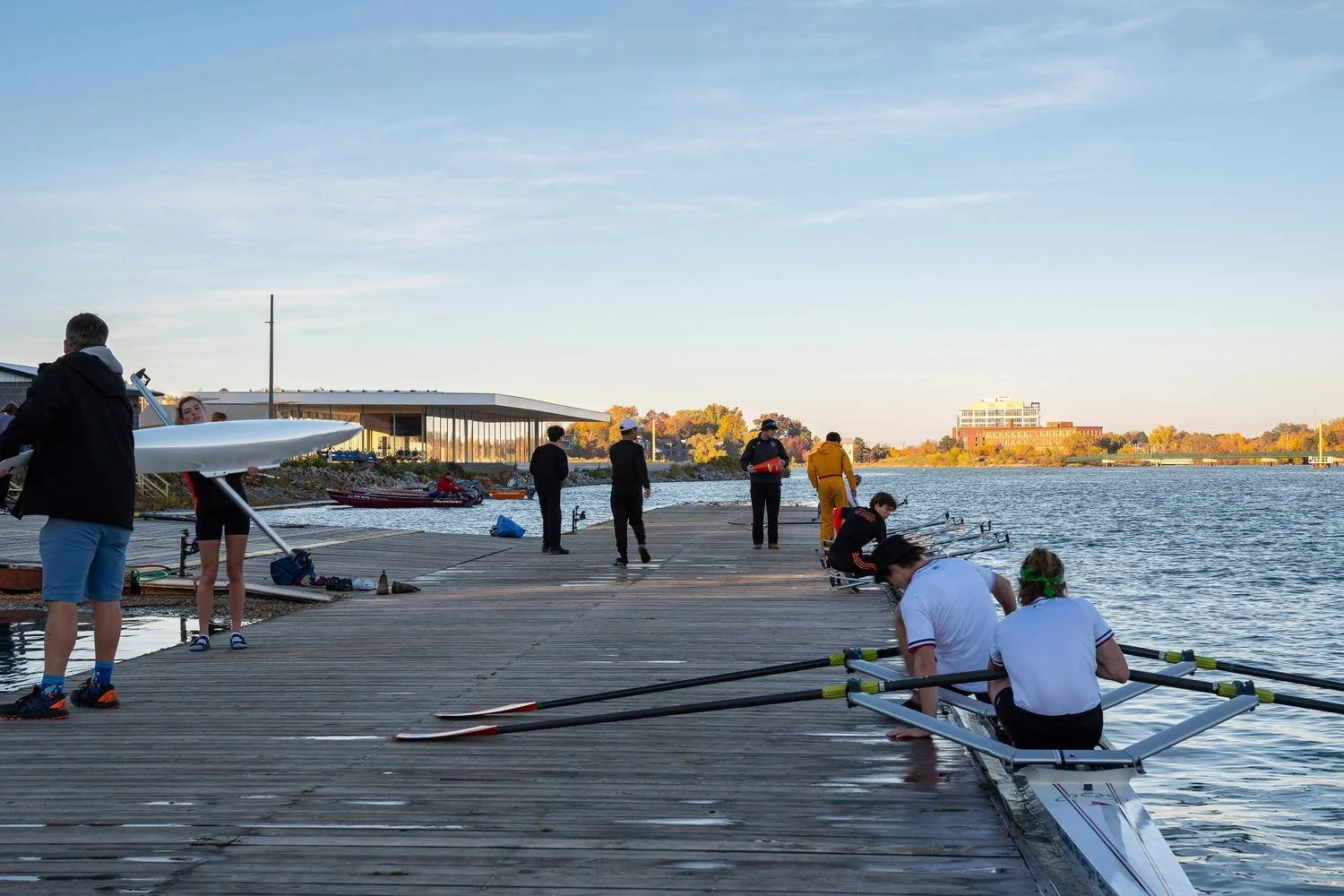
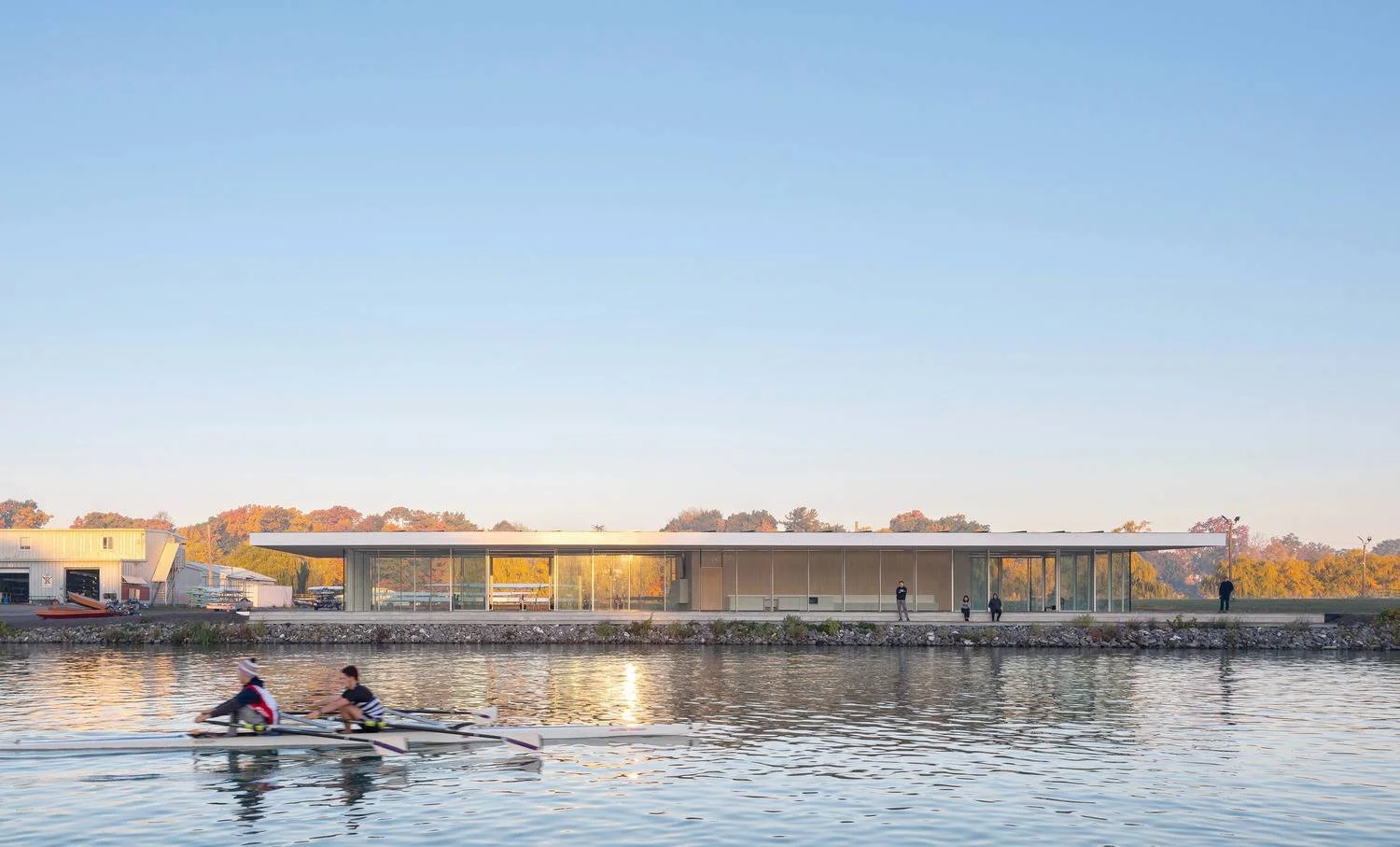
Henley Island and its 2km racecourse on Martindale Pond have been the epicentre of Canadian rowing since 1903. Situated on a gentle promontory of the island, the Neil Campbell Rowing Centre (NCRC) is a year-round training facility for the nation’s athletes. It was a key infrastructure component for the 2022 Canada Summer Games, and hosted the 2024 World Rowing Championships, the Royal Canadian Henley Regatta, and other competitions.
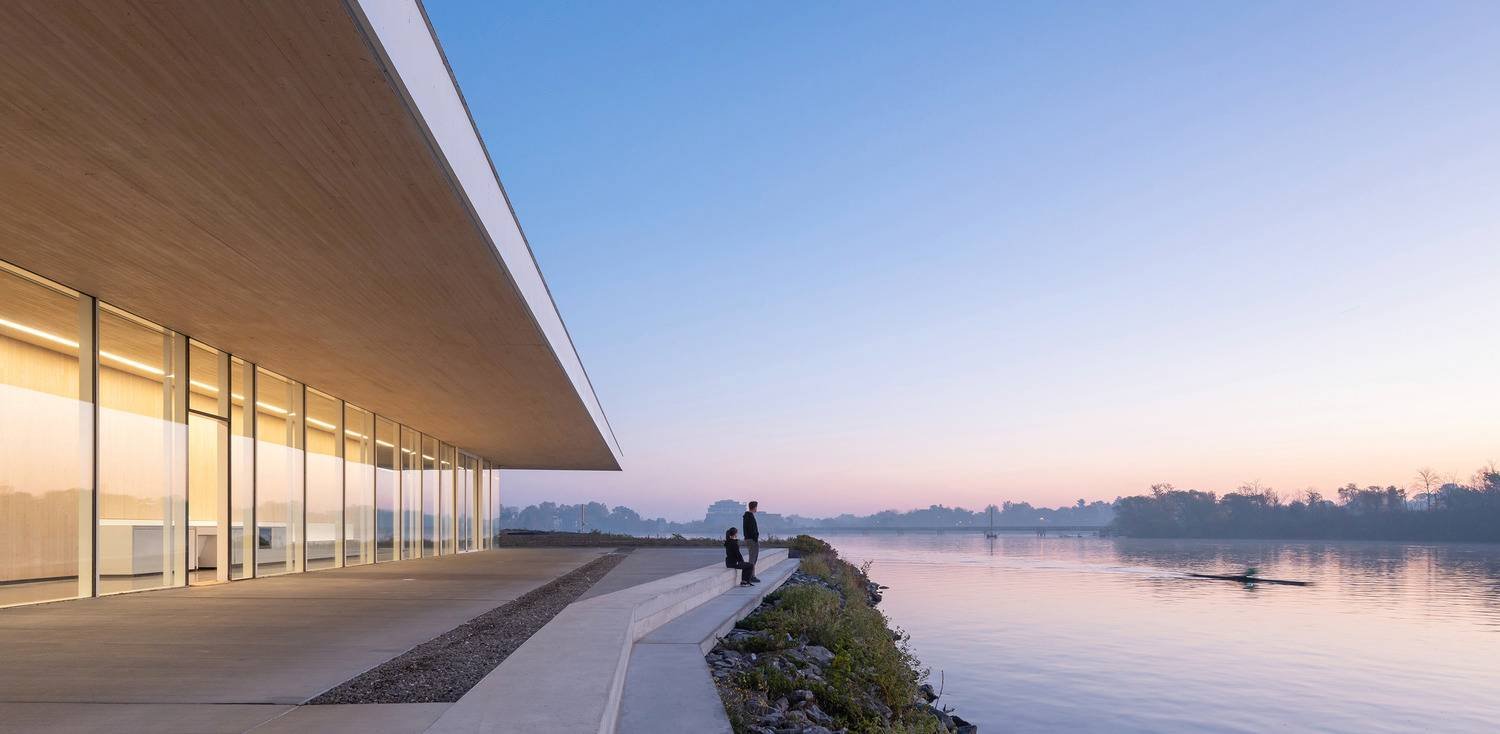
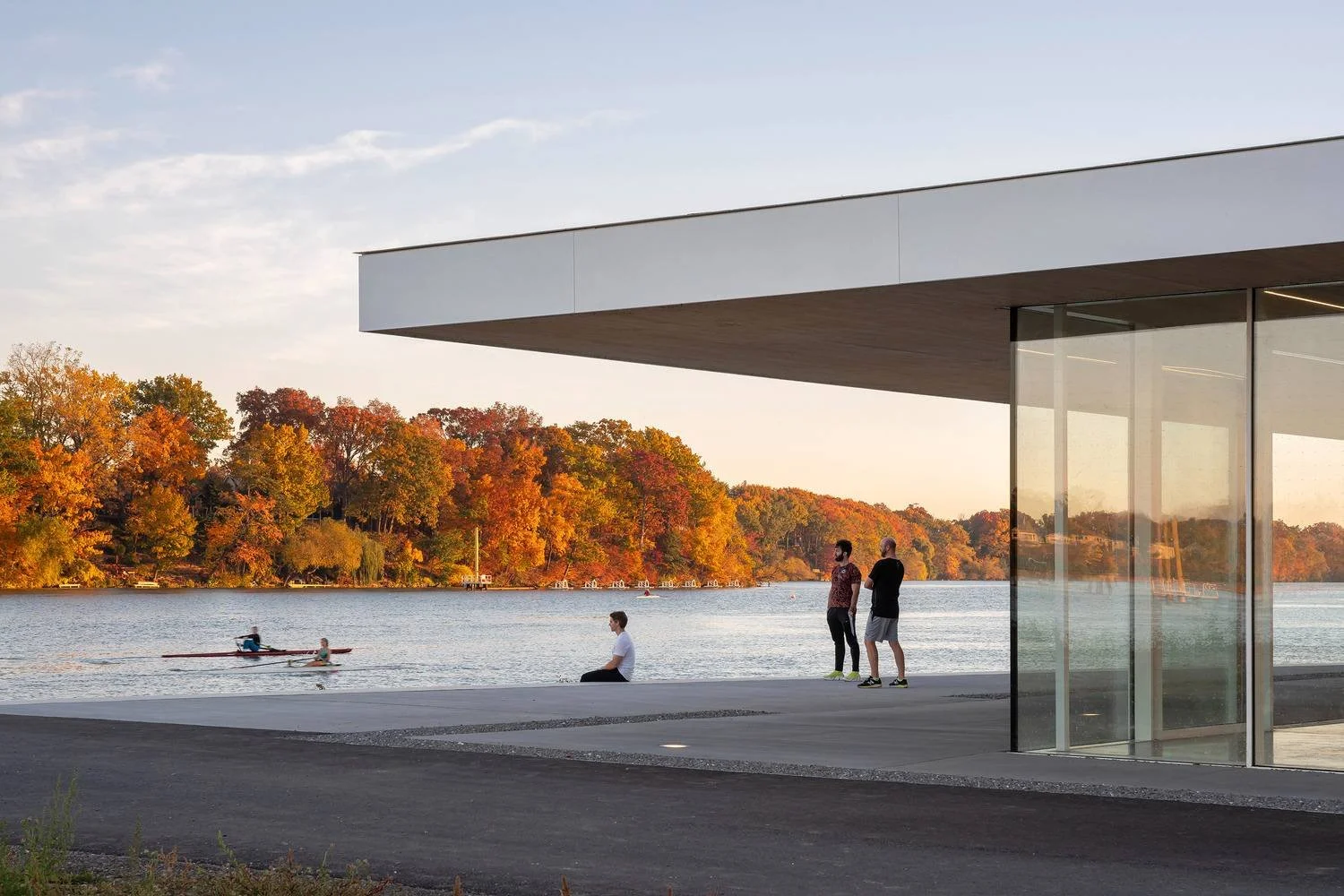
The NCRC is a beacon guiding racers along the watercourse and a pavilion-like assembly point at the heart of the island, drawing athletes and their supporters inward. Designed with an innovative mass timber structure, the facility configures an active race-preparation court with existing storage buildings, provides sheltered spaces for gathering, and creates a strong relationship to the water — all while presenting a striking visual identity from across Martindale Pond.
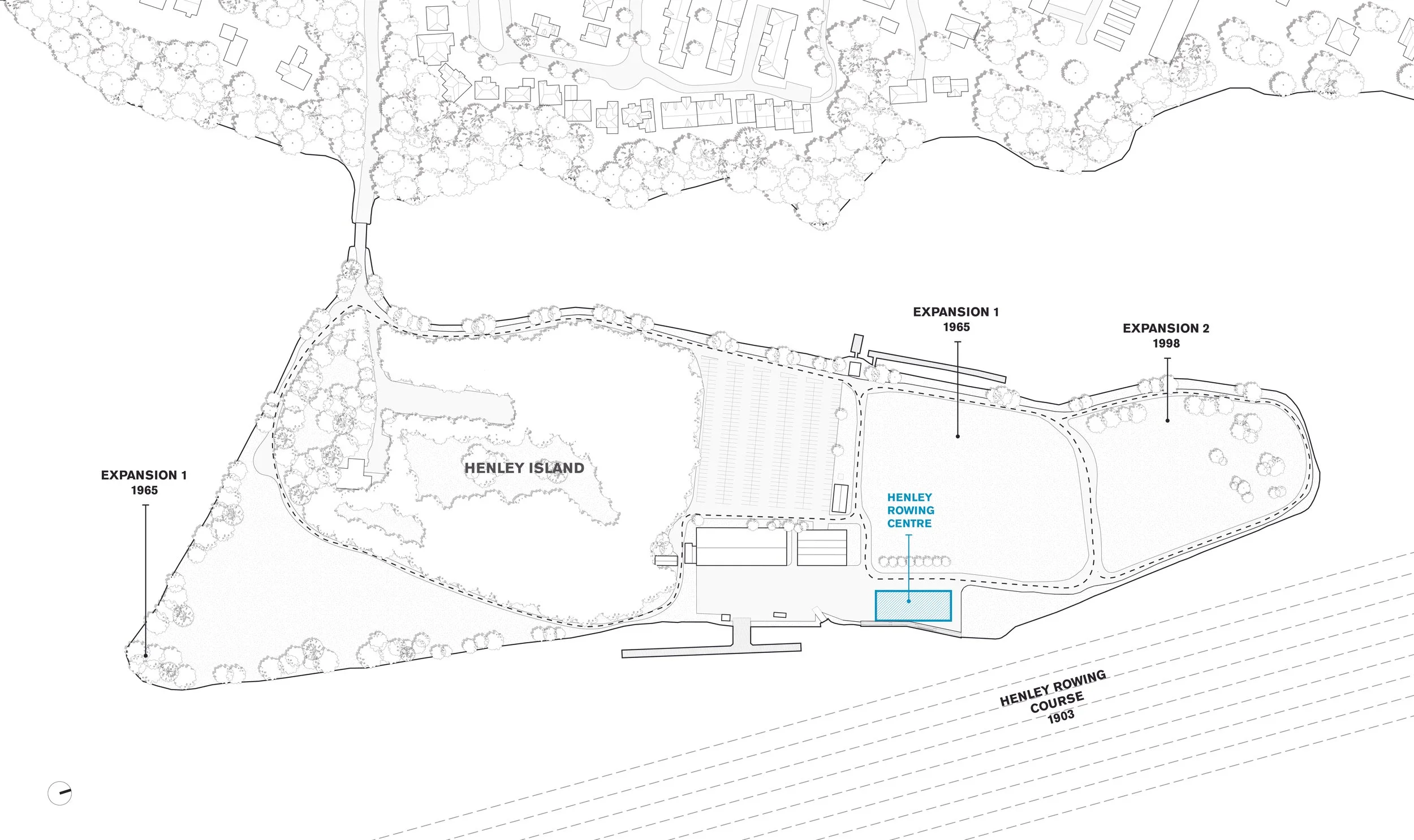
The site is situated in the Port Dalhousie community of St. Catherine’s, and within Martindale Pond. The Pond was created with the development of the Welland Canal in 1829 and described at the time as ‘a quiet and broad liquid expanse which has charmed the hearts of oarsmen.’
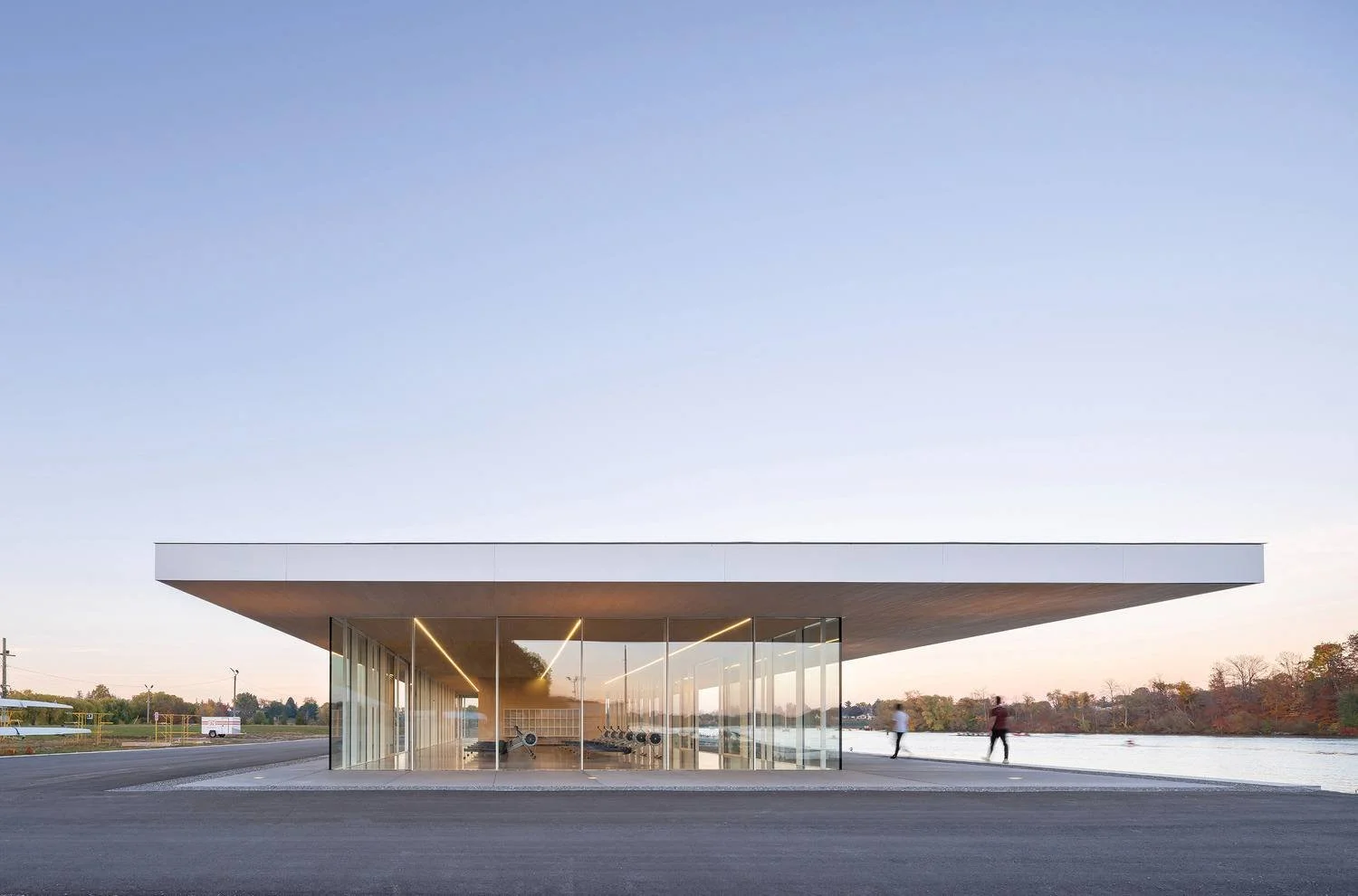
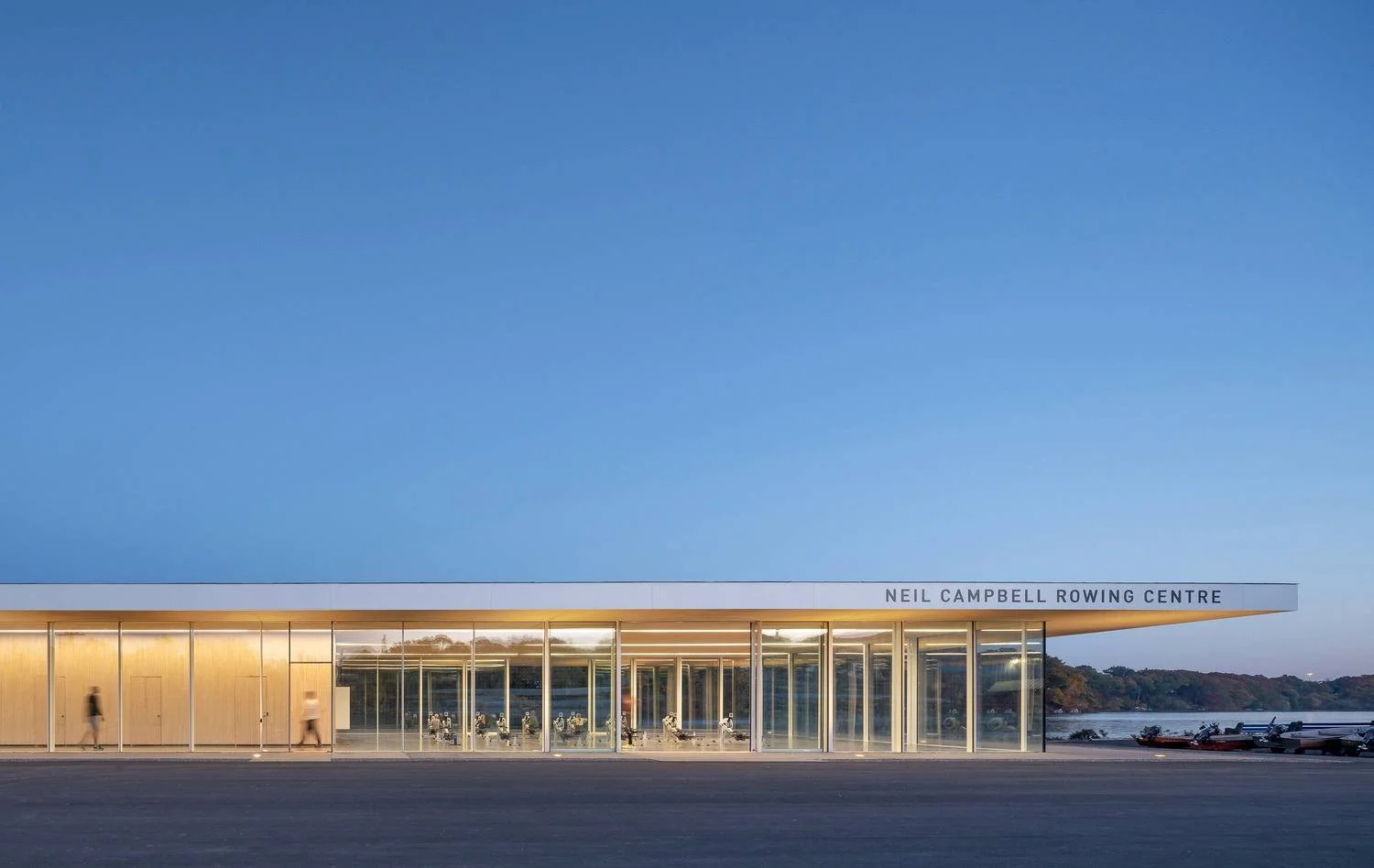
The design of the NCRC inverts the opacity of the typical boat shed and continues the tradition of the ‘glass house,’ reimagining these typologies as a functional, social amenity that is also undergirded with a responsible environmental approach.
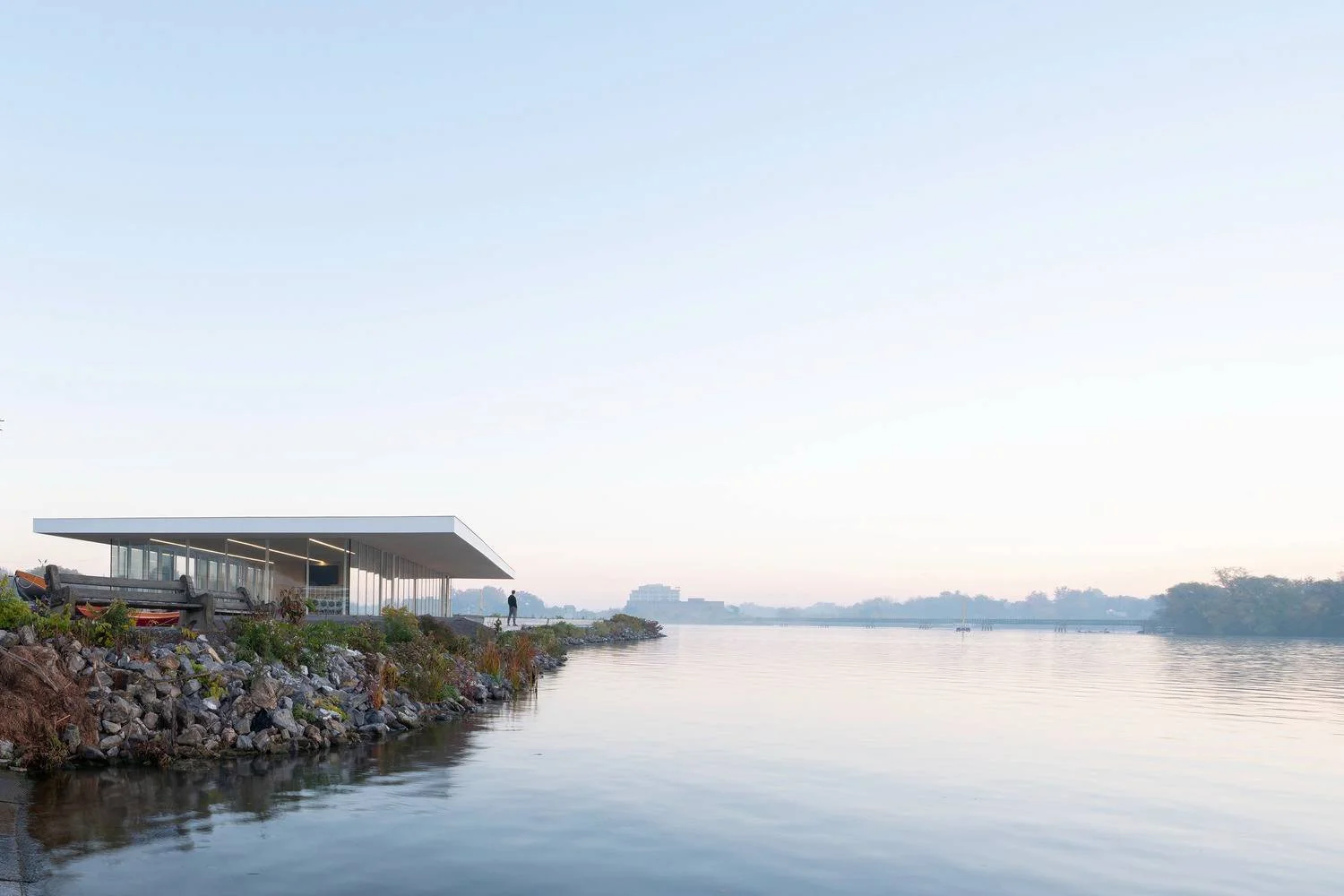
Visiting the Henley Regatta during the design phase, the team noted that many spectators, especially children, wanted to approach the Pond, not just to be closer to the race but to also physically touch the water.
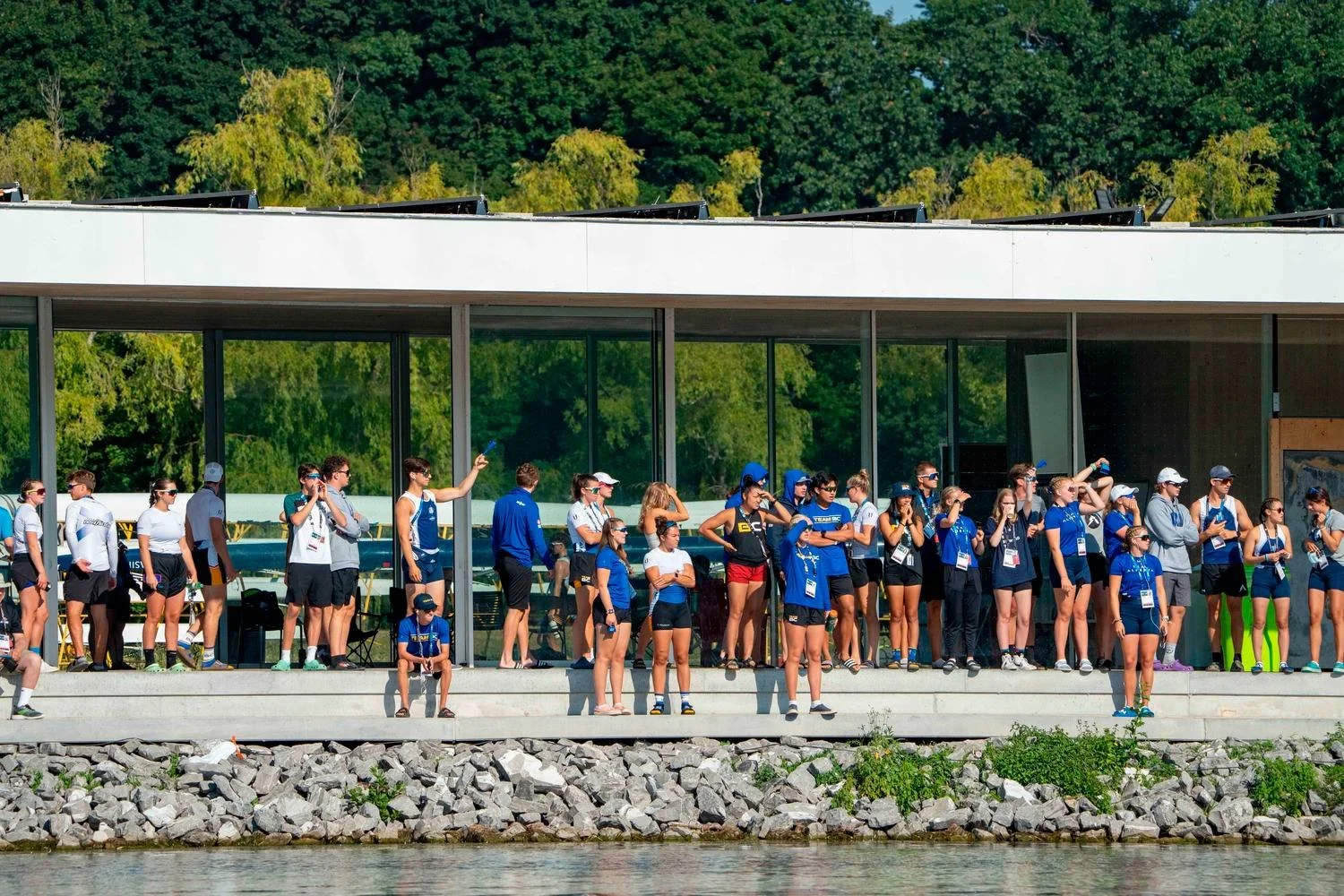
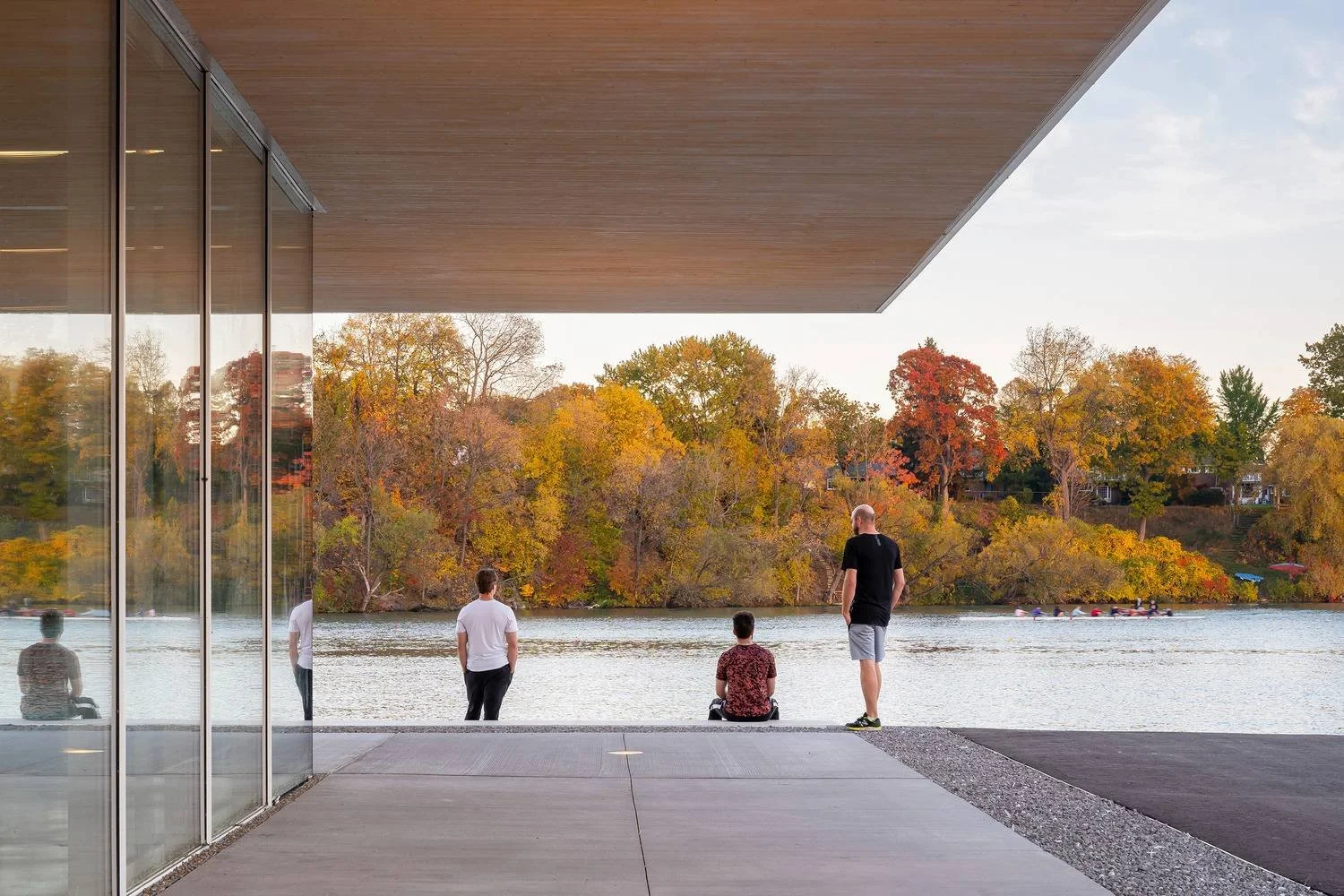
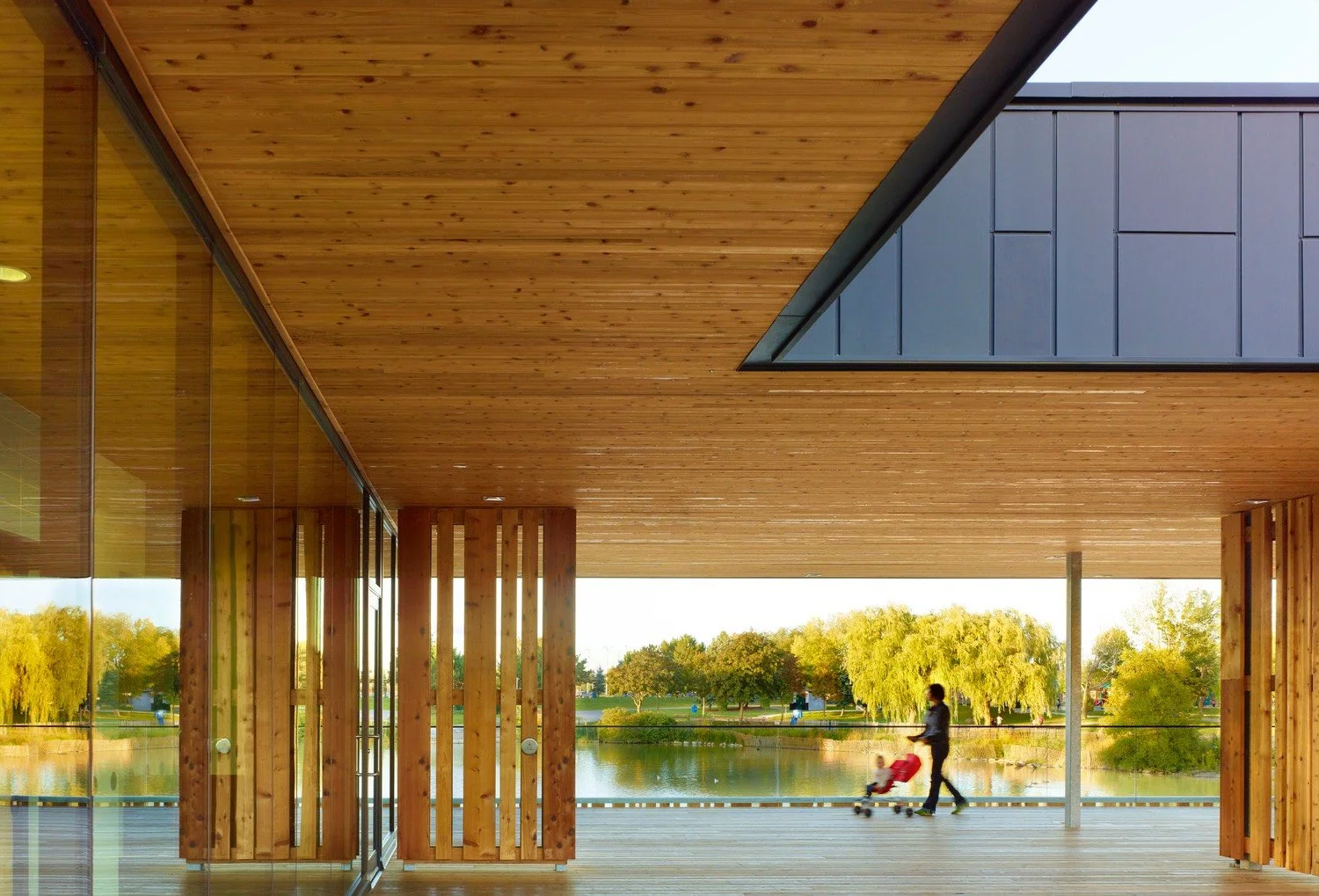
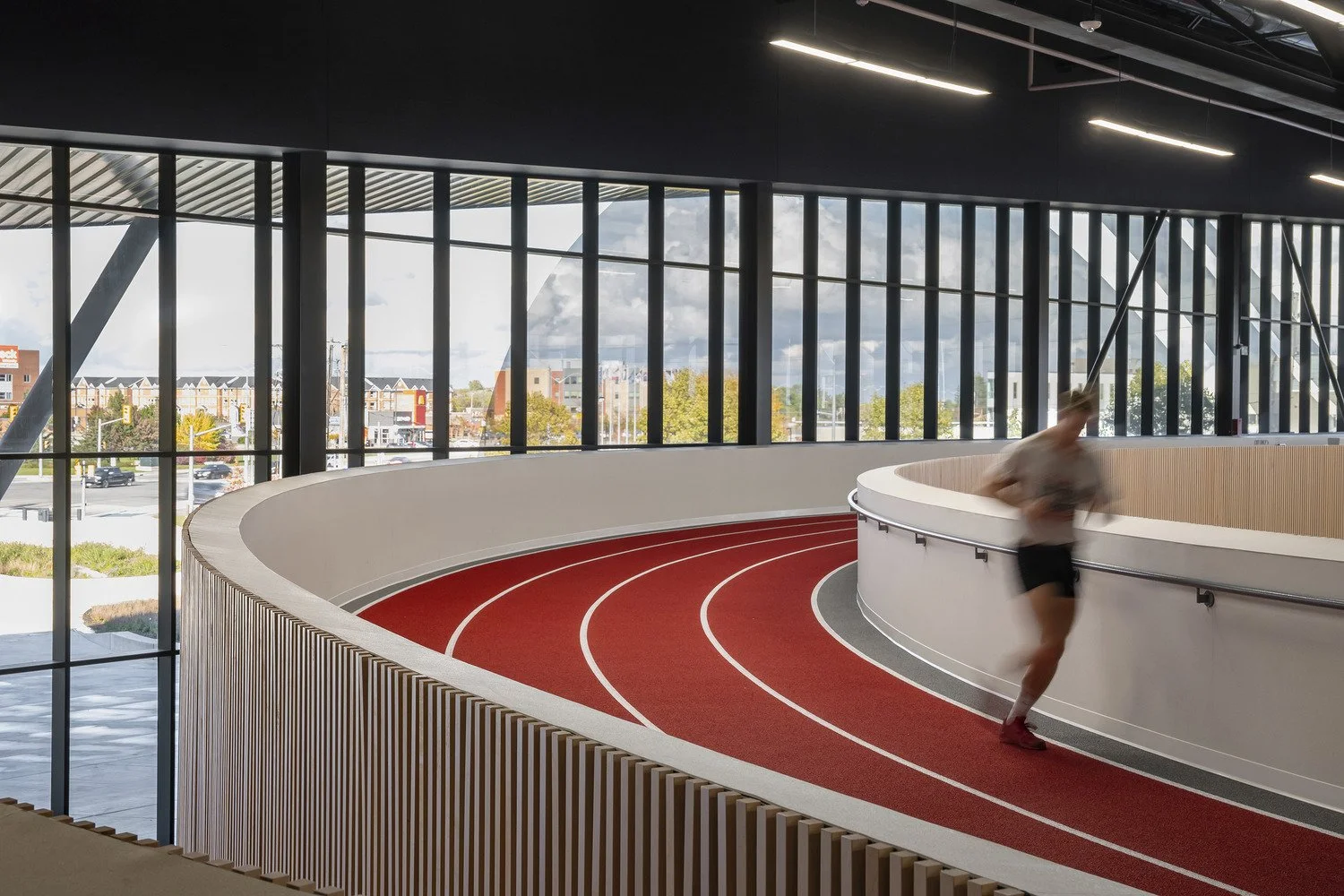
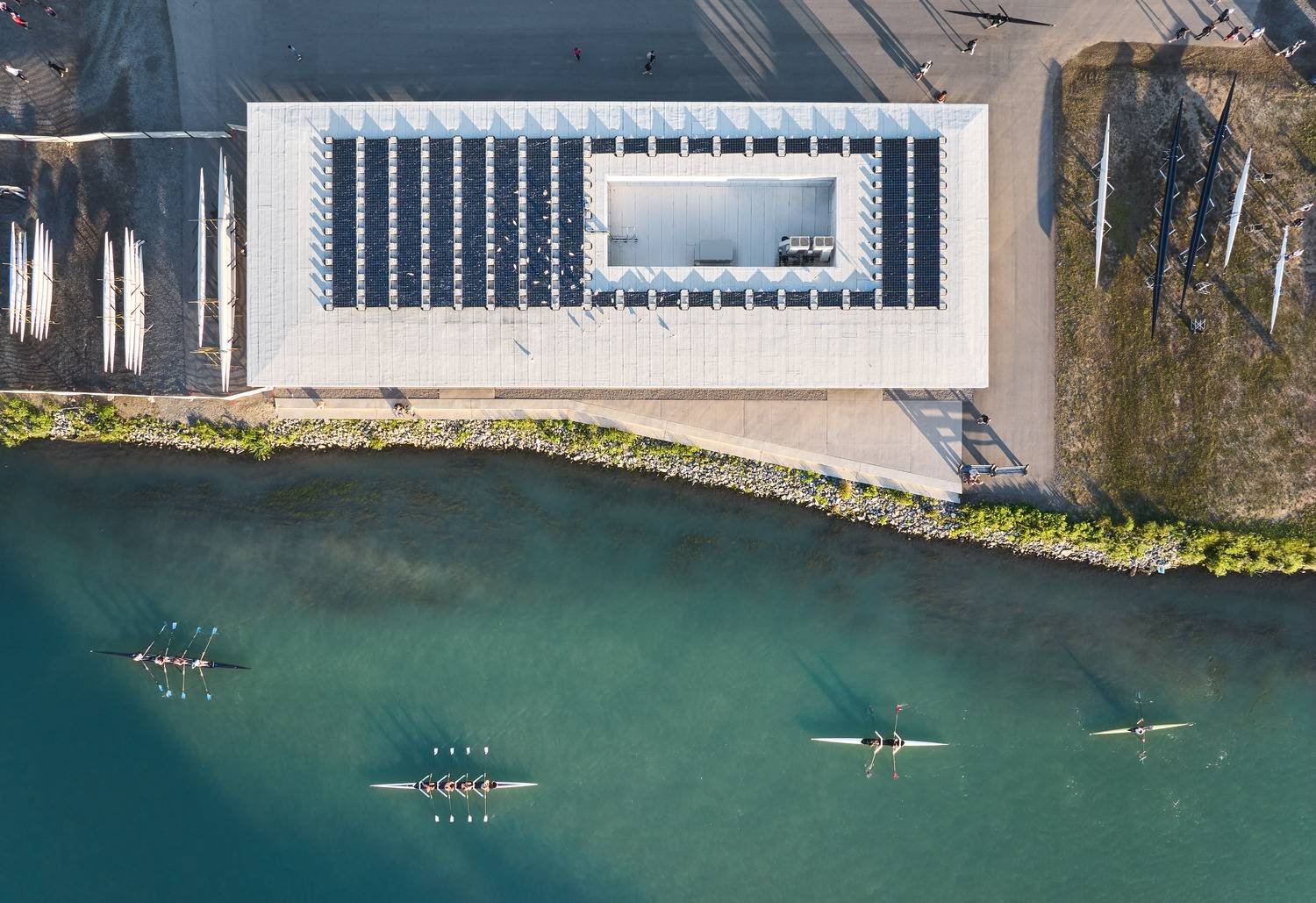
At the time, this edge was overgrown with plants and old construction debris; remedying this condition thus became a design priority. With its biased overhanging roof, extensive glazing, operable sliding doors, and expansive steps to the racecourse, the building provides sheltered spaces while connecting athletes and spectators to one another and to the water.
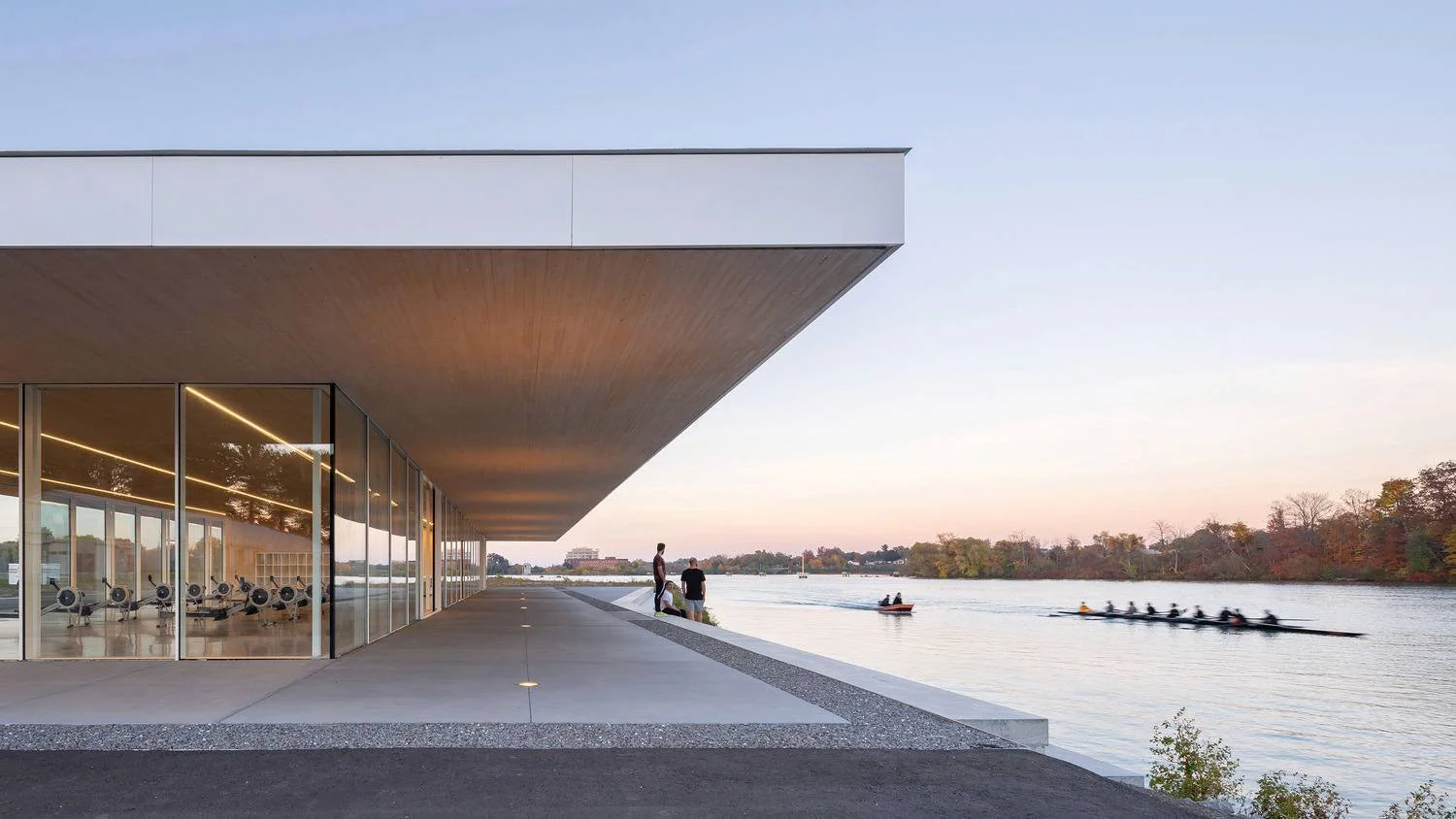
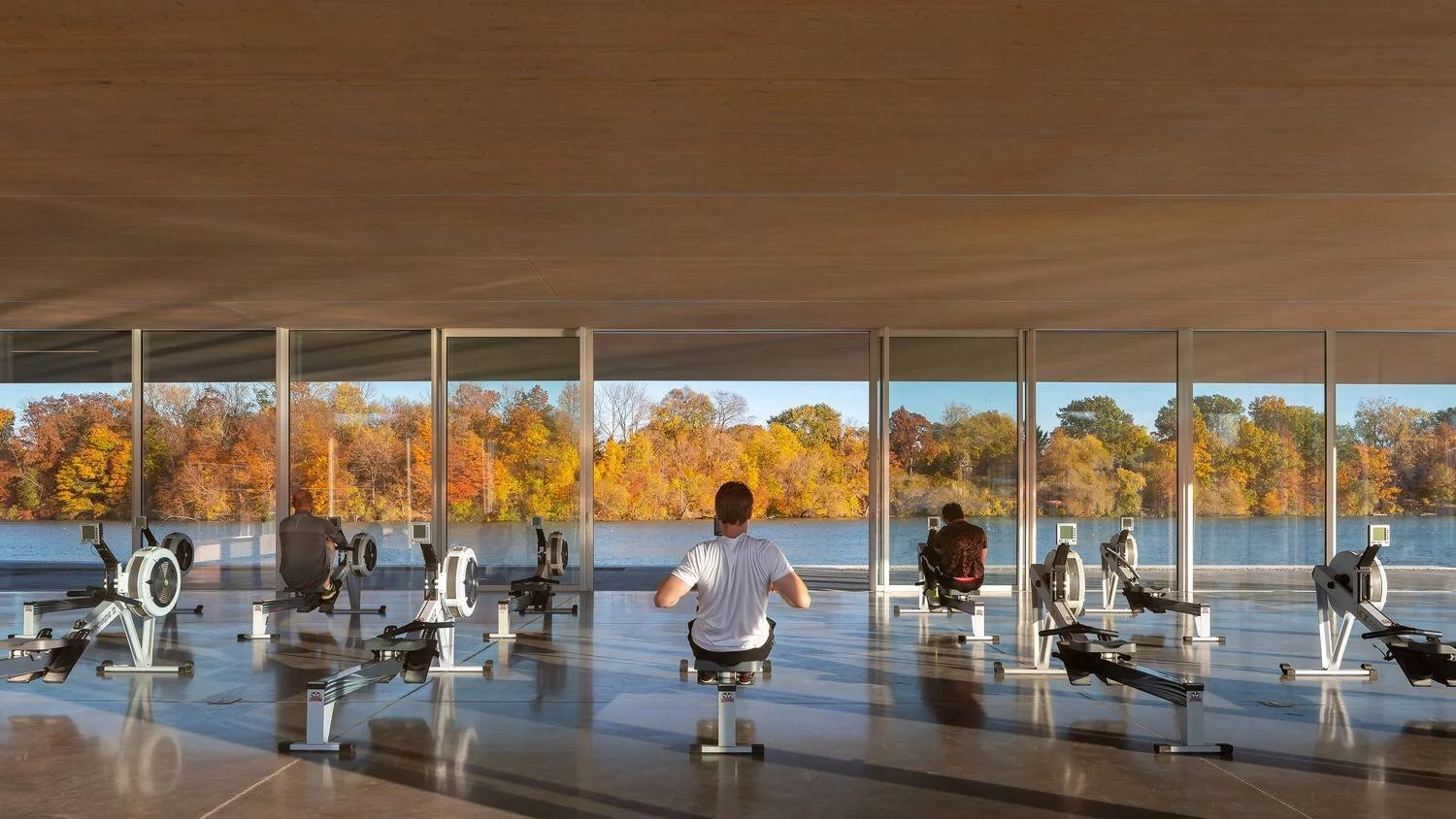
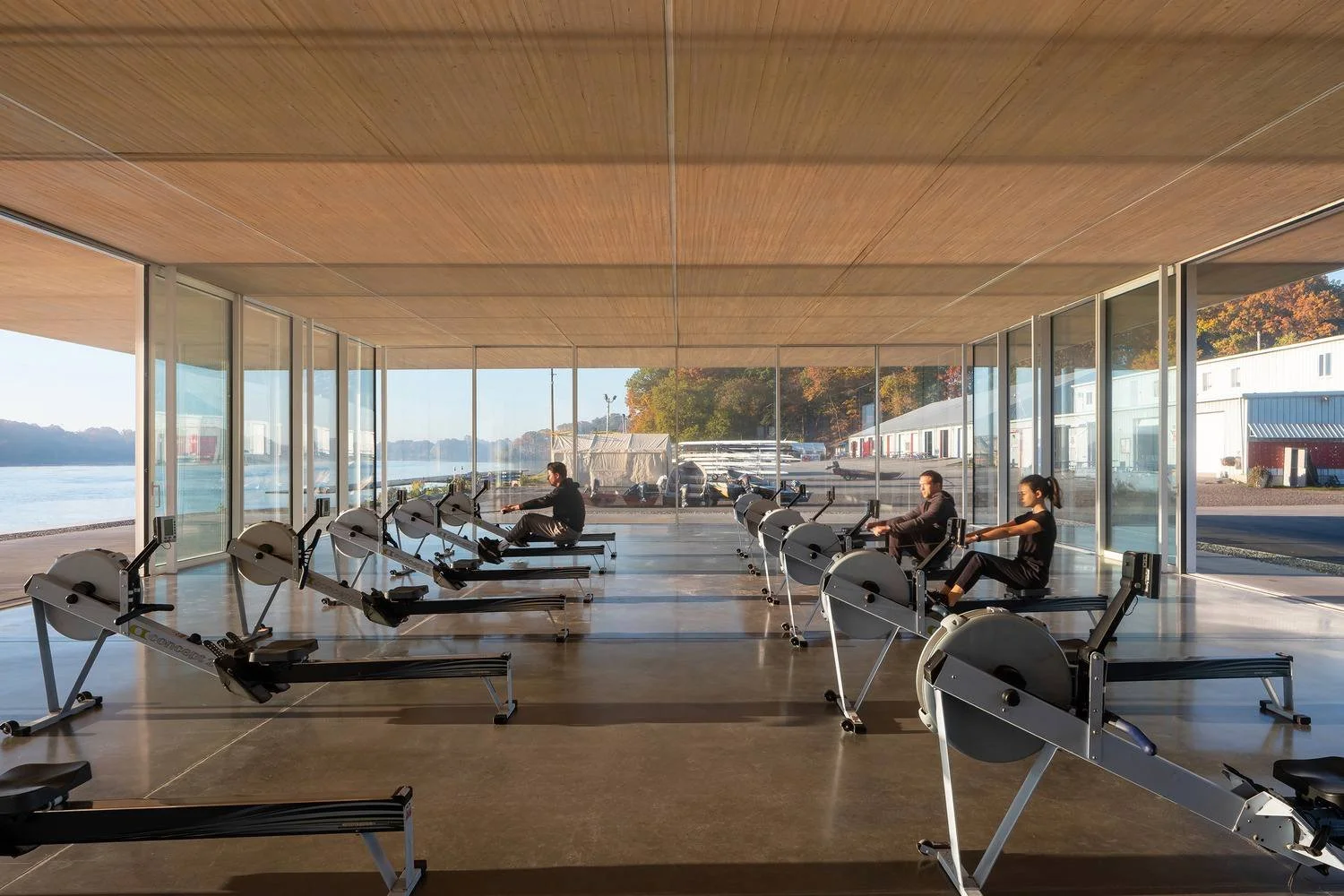
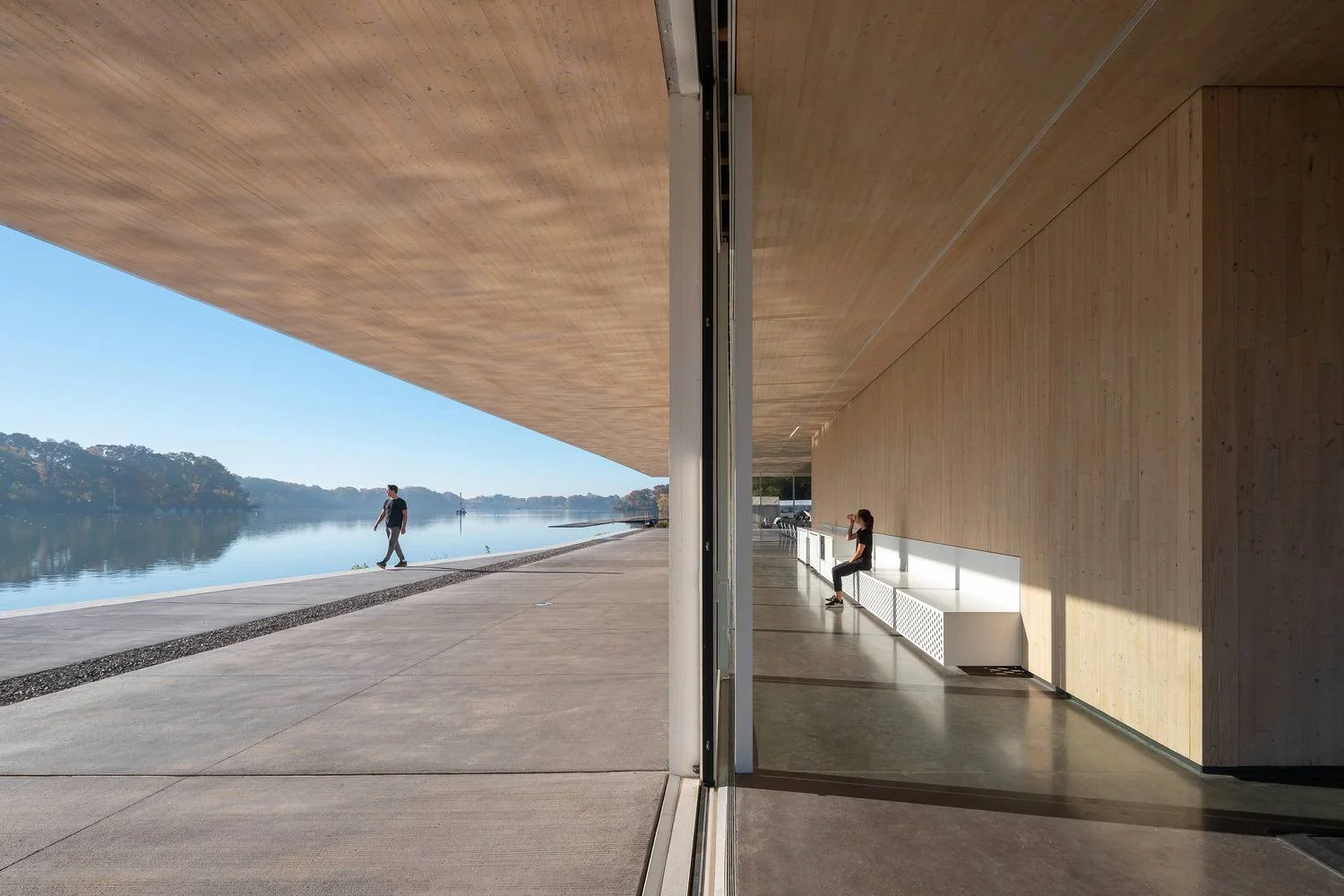
With its sliding doors open, the facility becomes an indoor-outdoor space with ample room for gathering and viewing to fully accommodate and display the spectacle of the race. During less eventful periods, the NCRC is a more reserved place, serving personal development and team-building.
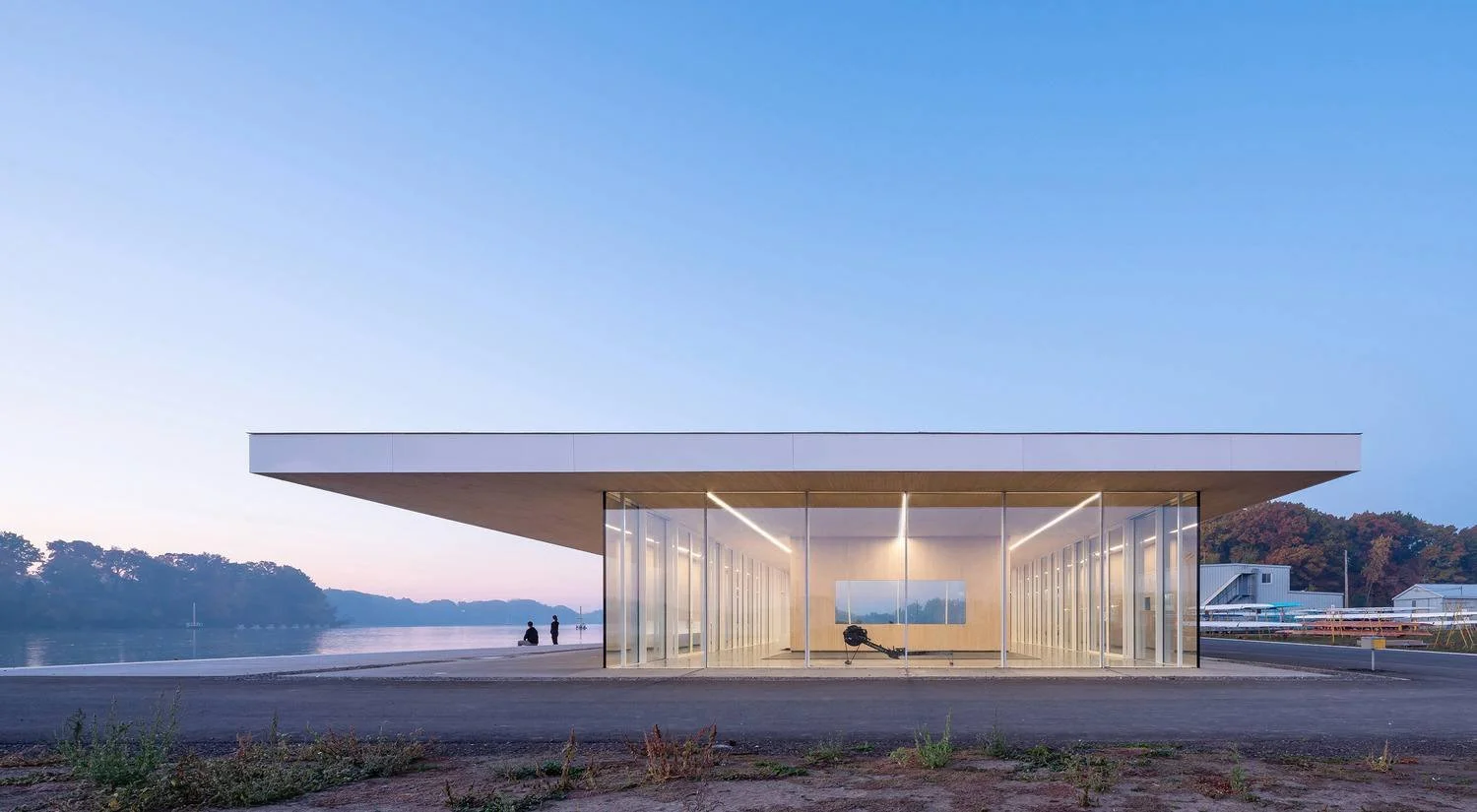
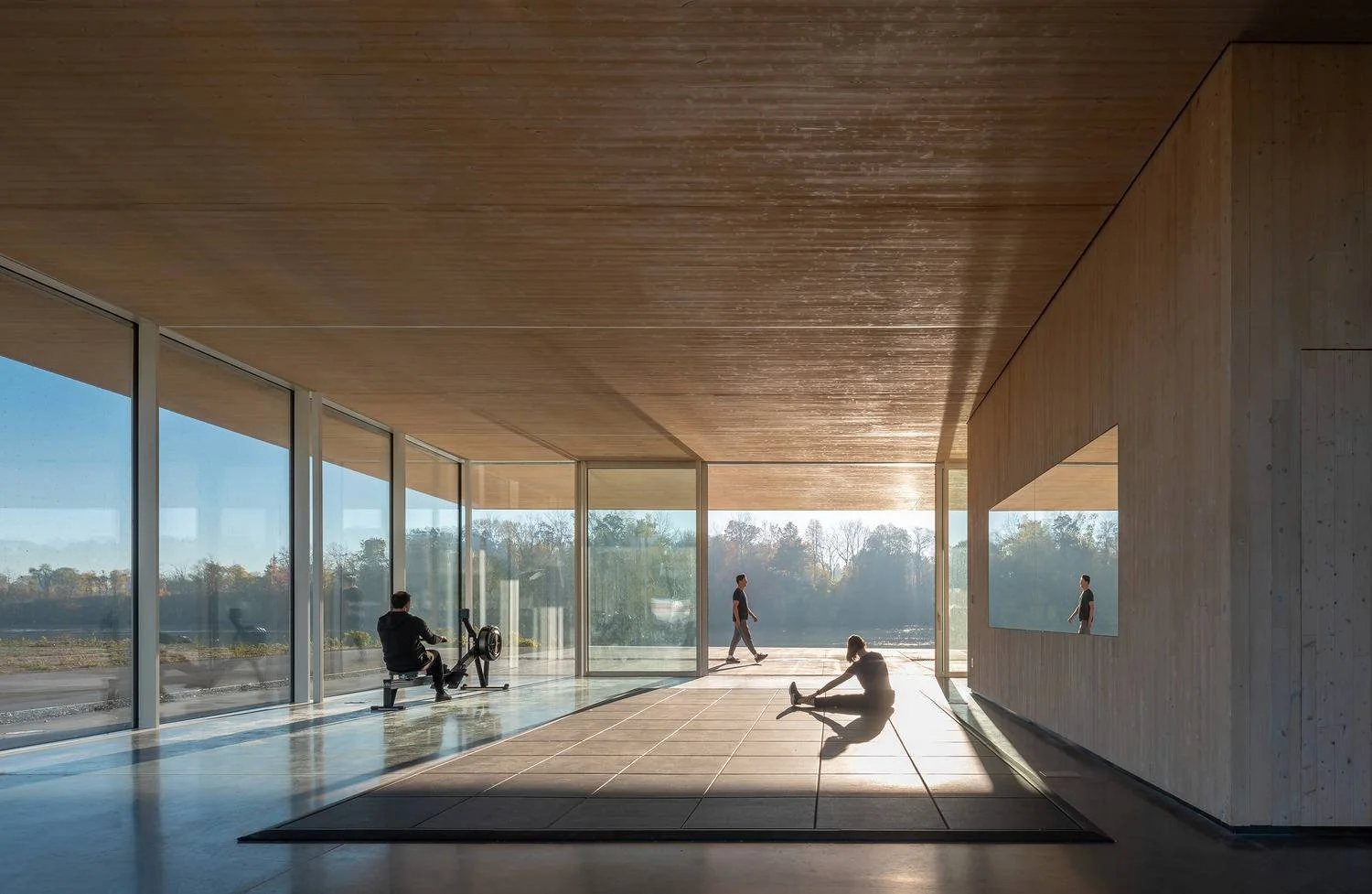
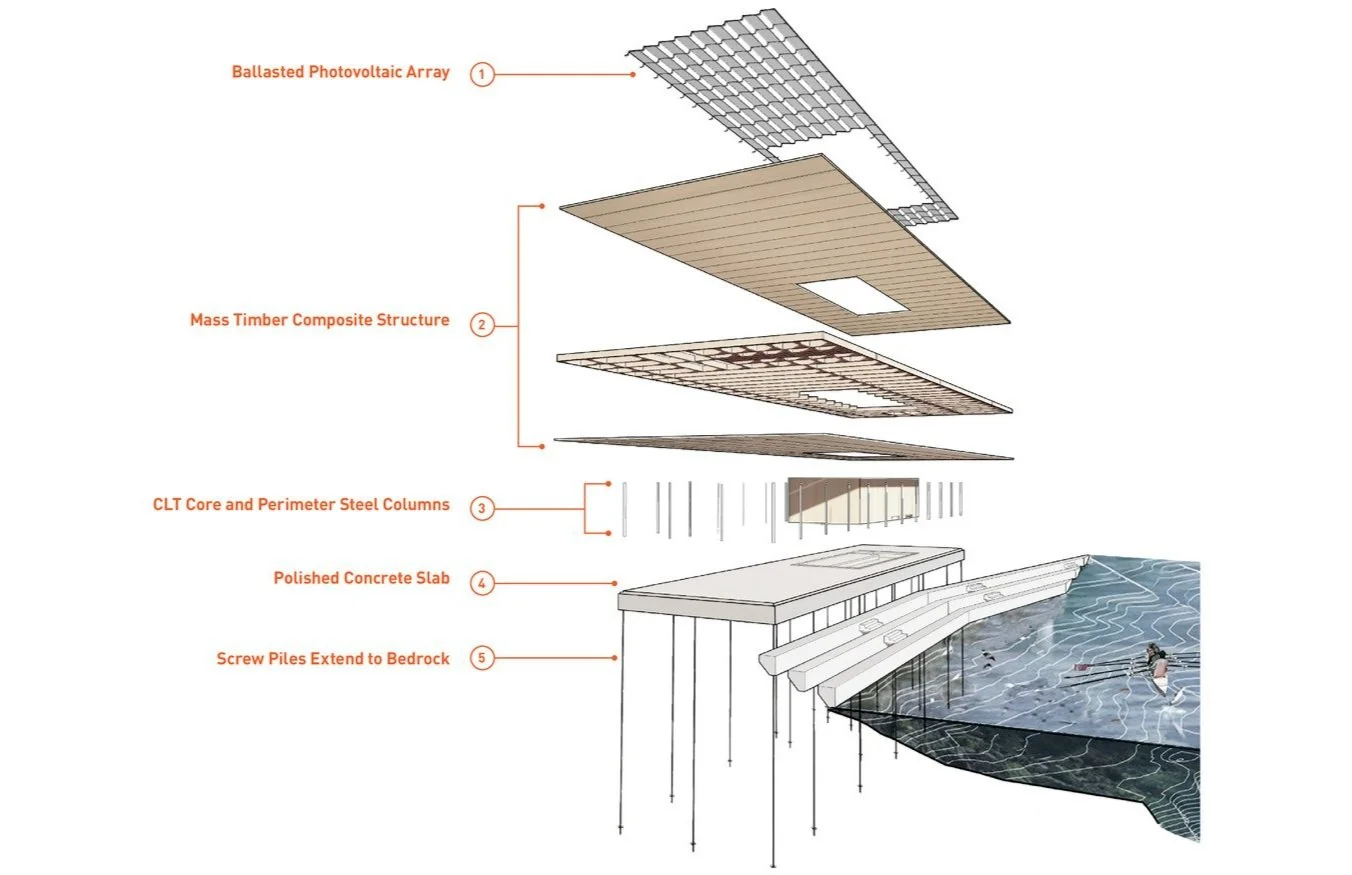
The Rowing Centre meets Zero-Carbon Emissions and Net-Zero Energy Design benchmarks. Its measures include a high-performance building envelope, passive methods of ventilation and sun control combined with low-energy-use mechanical systems, a rooftop photovoltaic array that produces the energy required to operate the building, and an innovative mass timber stressed-skin structure — a feature that is aesthetically beautiful while also contributing to global carbon sequestration.