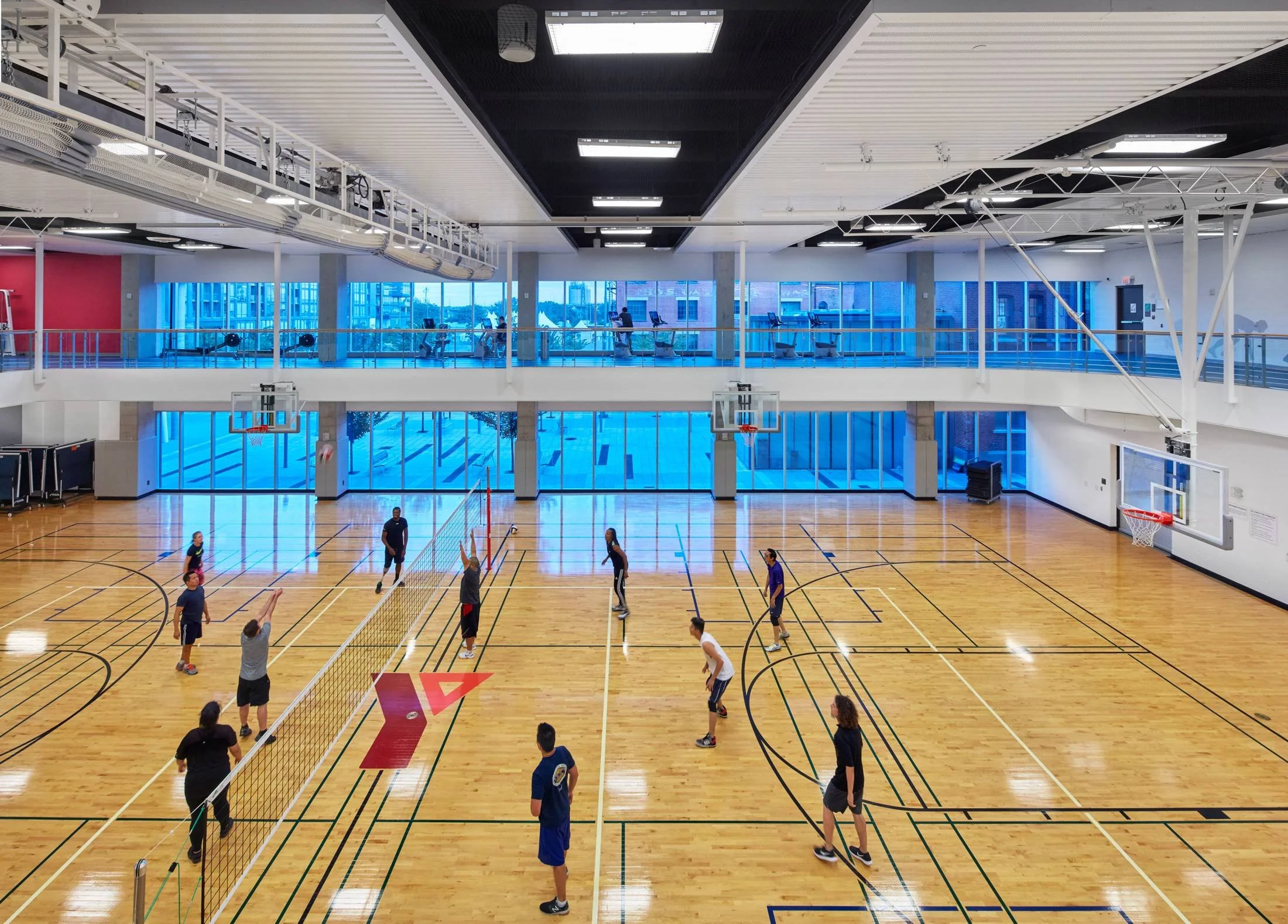
Cooper Koo Family Cherry Street YMCA
Toronto, Ontario
In Collaboration with ArchitectsAlliance (aA), KPMB Architects, Daoust Lestage Architects
-
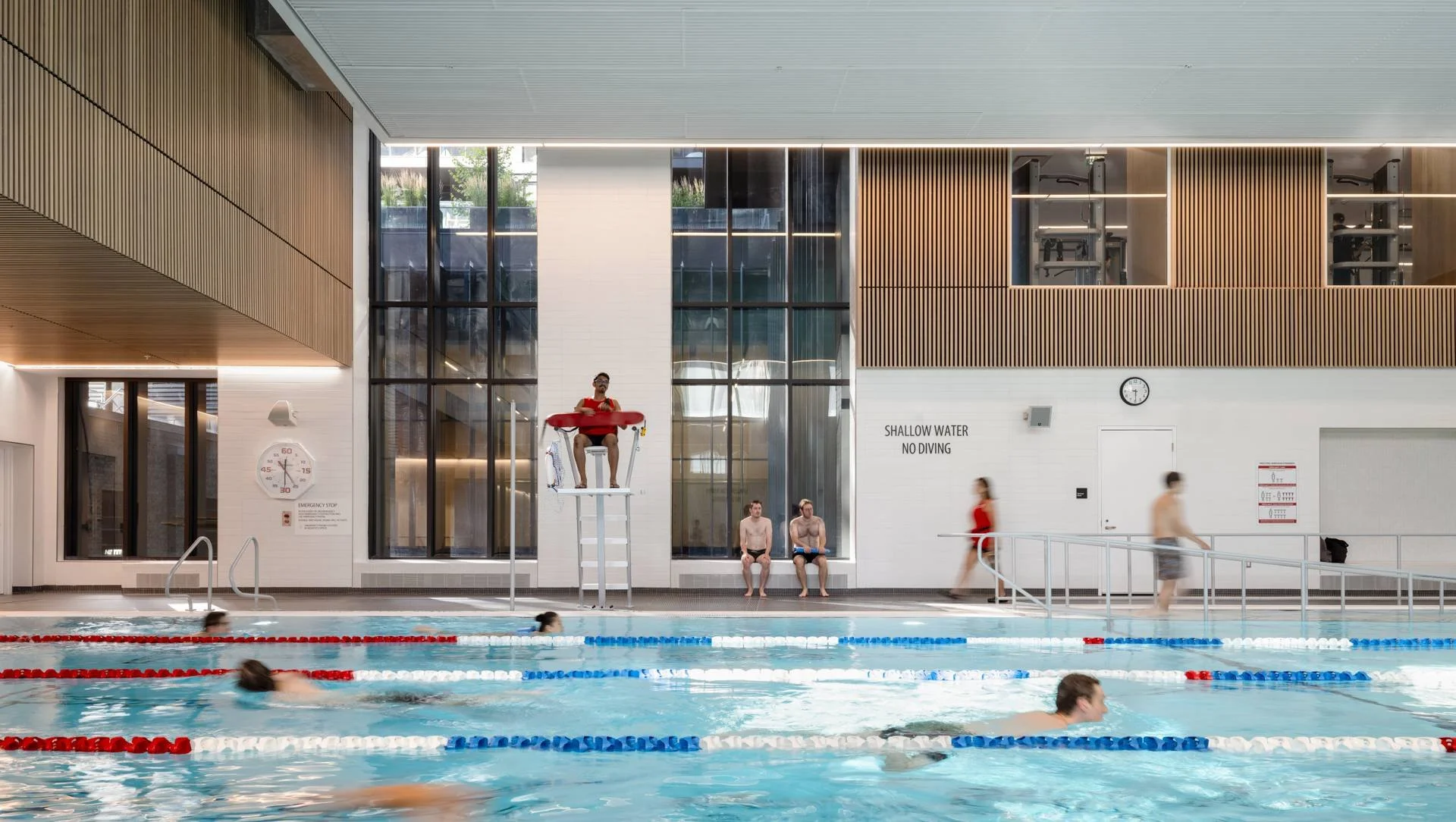
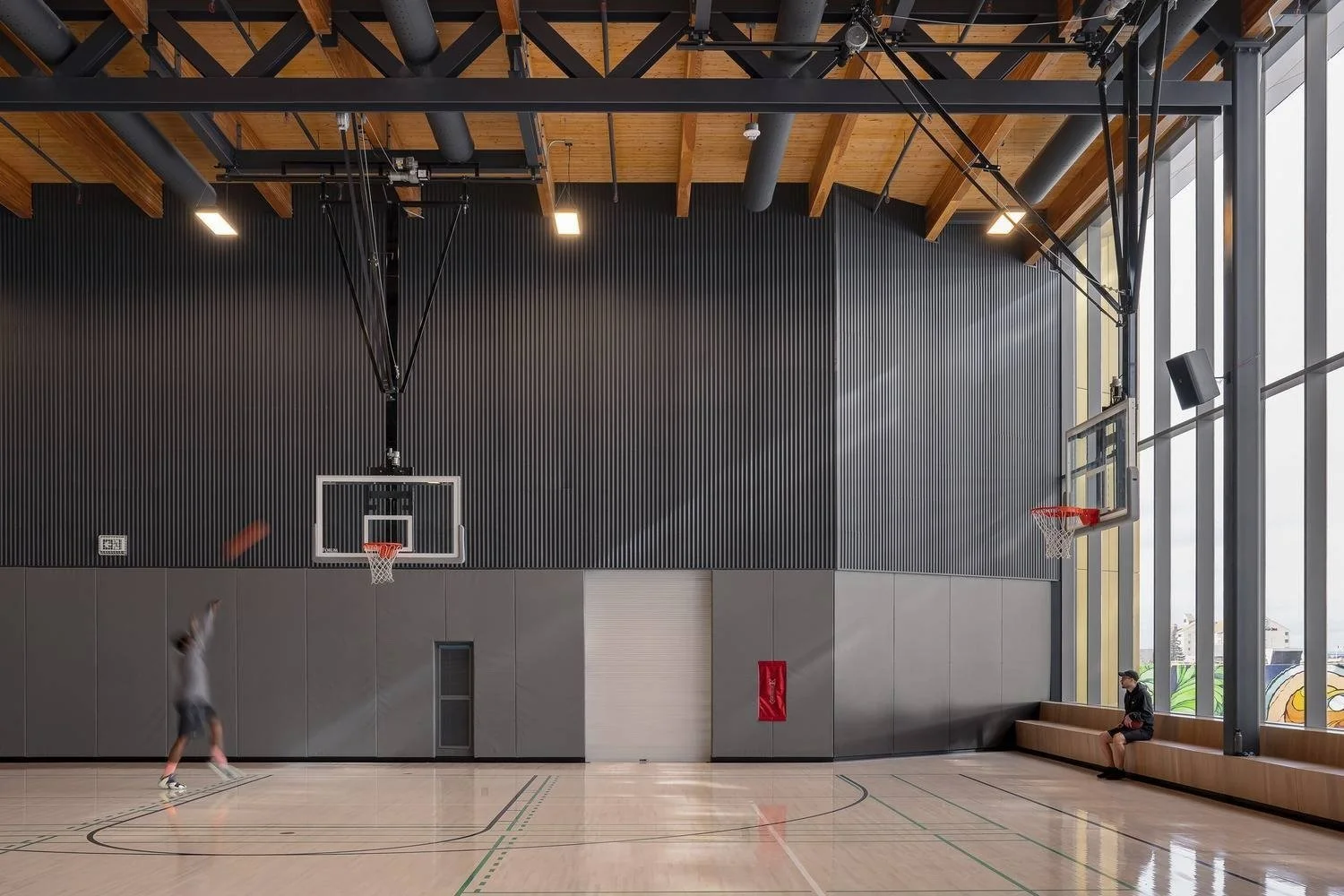
Aquatic Centre, Gymnasium, Fitness Conditioning Space, Indoor Track, Multipurpose Rooms, Youth Room, Child Care, George Brown College Student Residences, Accessible Roof
-
Structural: WSP (formerly Halsall)
Mechanical / Electrical: The Hidi Group
Civil: Cole
Landscape: NAK Design Strategies -
2018 Athletic Business: Facilities of Merit Design Award
2017 / 2018 Urban Land Insitute (ULI): Global Award for Excellence
2013 Canadian Brownfields Network: CUI Brownie Award (Best Overall Project)
2012 Canadian Architect: Award of Excellence
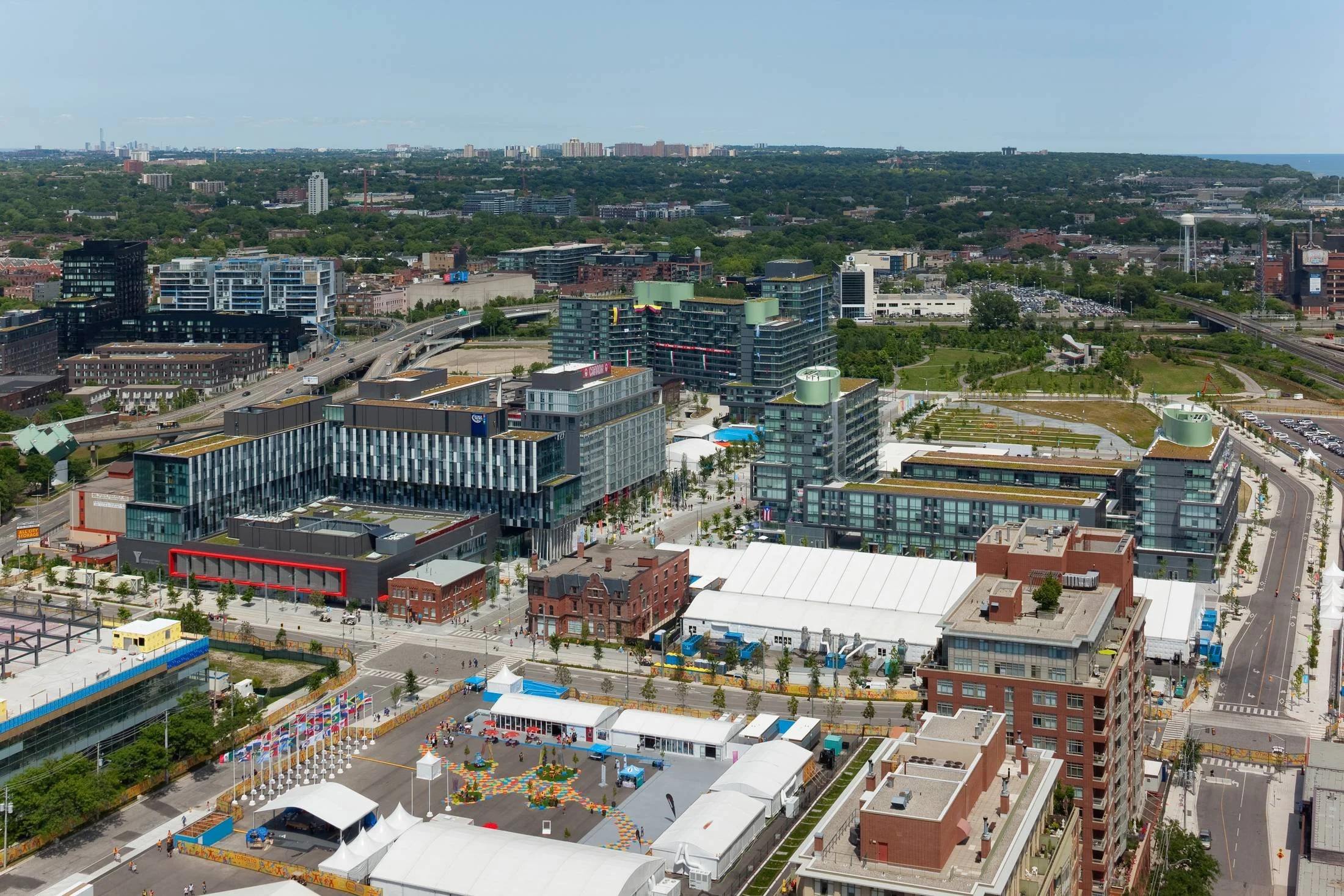
The LEED Gold-certified Cooper Koo Family Cherry Street YMCA is a key part of a larger development that has transformed remediated industrial land in the West Don Lands precinct of Toronto. The project had a unique timeframe: initially, the development was the Athlete’s Village for the 2015 PanAm / Parapan Games, with MJMA’s component serving as a social hub for the Village; after the Games, the building was converted to a YMCA, and the Village became a progressively-designed, fully-served neighbourhood.
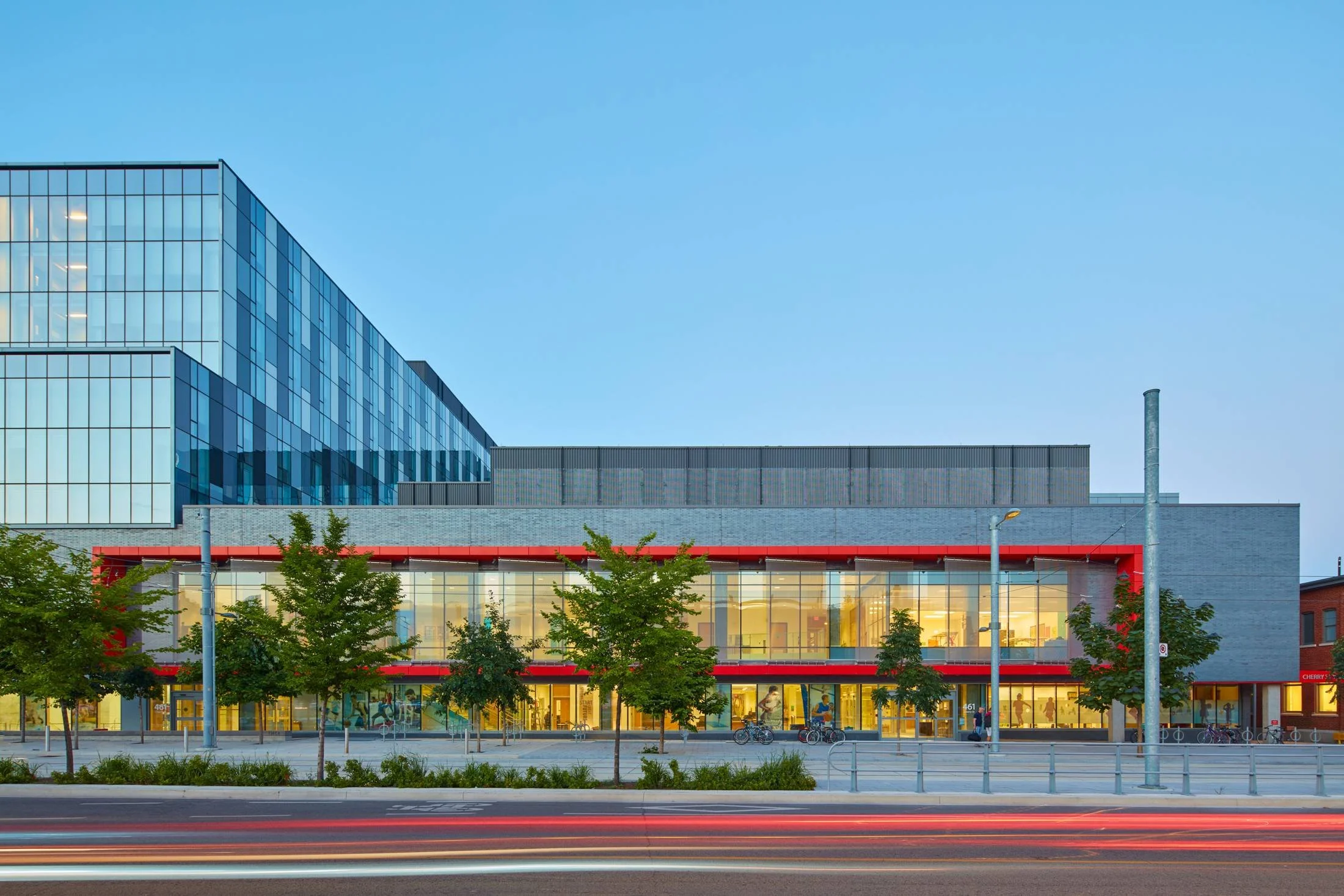
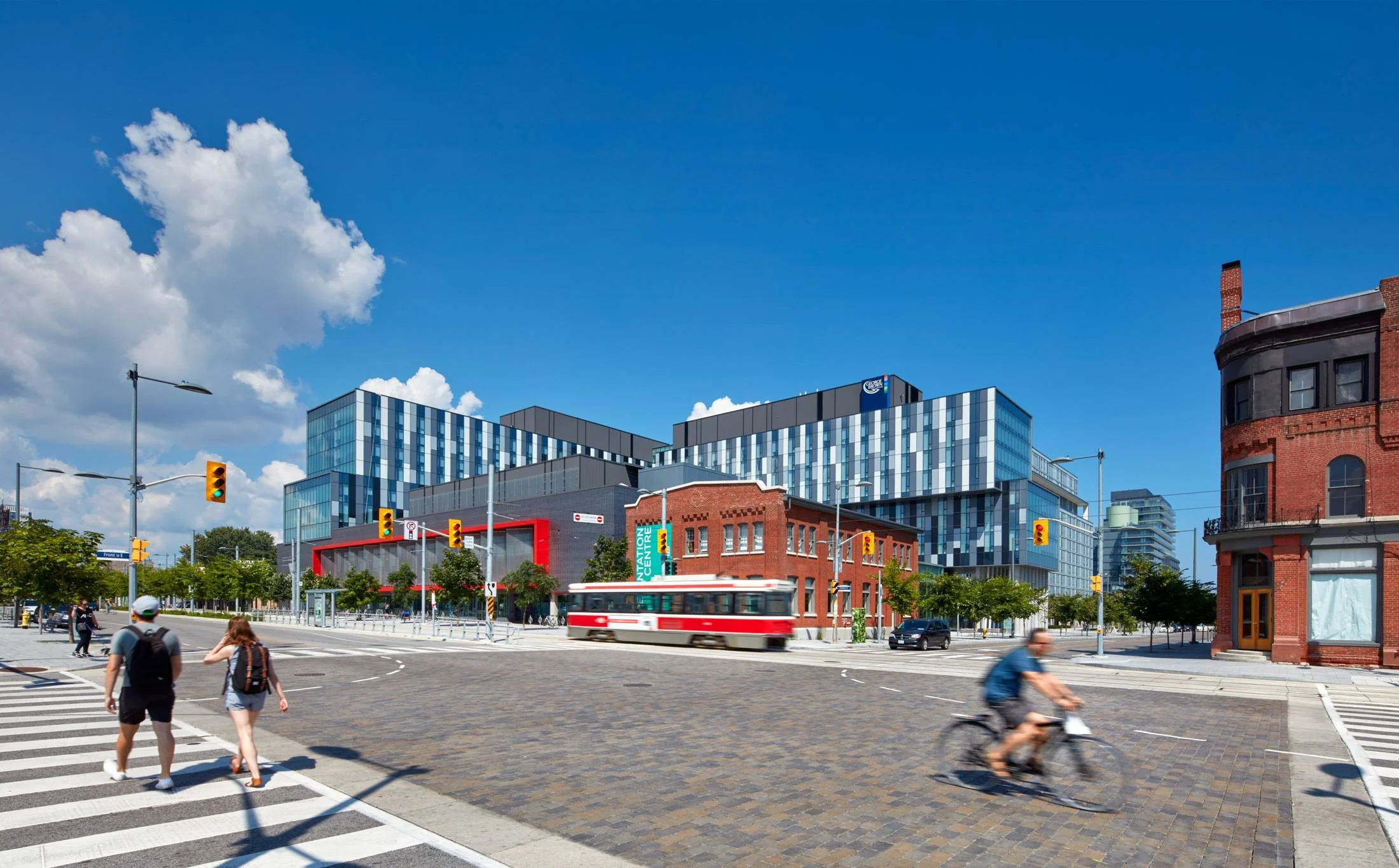
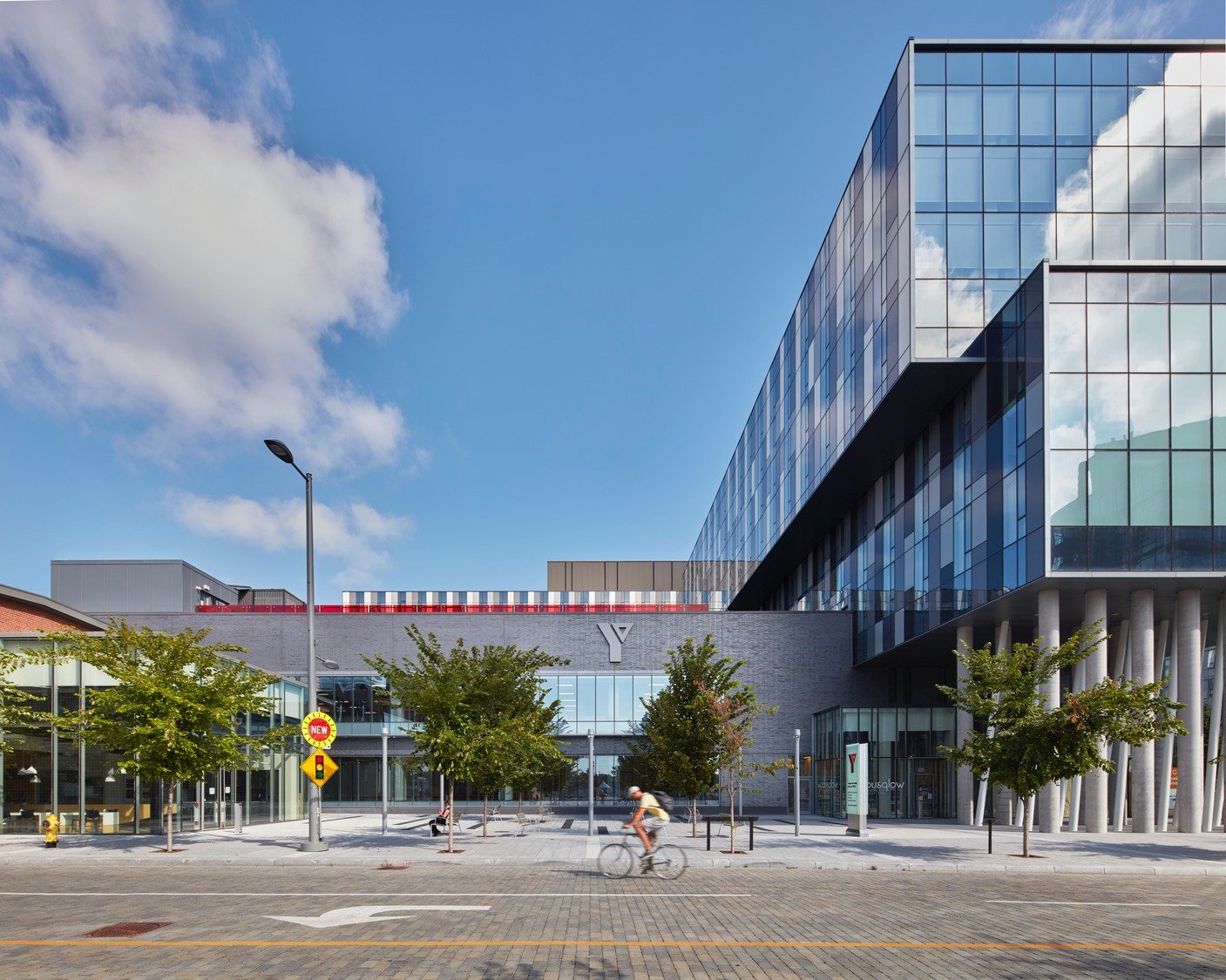
The building responds to its surroundings with civic and human-scaled gestures. Its western elevation joins a pair of red brick heritage structures to the south, to act as a gateway from downtown into nearby established neighbourhoods, while extensive exterior glazing allows its interior life to be shared with the street. At the time of its completion, the facility was one of the most accessible in PanAm / Parapan Games history and the most accessible in the YMCA’s portfolio. Now, with over 1,000 visitors per day, it is an inclusive and dynamic centrepiece in one of Toronto’s newest neighbourhoods, destined to contribute to the flourishing of its community and the city for years to come.
To take a holistic approach with the Pan Am development — which afterwards became the Canary District neighbourhood — MJMA collaborated with three other architectural practices and a larger multi-disciplinary team: combining expertise in urban planning and design, as well as the design of landscape, retail, multi-family and student residences, community centres, and sports facilities.
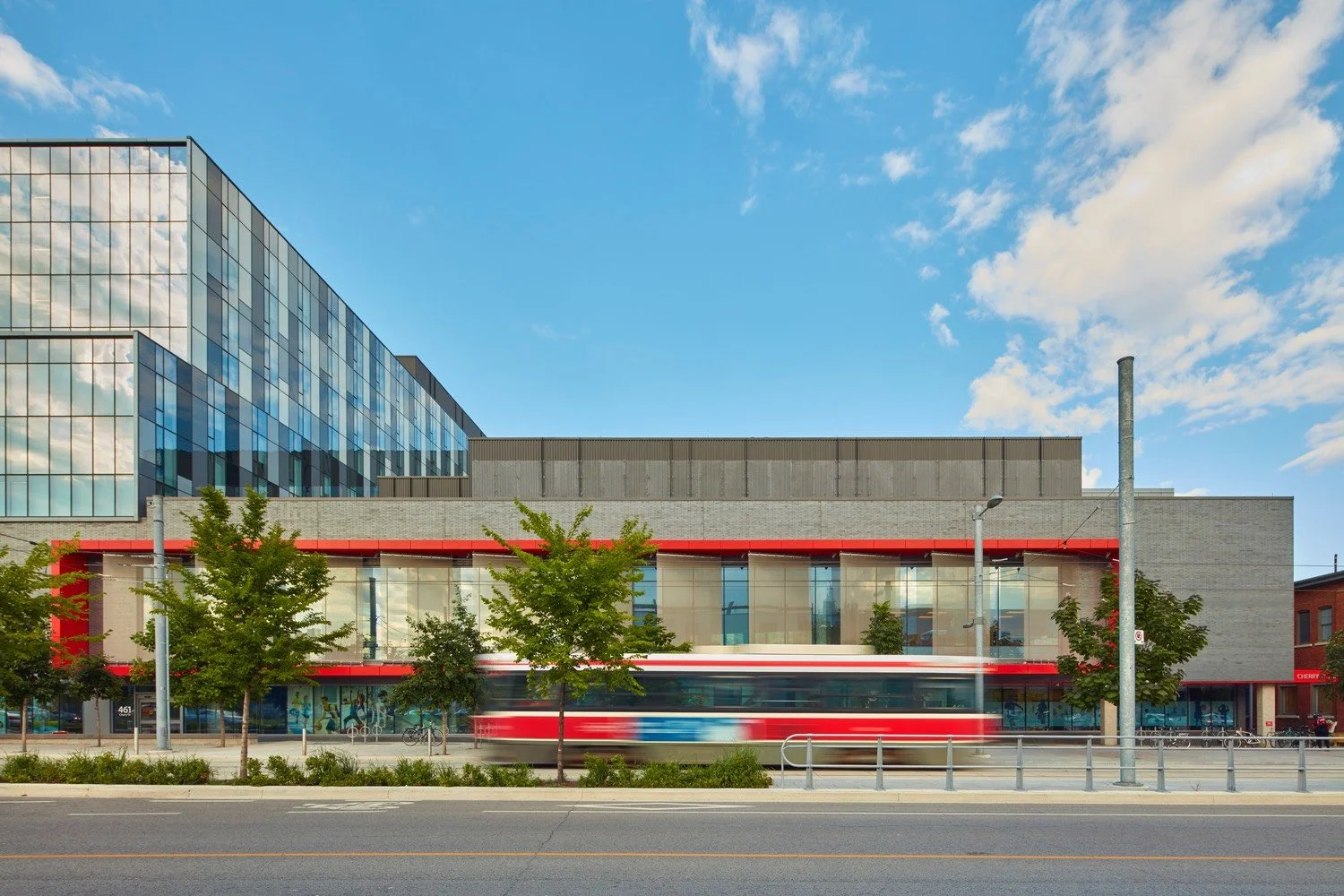
The upper-level windows on Cherry Street are shaded with a series of steel mesh panels and surrounded by a bright red frame that, with the red entrance canopy, forms a striking signature motif for the facility.
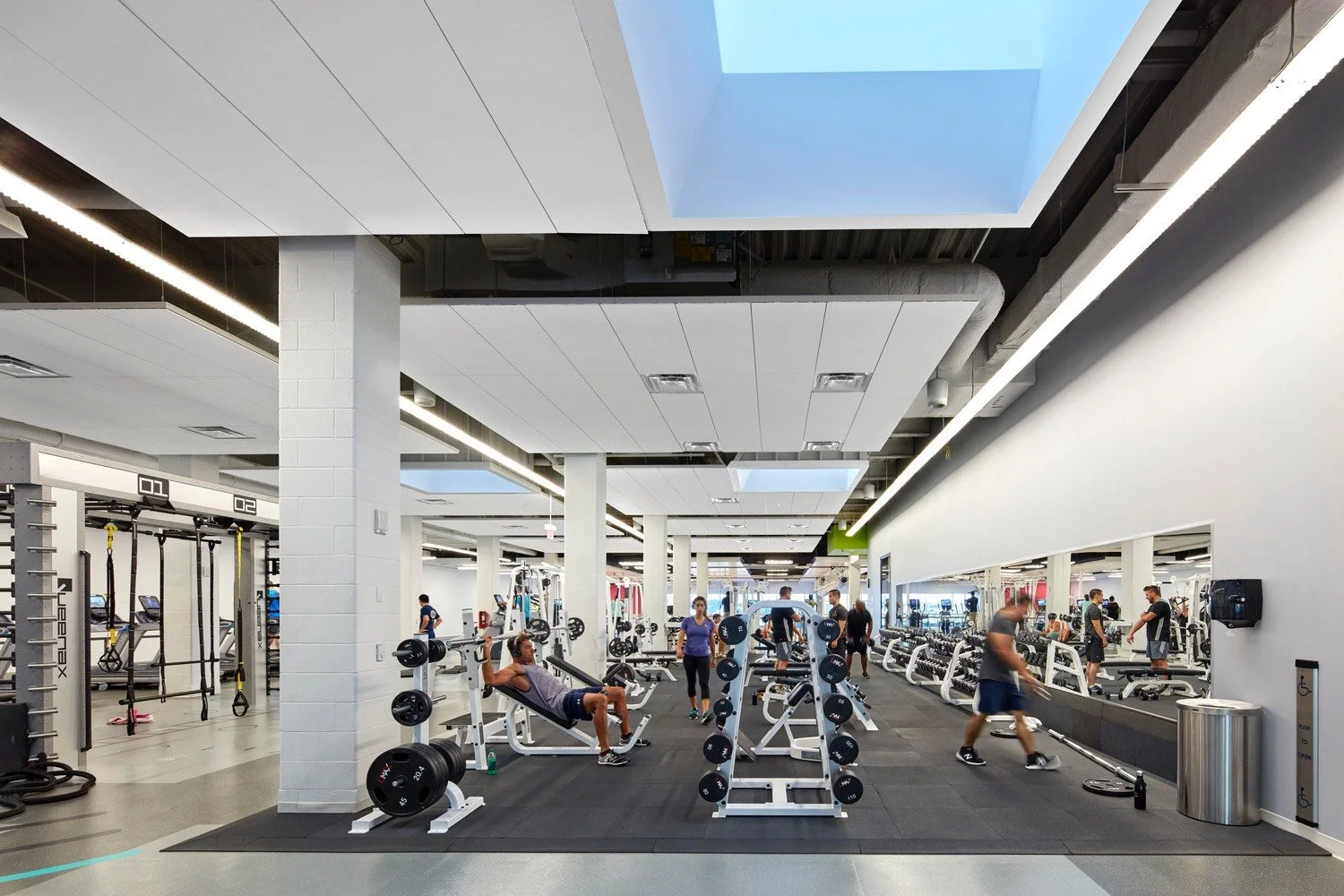
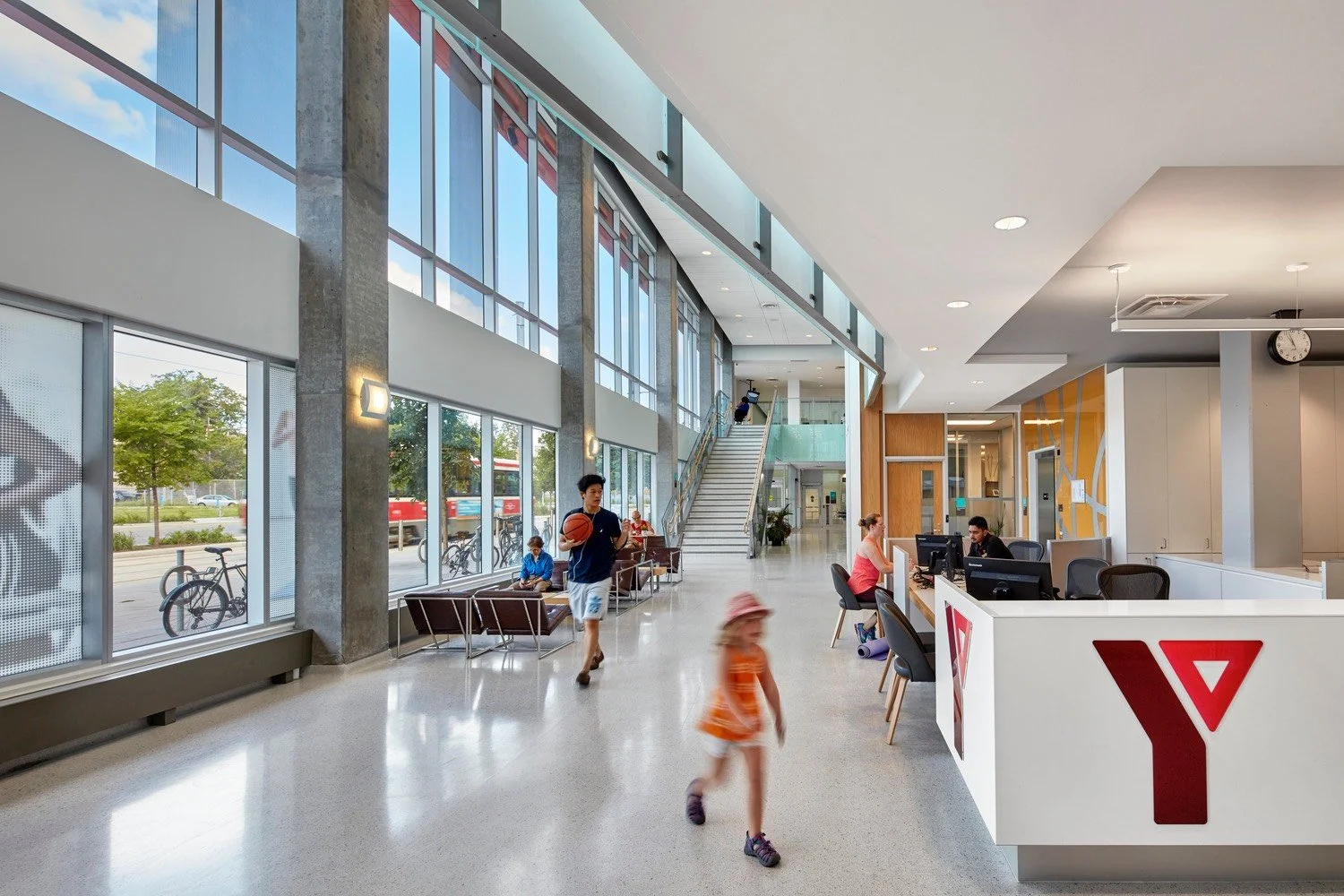
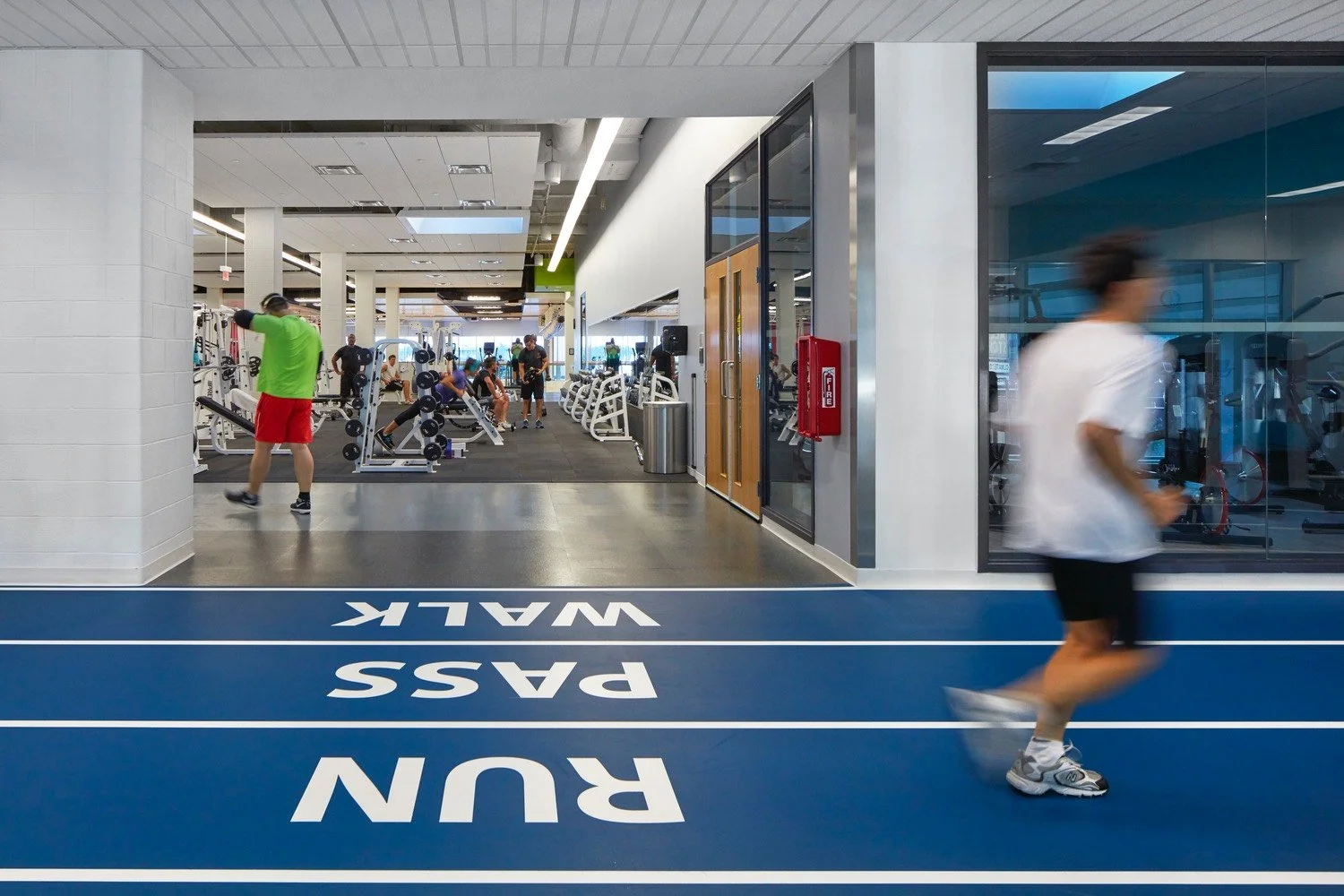
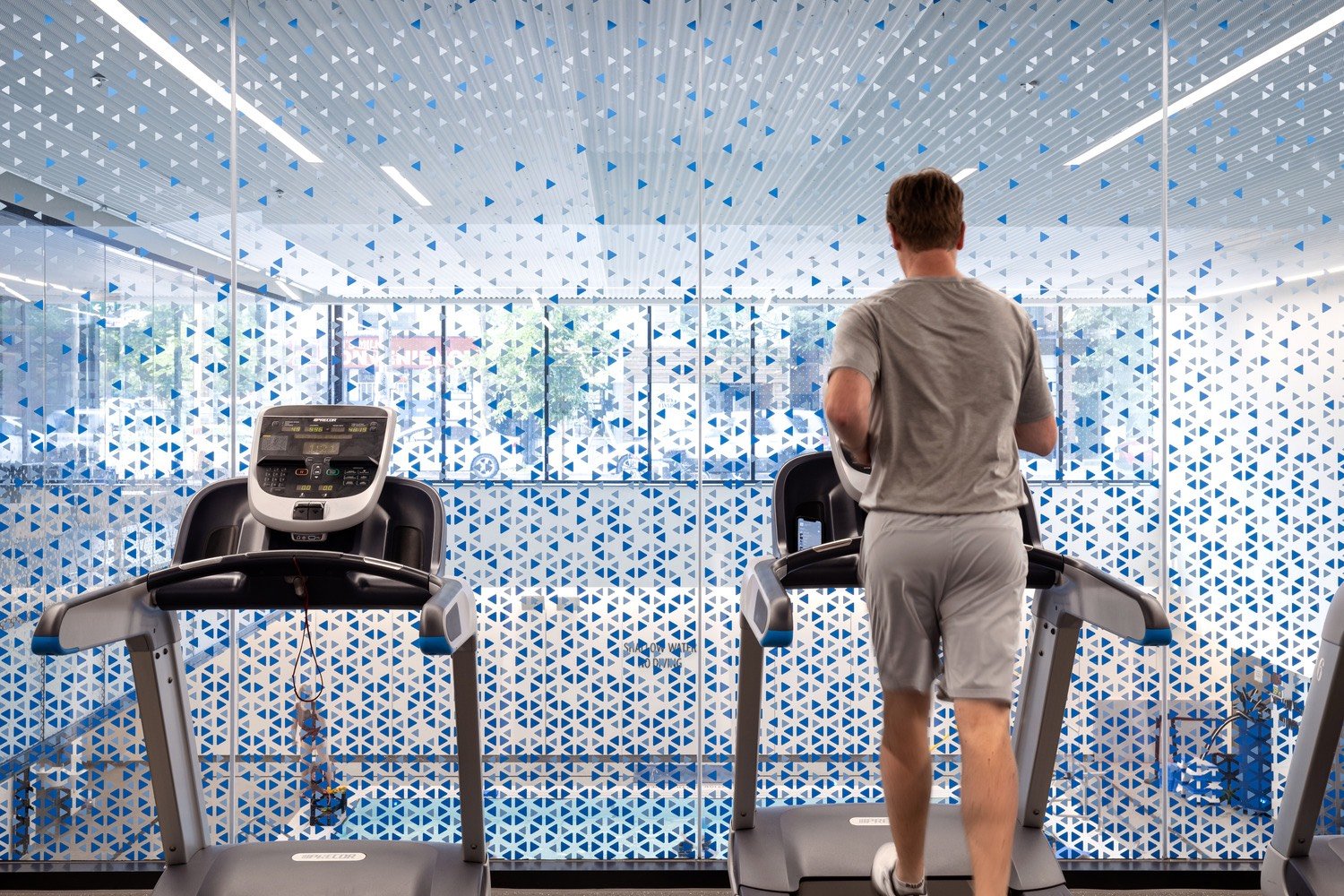
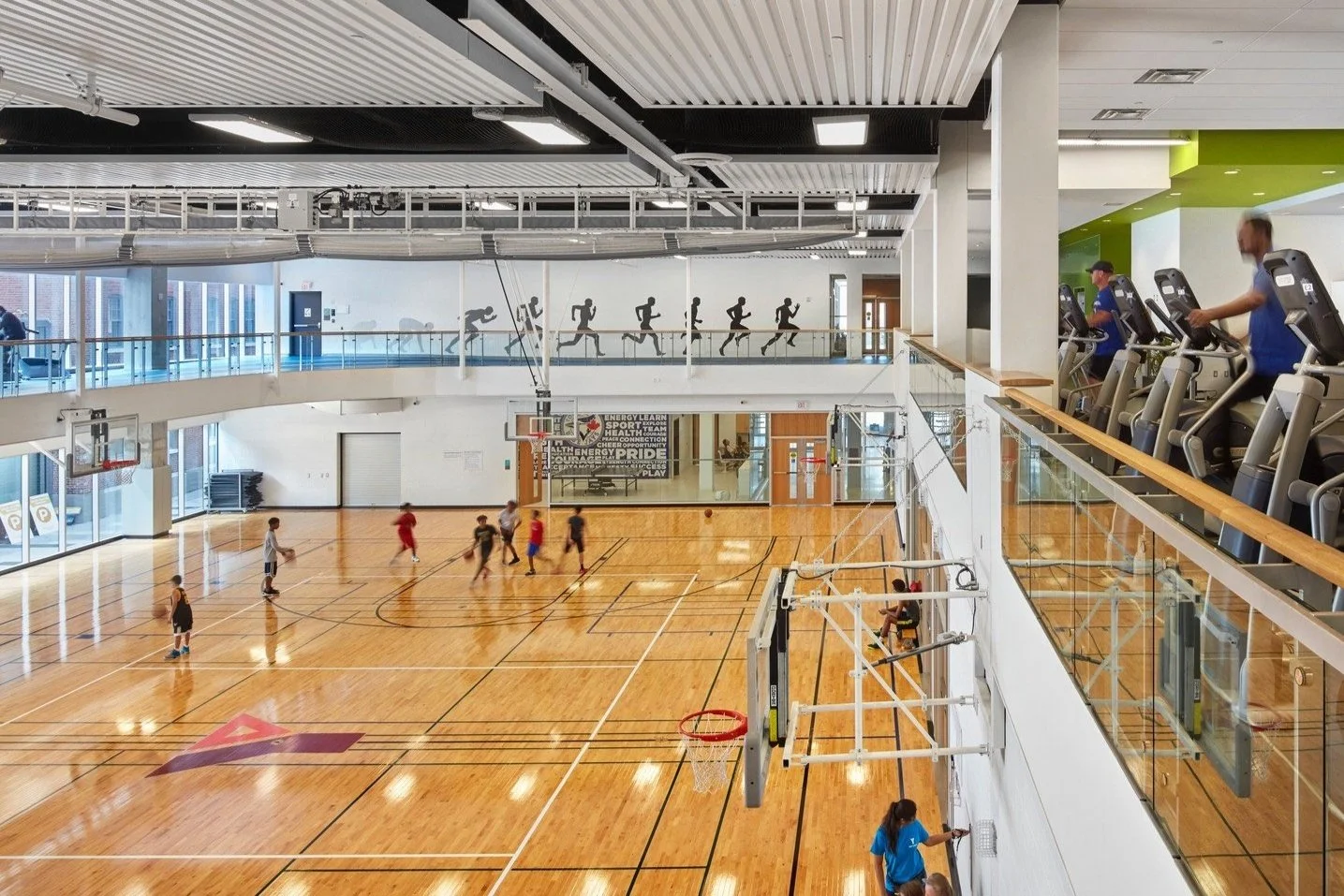
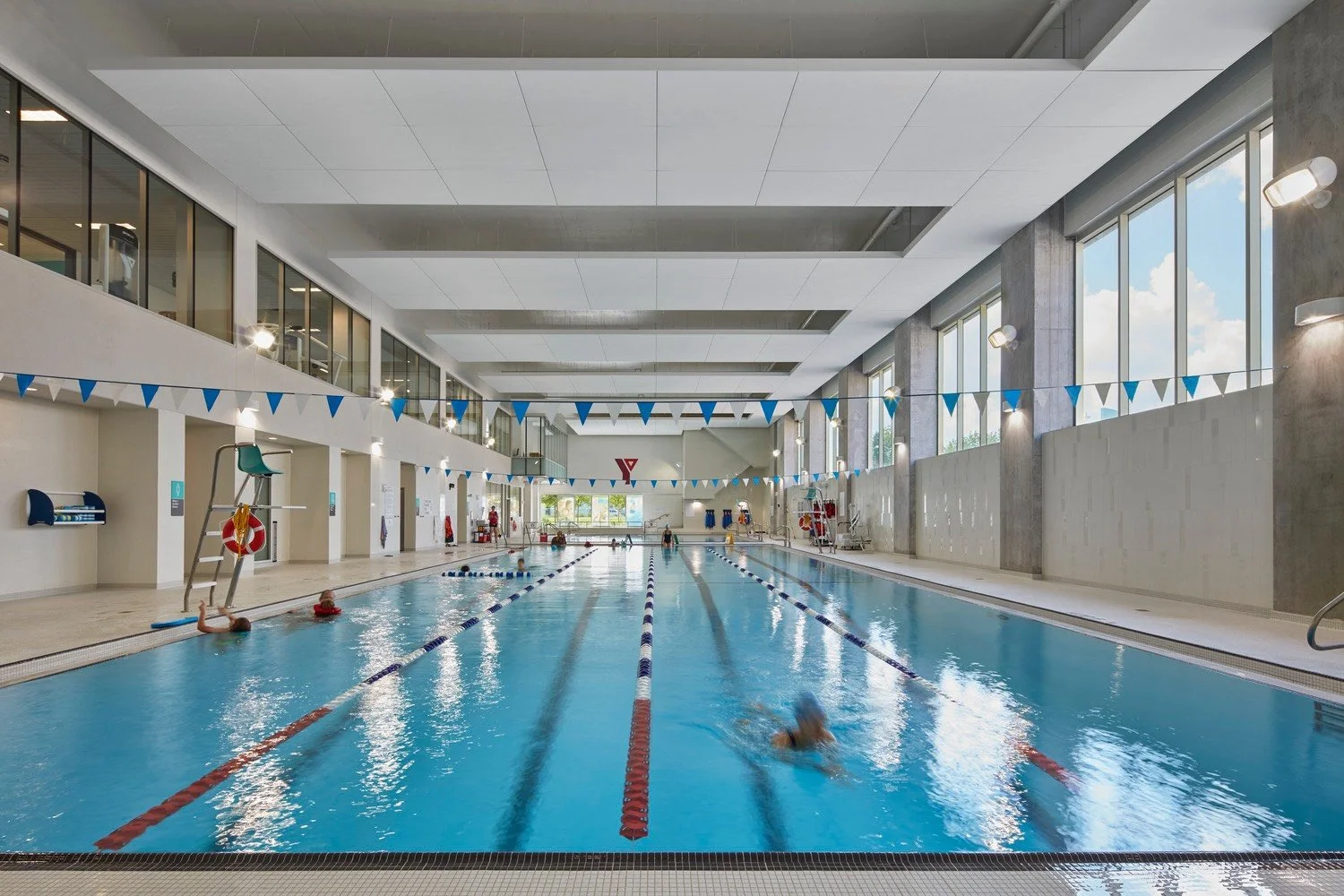
Copious natural light penetrates deep into the interior. Views are also opened up between primary spaces and between the two levels, creating natural wayfinding and energizing the facility.
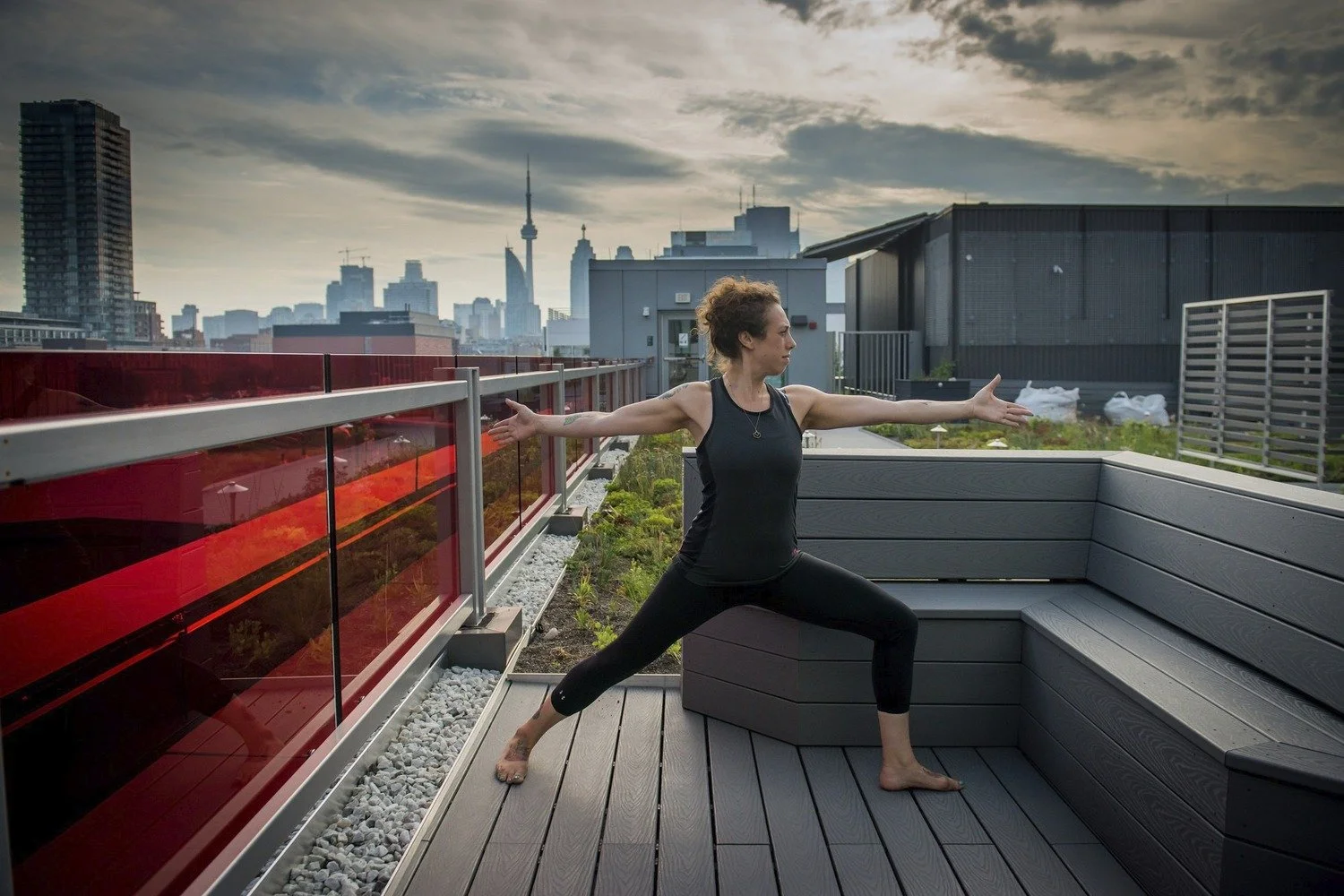
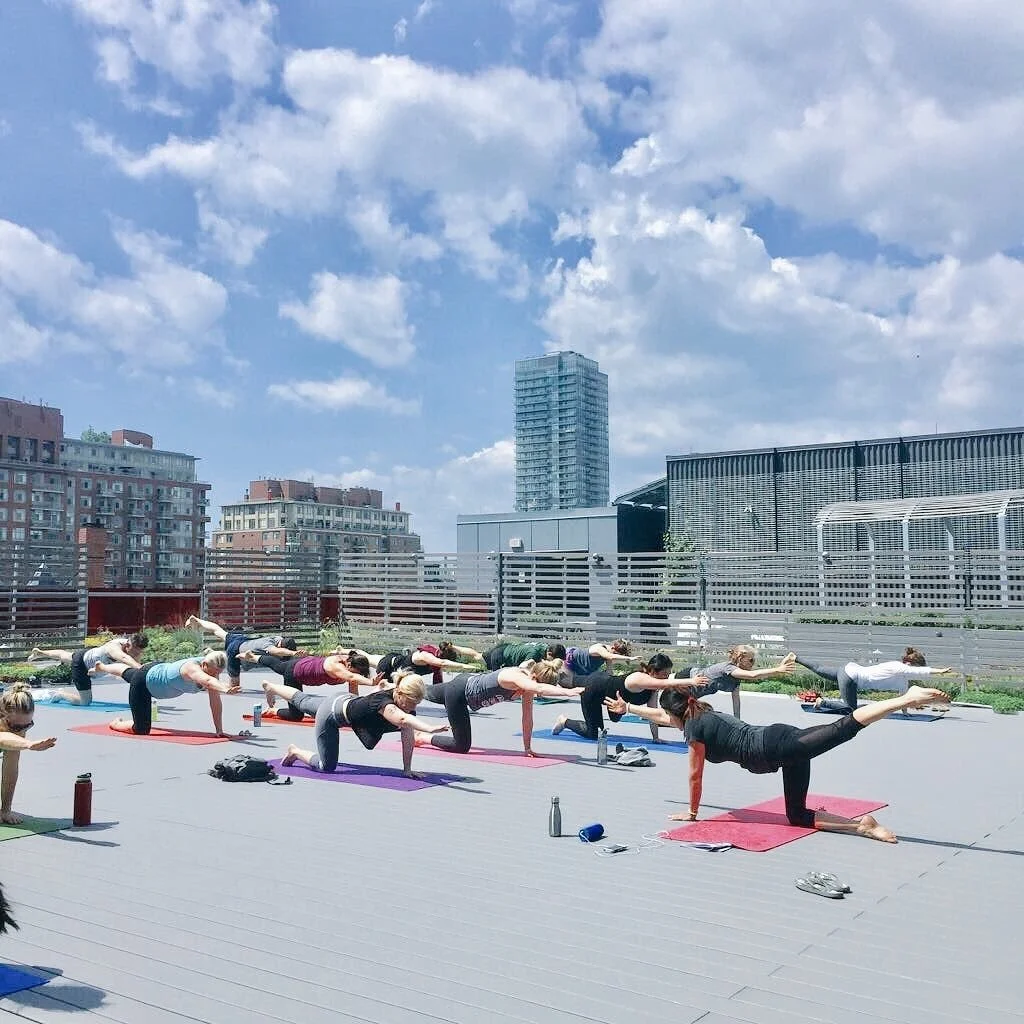
The building’s accessible green roof is a vibrant and unique community space. Its programming was designed entirely by means of a highly participatory engagement process that involved over 200 neighbourhood residents.