University of Auckland Waipapa Taumata Rau,
Hiwa, Recreation Centre
Auckland Tāmaki Makaurau , New Zealand Aotearoa
In Collaboration with Warren & Mahoney and Haumi
-
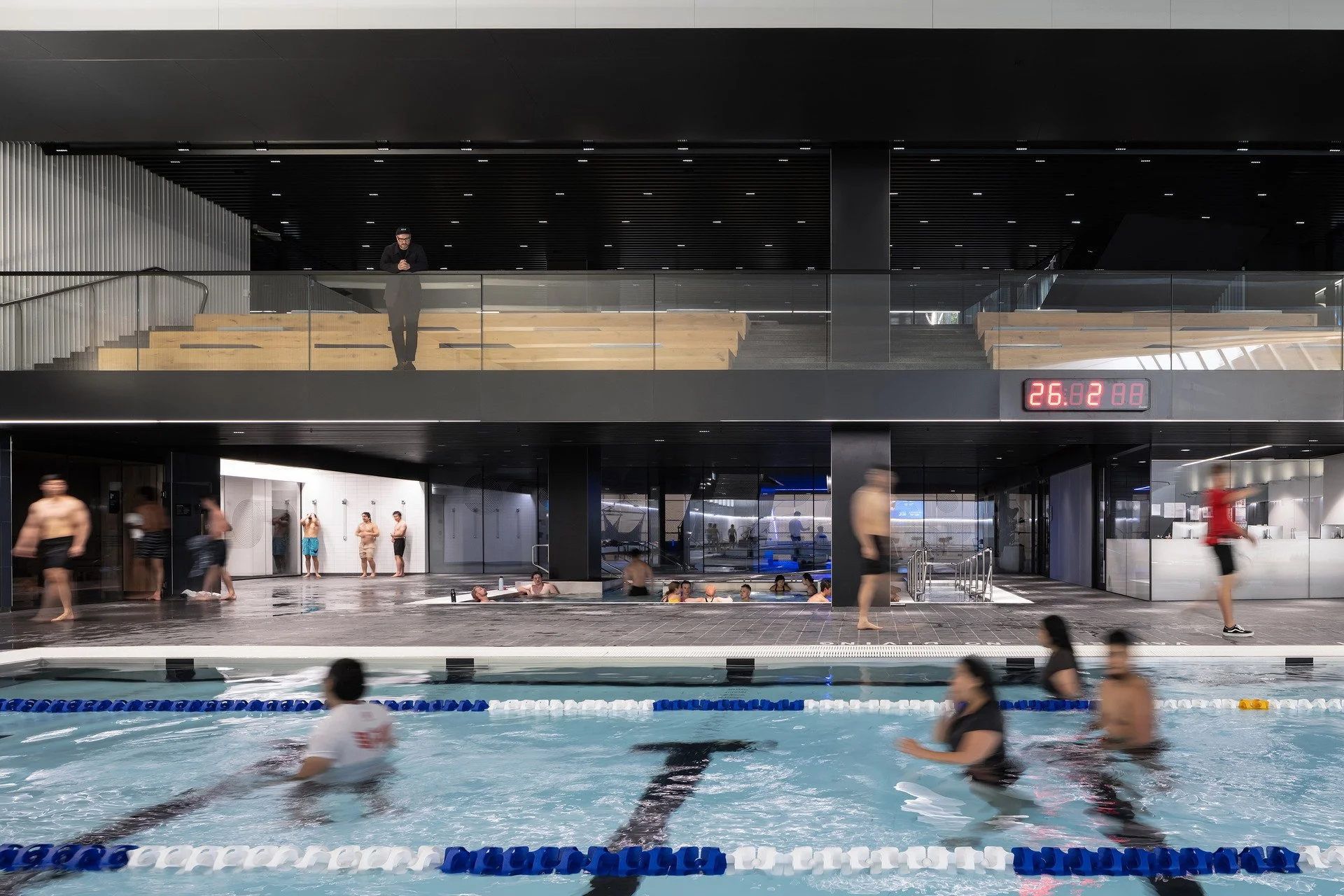
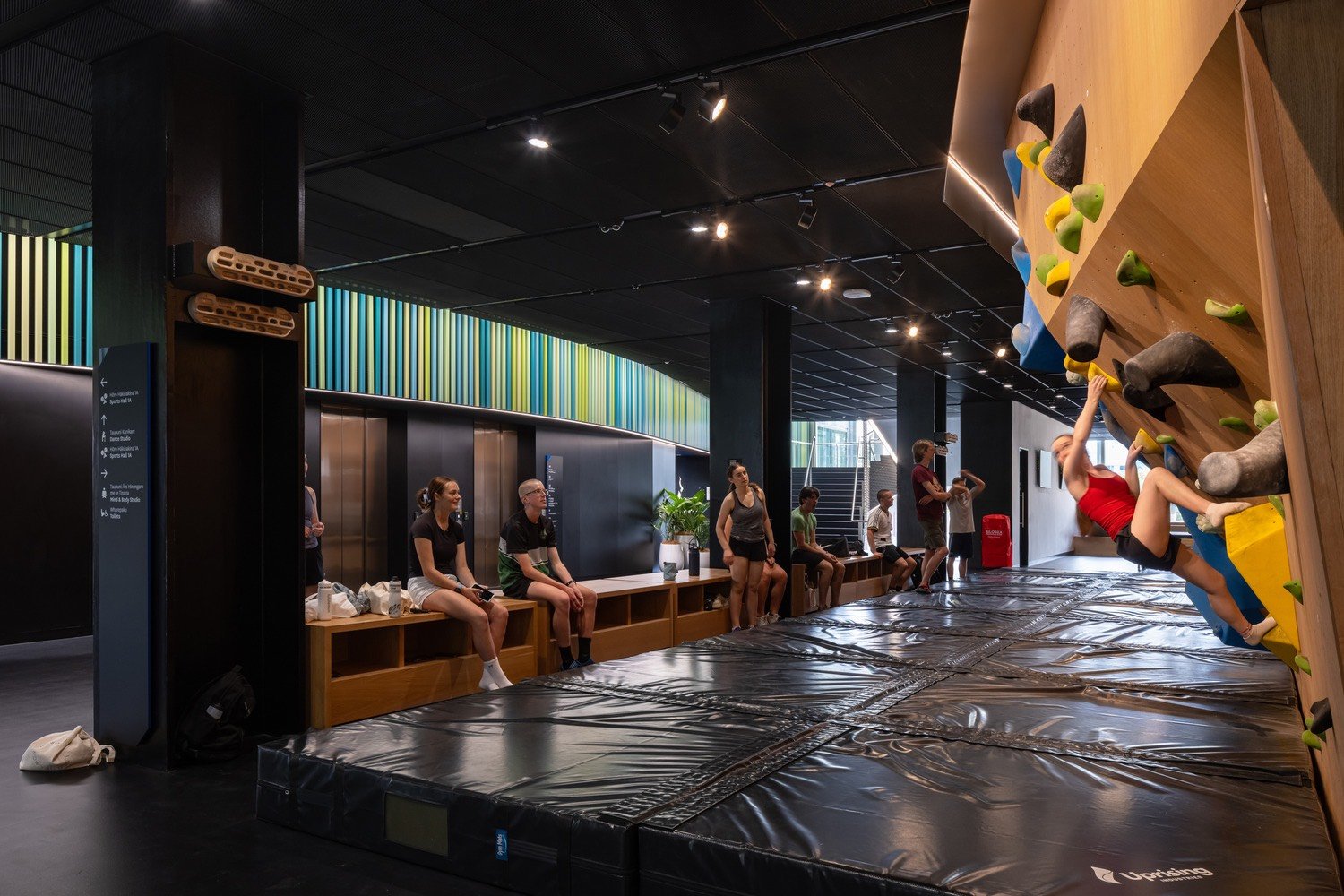
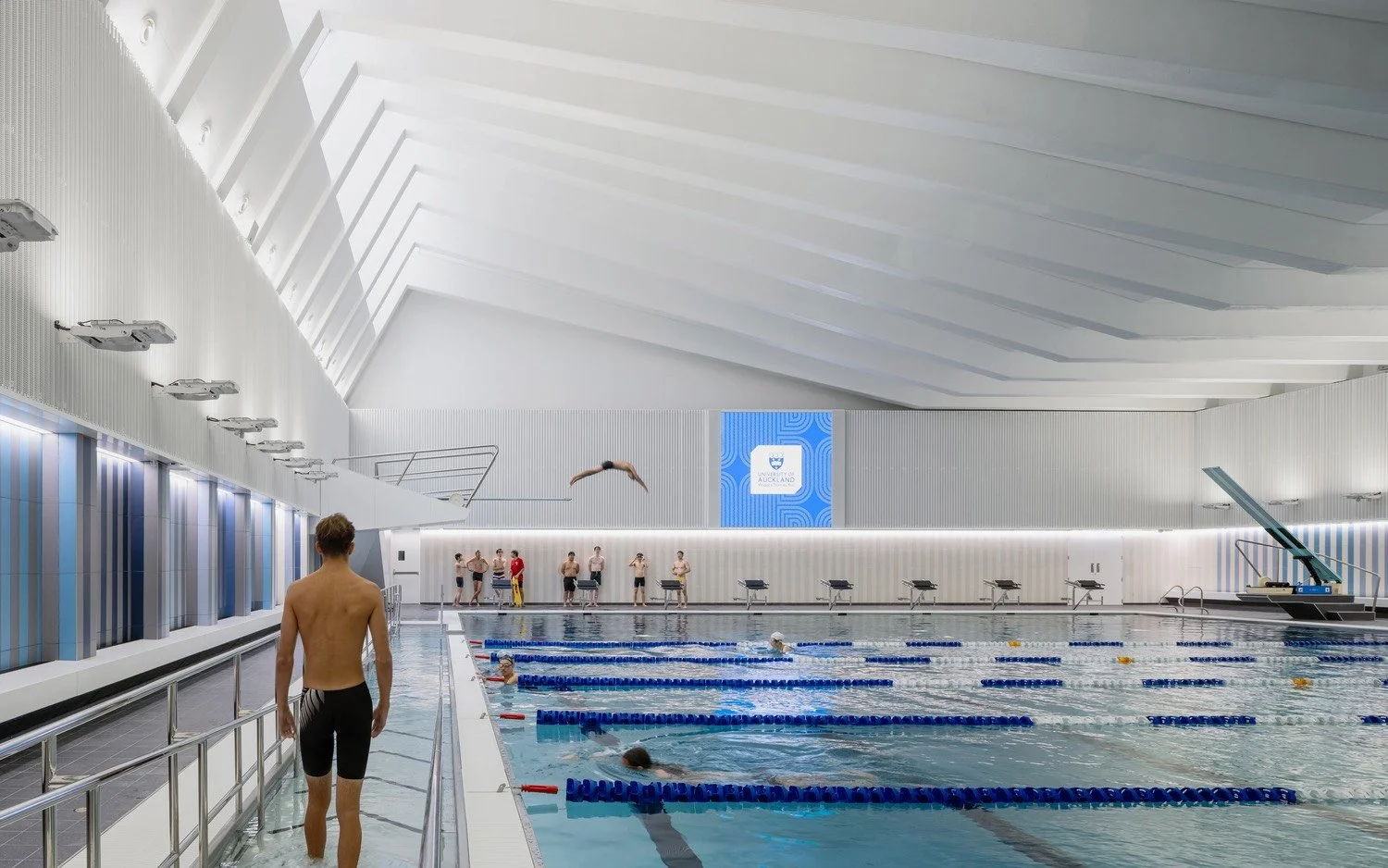
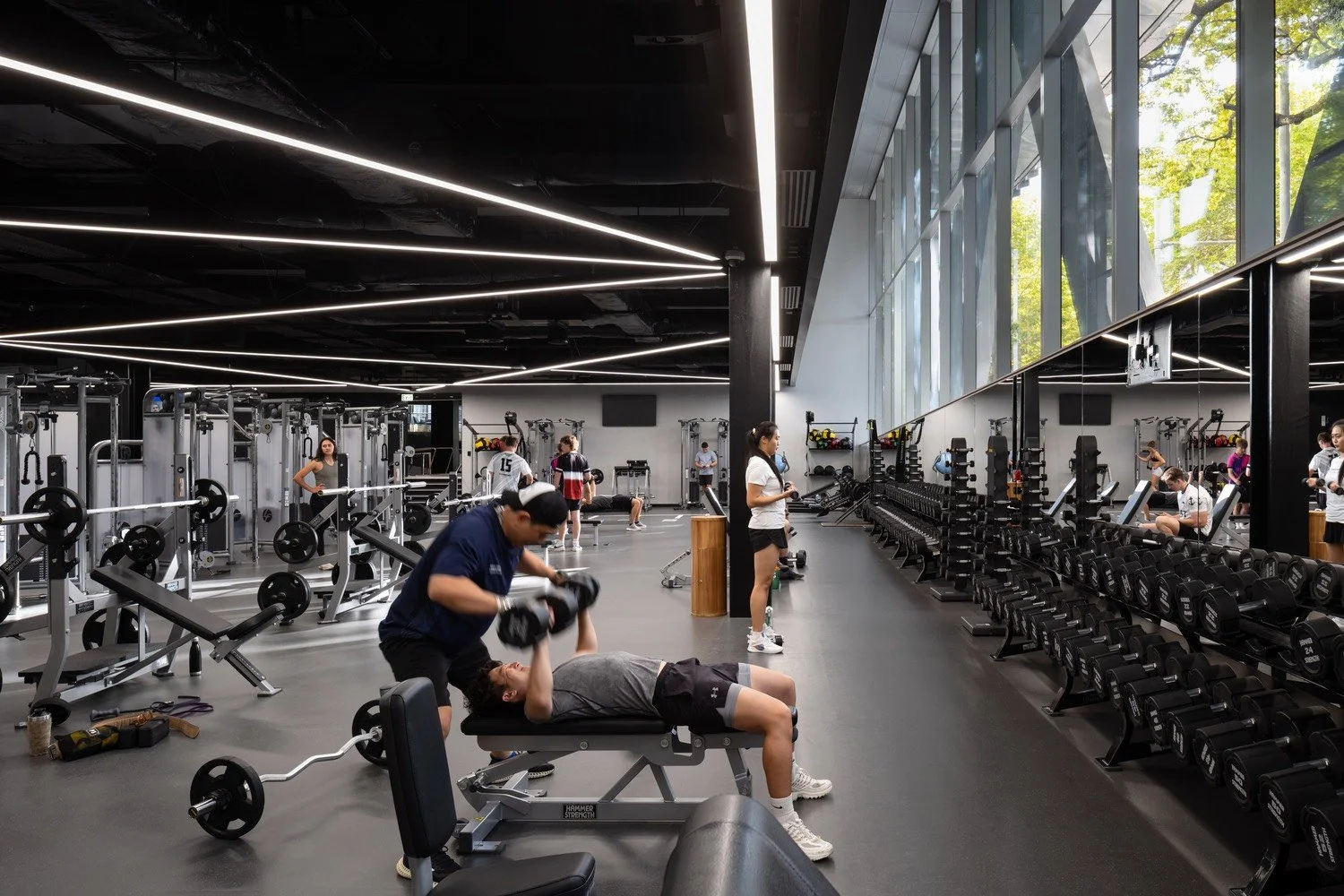
Aquatic Centre (Lap Pool, Leisure Pool, Spa Pool, Sauna, Diving Tower, Wet Classroom), Gymnasium, Racquet Sports Courts, Fitness Space, Weight Rooms, Circuit Studio, Immersive Spin Studio, Dance Studio, Yoga Studio, Boxing Studio, Events Sports Hall, Practice Sports Hall, Indoor Track, Bouldering Wall, Lounge, Cafe, Retail, Student Plaza, Rooftop Pitch, Rooftop Fitness and Track
-
Structural / Mechanical / Electrical / Civil: BECA
Landscape: LandLAB -
2026 Society for College & University Planning (SCUP): SCUP/AIA-CAE Excellence in Architecture Award
2025 Graphic Design USA (GDUSA): Design Award
2025 Association of Registered Graphic Designers (RGD) Branding Award: Environmental / Experiential
2025 Association of Registered Graphic Designers (RGD) Branding Award: Social Good Award
2025 D&AD Pencil Award: Graphic Design (Environmental)
2025 Applied Arts Design Award (Cultural Overlay)
2025 Applied Arts Design Award (Gamify Movement)
2025 New Zealand Architecture Award: Education
2025 New Zealand Institute of Architects (NZIA): Auckland Architecture Award
2025 New Zealand Property Industry Award: Supreme Award
2025 New Zealand Property Industry Award: Education Property Award
2025 World Architecture Festival (WAF) Award: Completed Buildings (Sport)
2025 International Olympic Committee (IOC) / International Association for Sports and Leisure Facilities (IAKS): Architecture Prize
2025 Designers Institute of New Zealand: Best Design Award (Private, Public & Institutional Spaces)
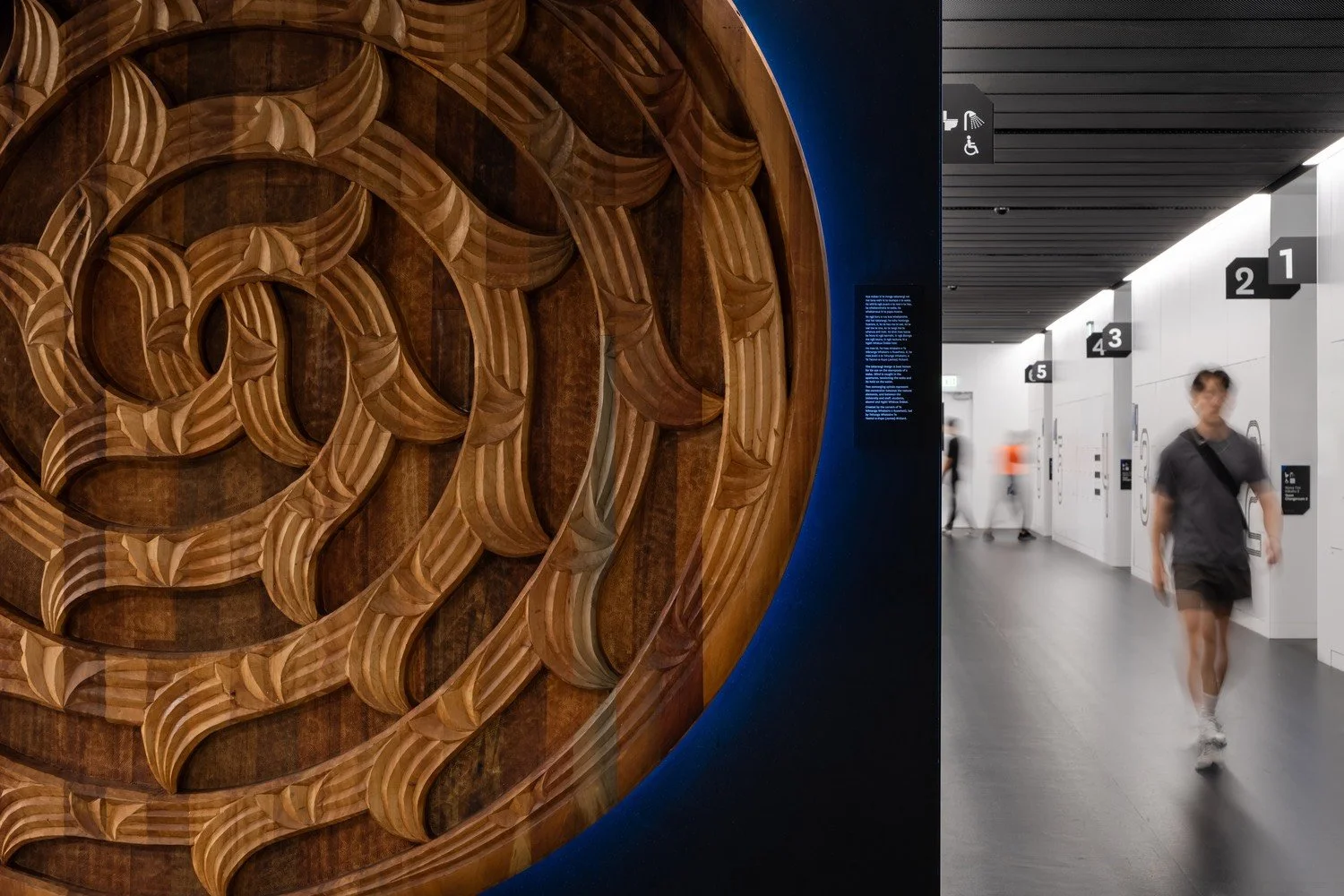
This international competition-winning design, submitted in collaboration with local architects Warren and Mahoney, revitalizes a precinct of the university campus in the heart of the city of Auckland. Haumi, developed a project-specific cultural framework to consolidate the design direction, and embed cultural references and narrative woven into human-scaled details.
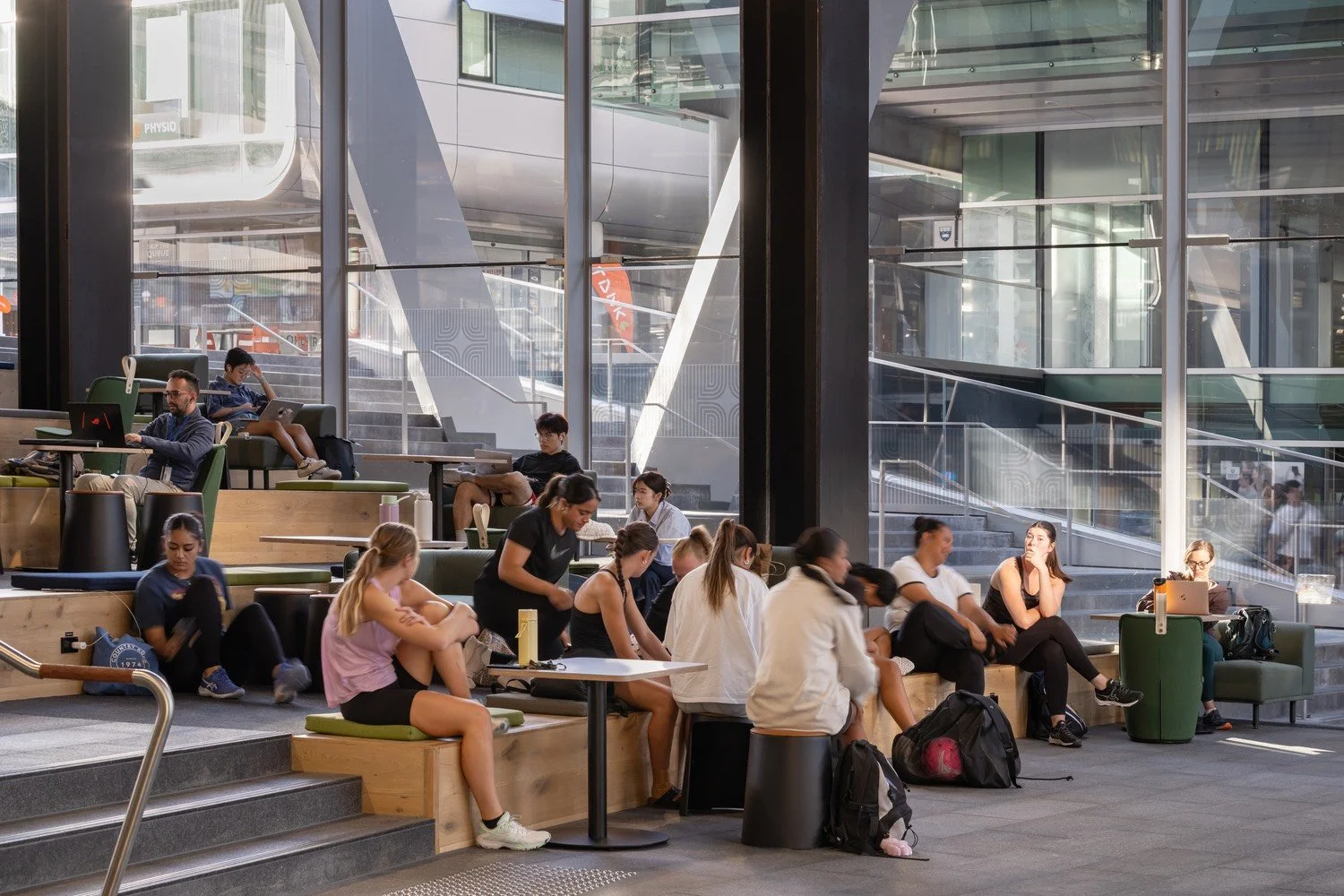
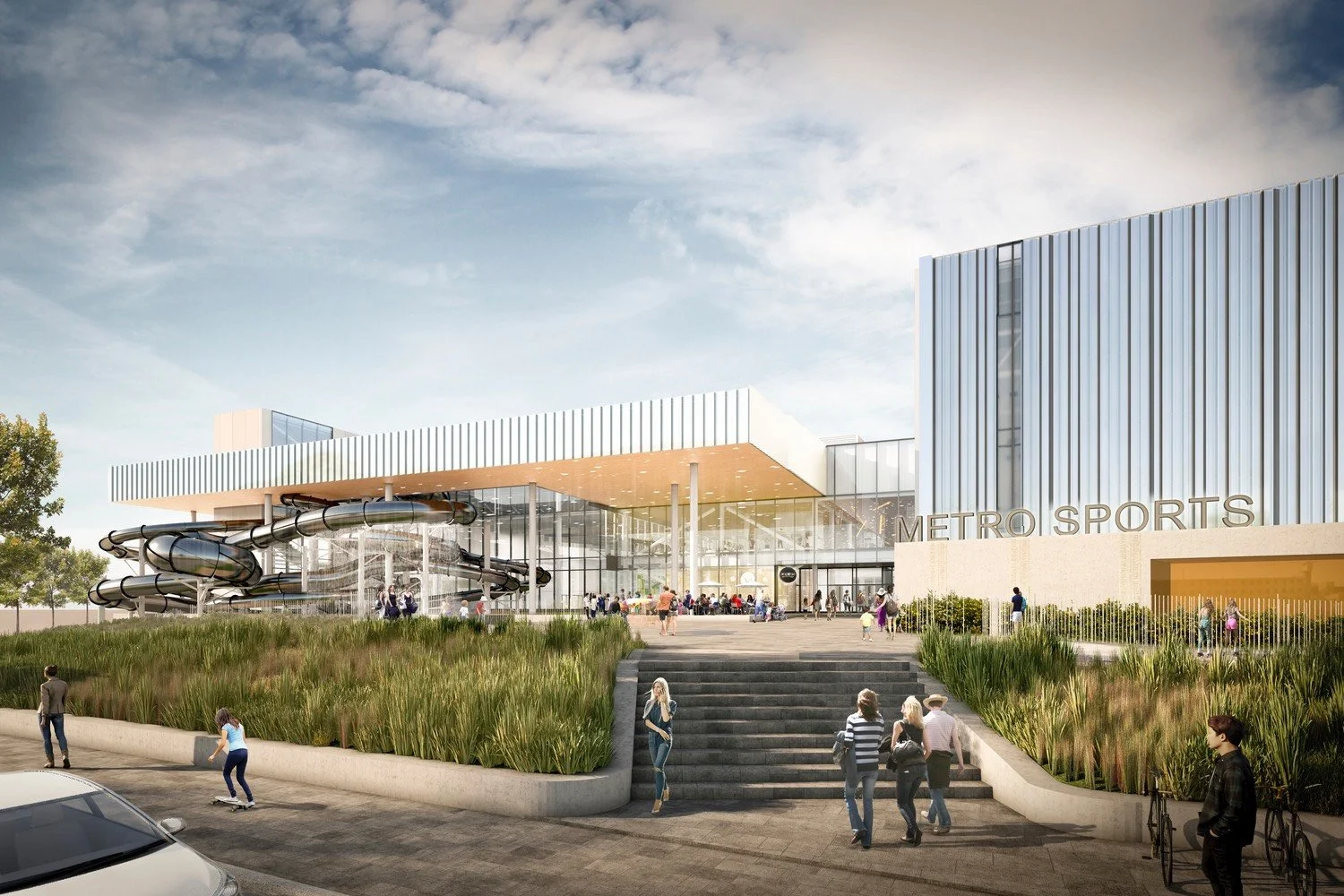
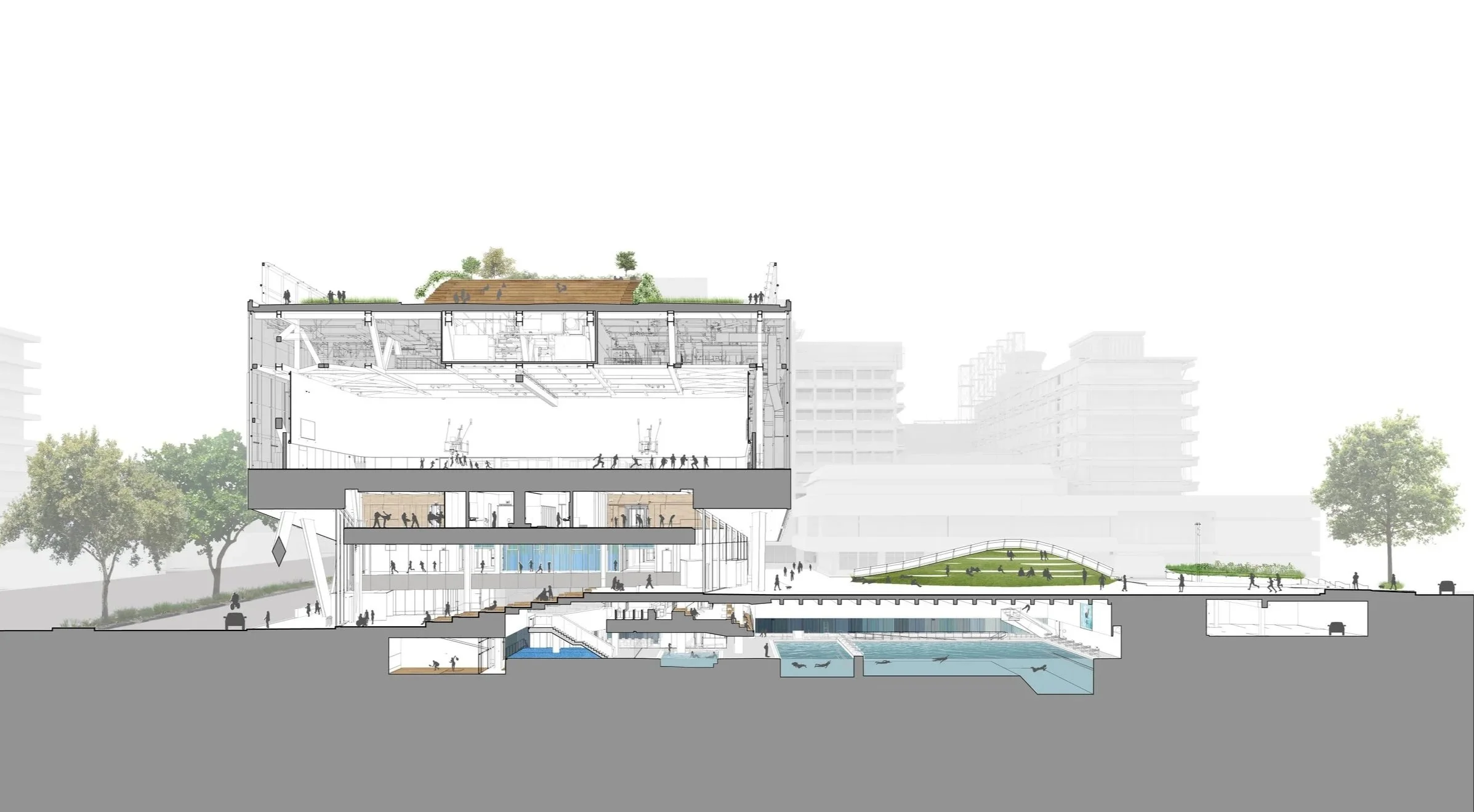
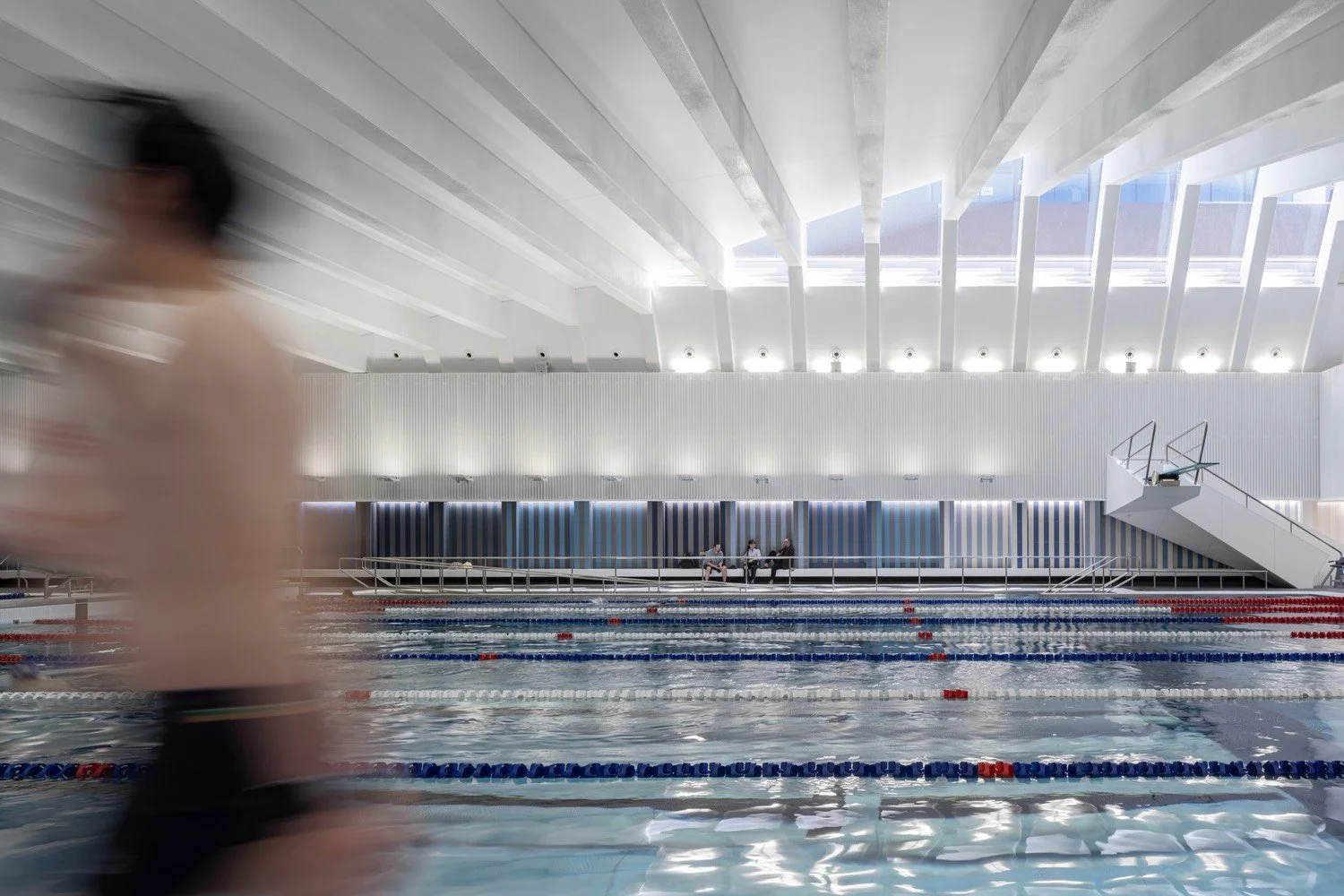
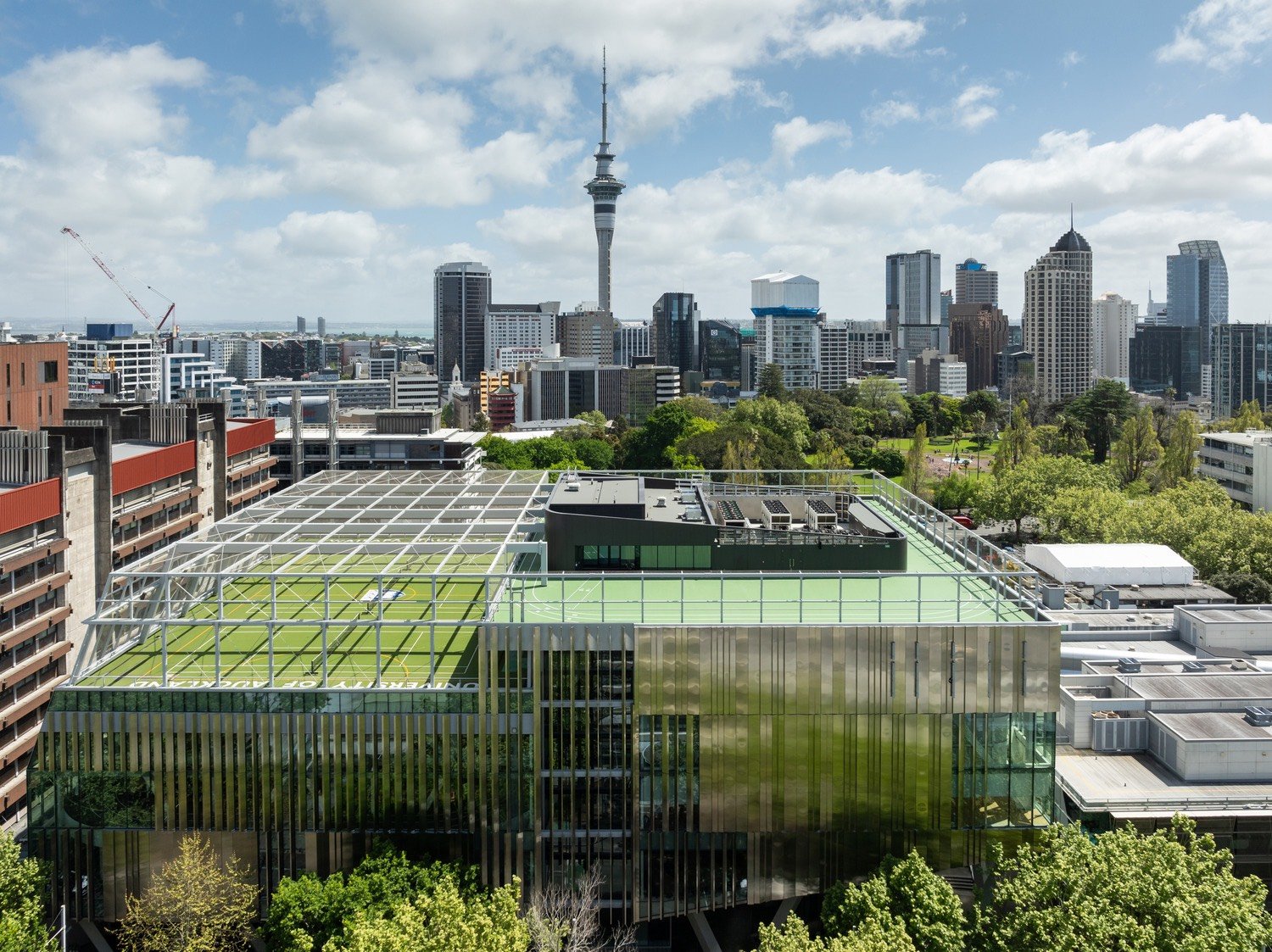
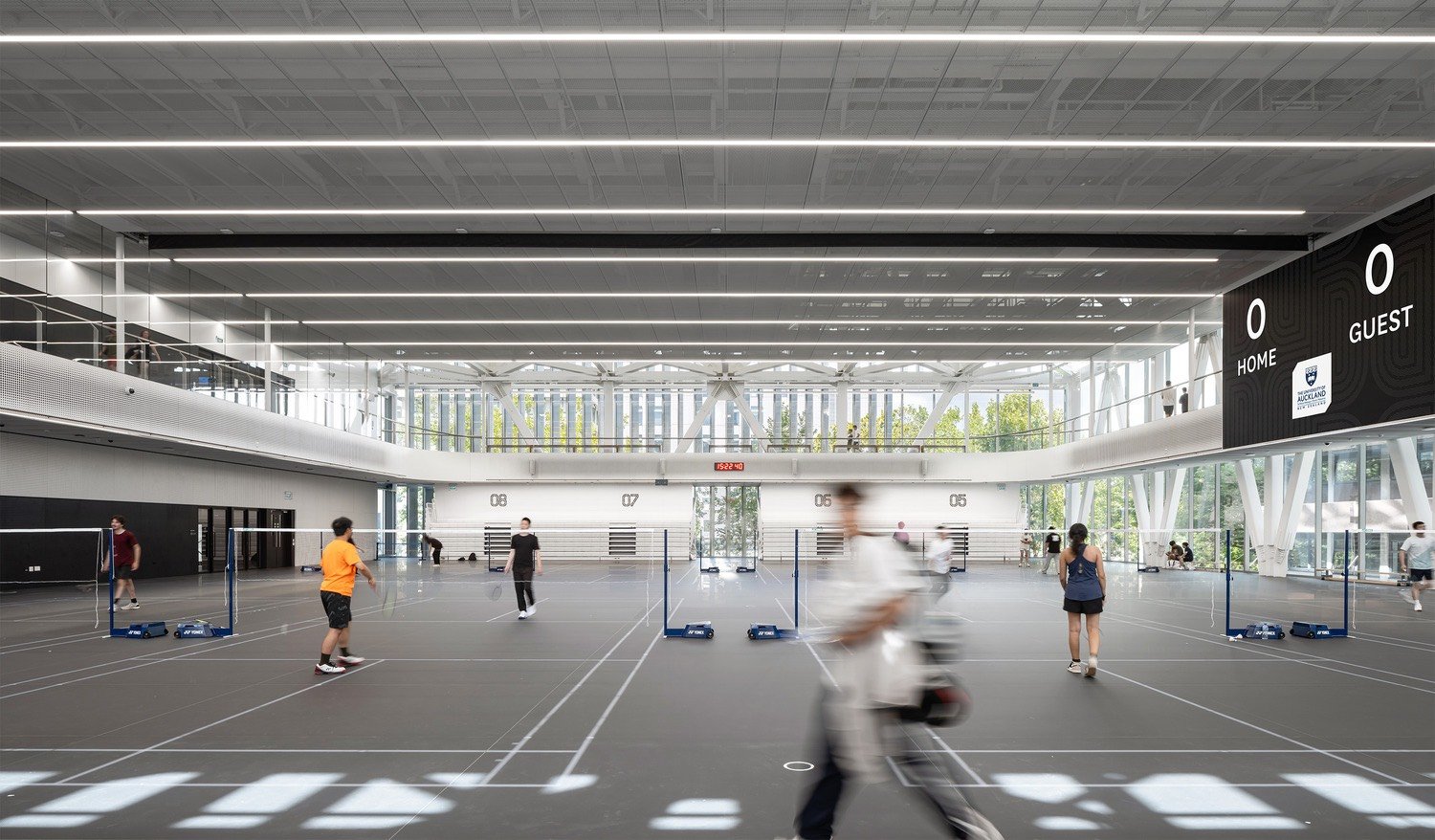
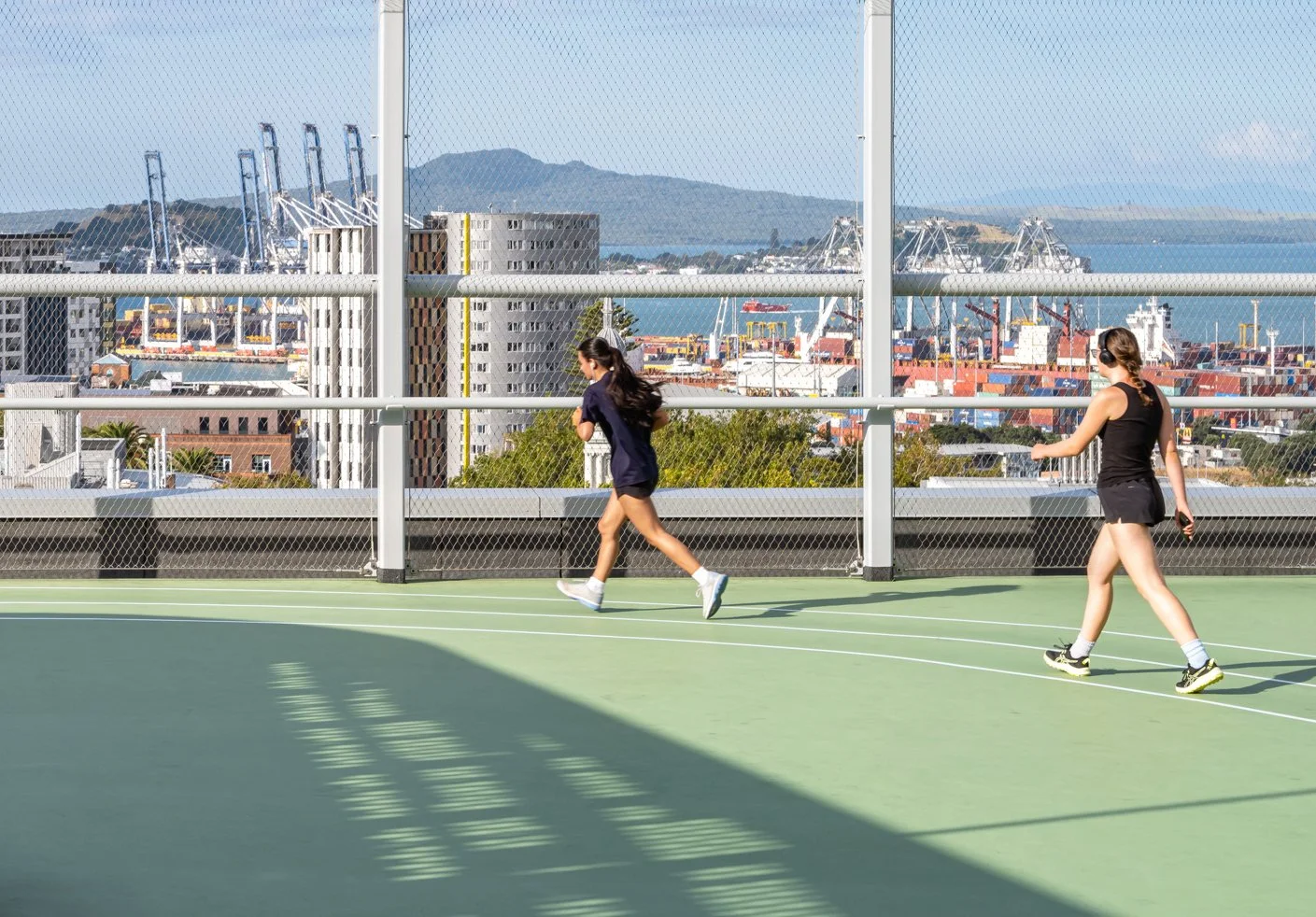
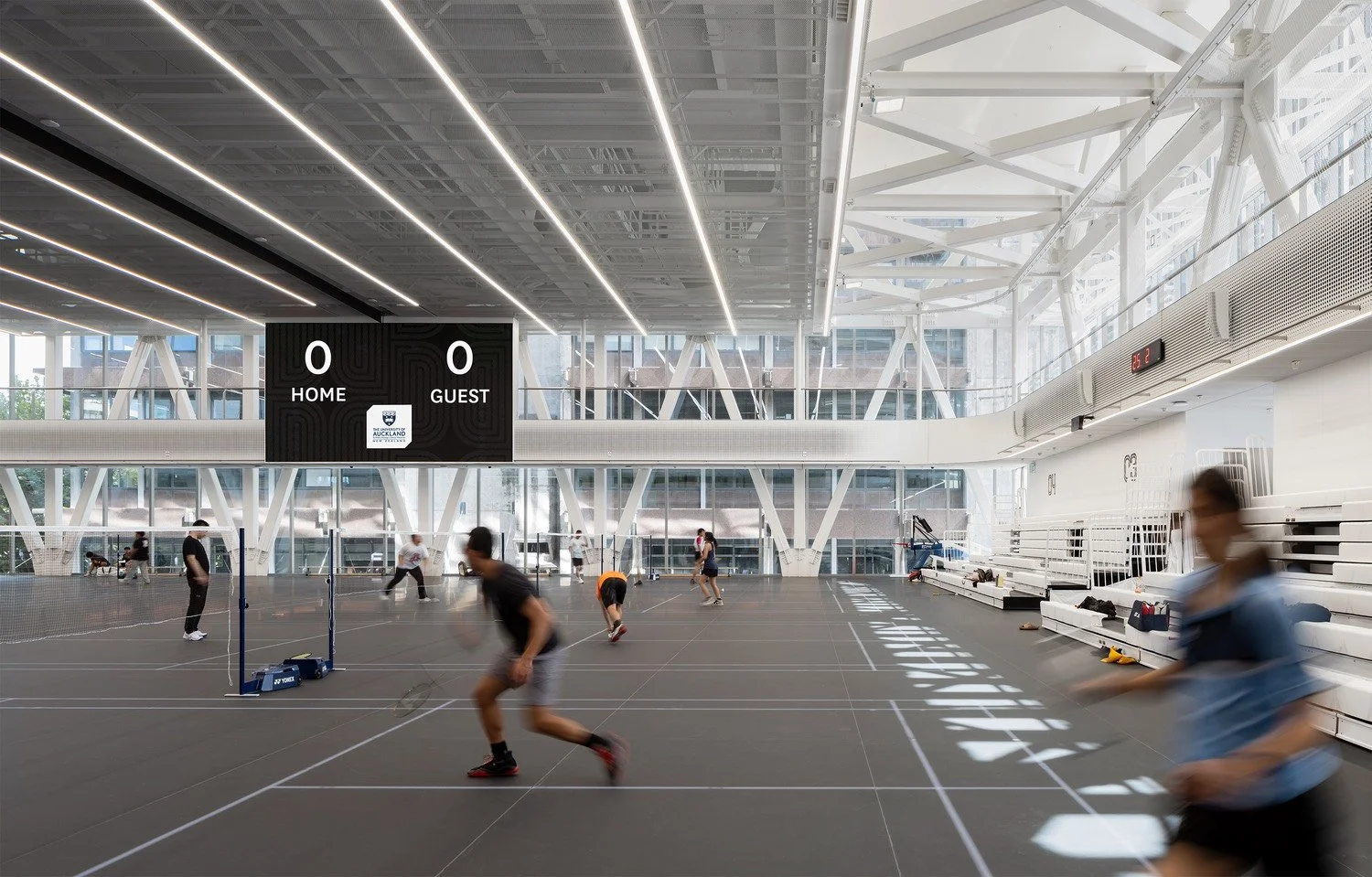
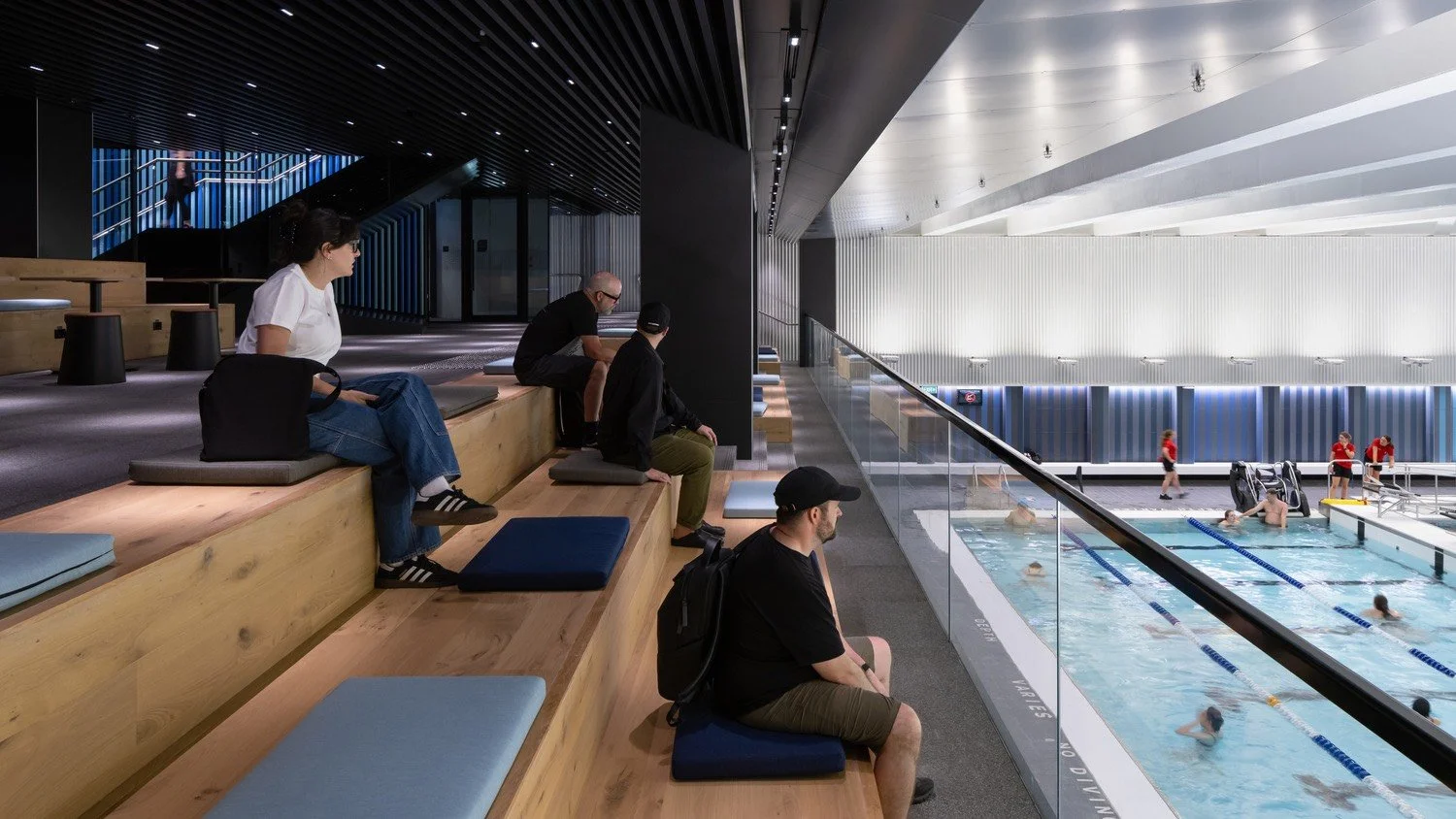
Spanning 232,000-sf across eight-storeys on a highly constrained site, Hiwa occupies an entire city block, serving 40,000 students and staff. It delivers competition, recreation, and wellness spaces in a unique vertical configuration of three large volumes: a below-ground aquatic hall, a 1,200-seat event sports hall, and a practice sports hall. These functions are seamlessly connected by a continuous vertical fitness circuit – stairs, mezzanine and rooftop running tracks place movement on display. Complementing its active programs, Hiwa also provides dedicated social and relaxation spaces to encourage community interaction.
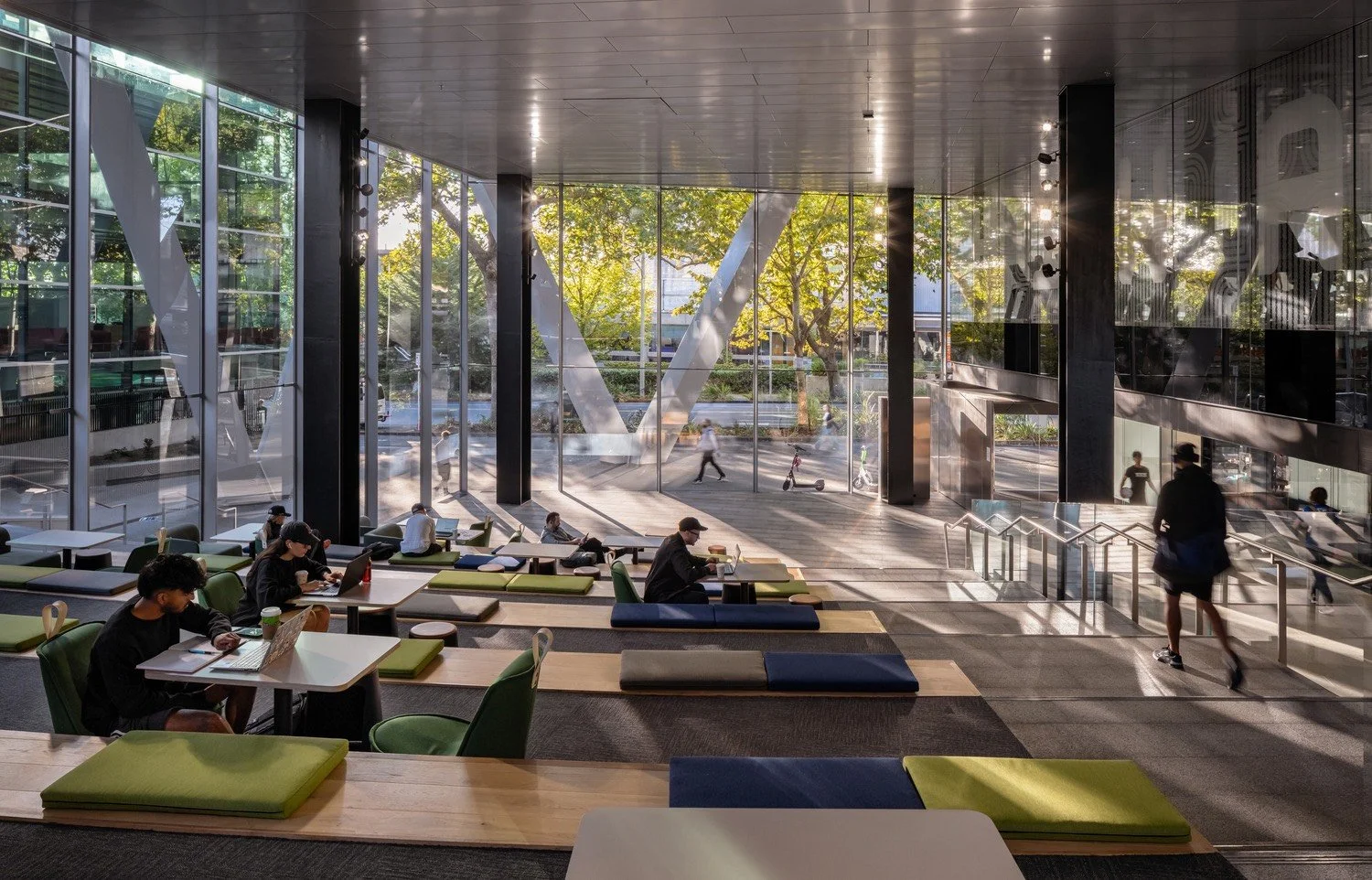
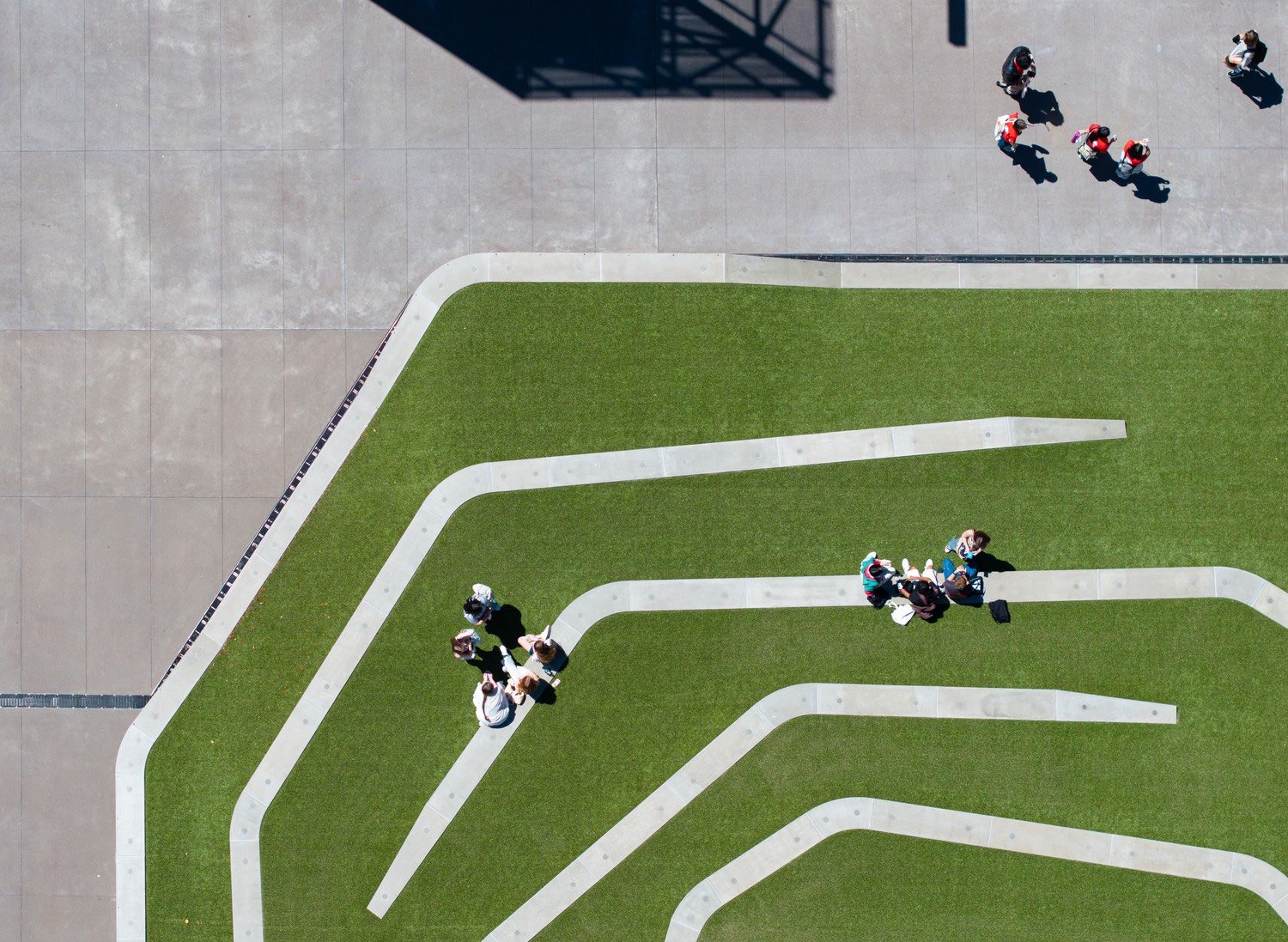
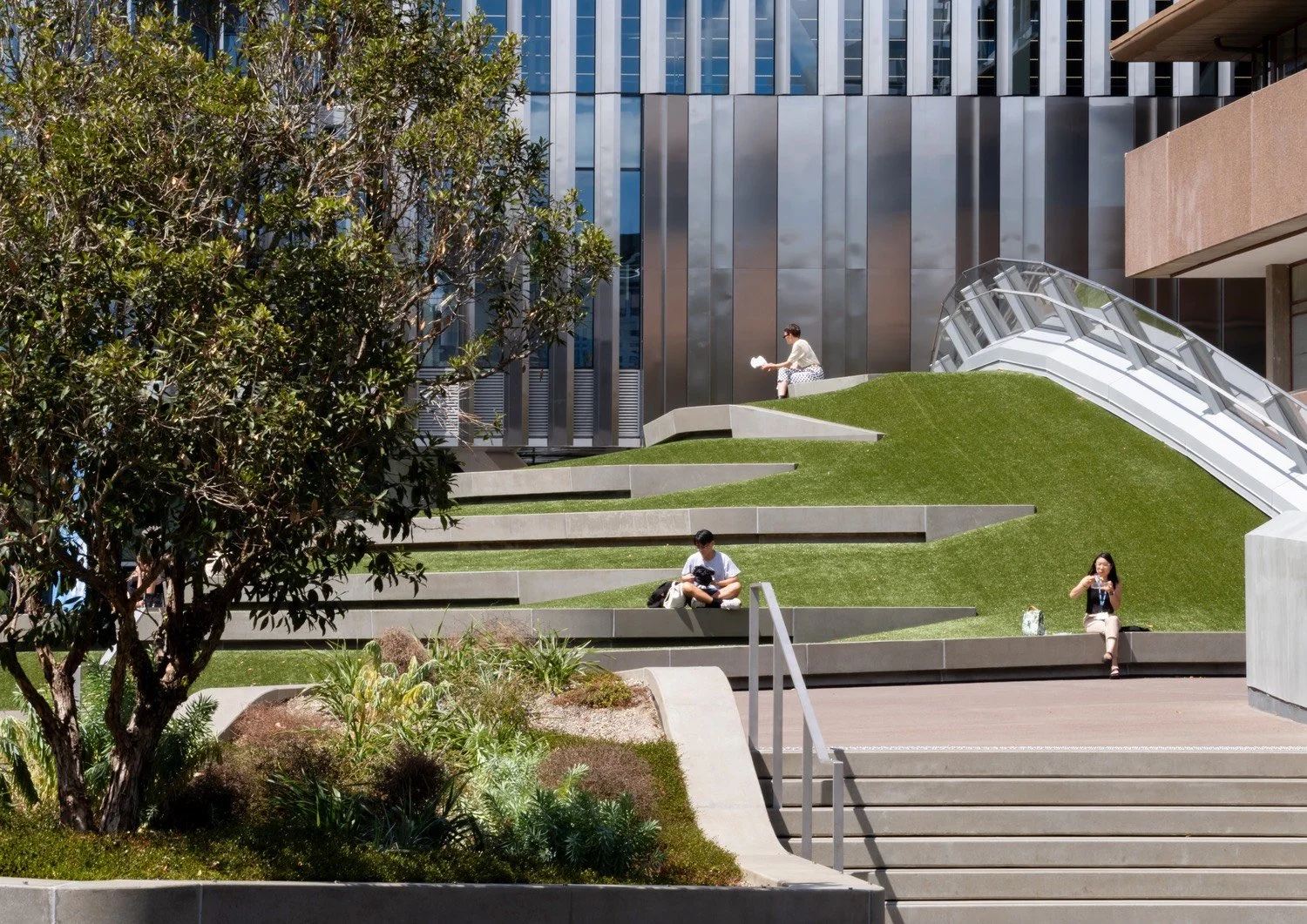
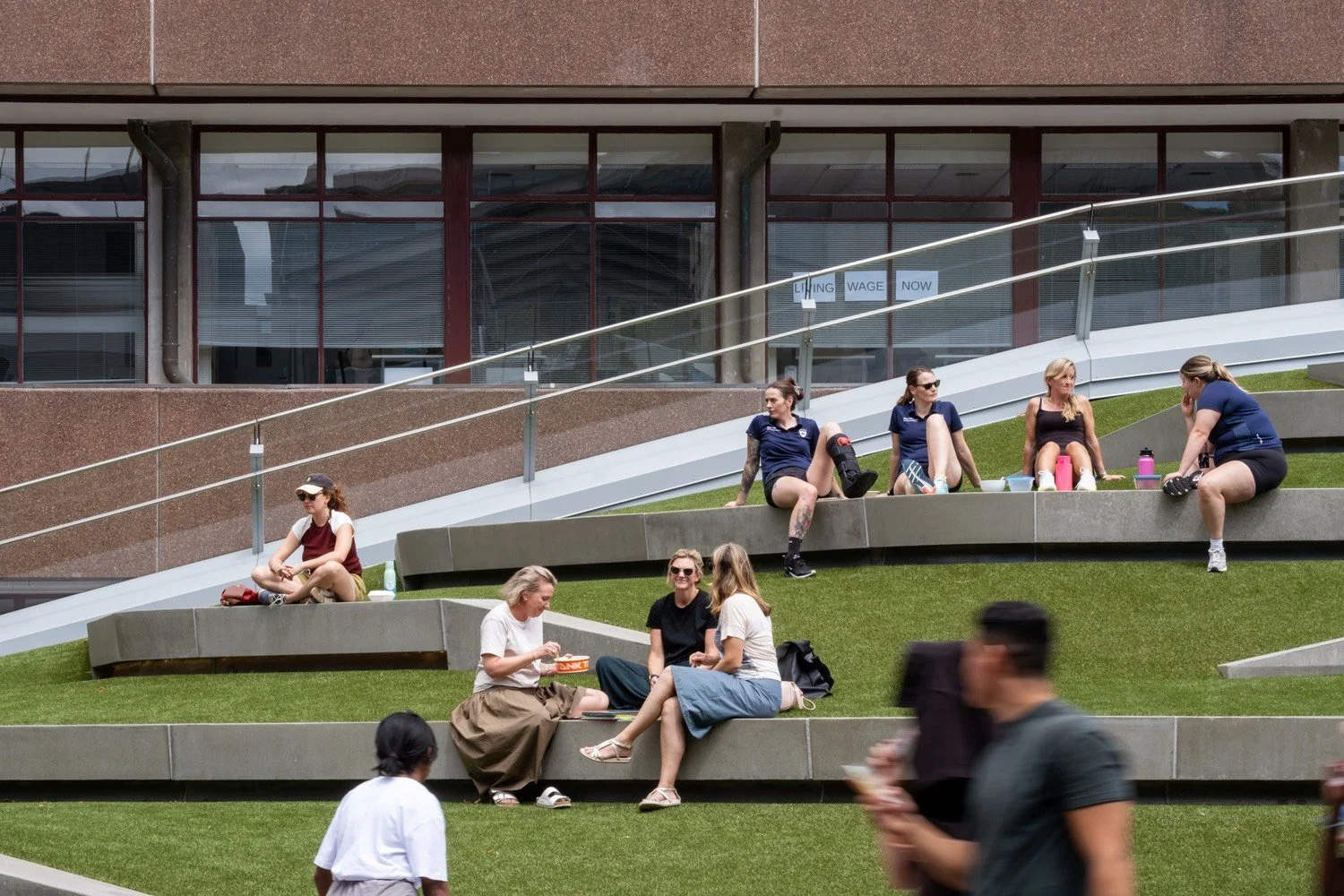
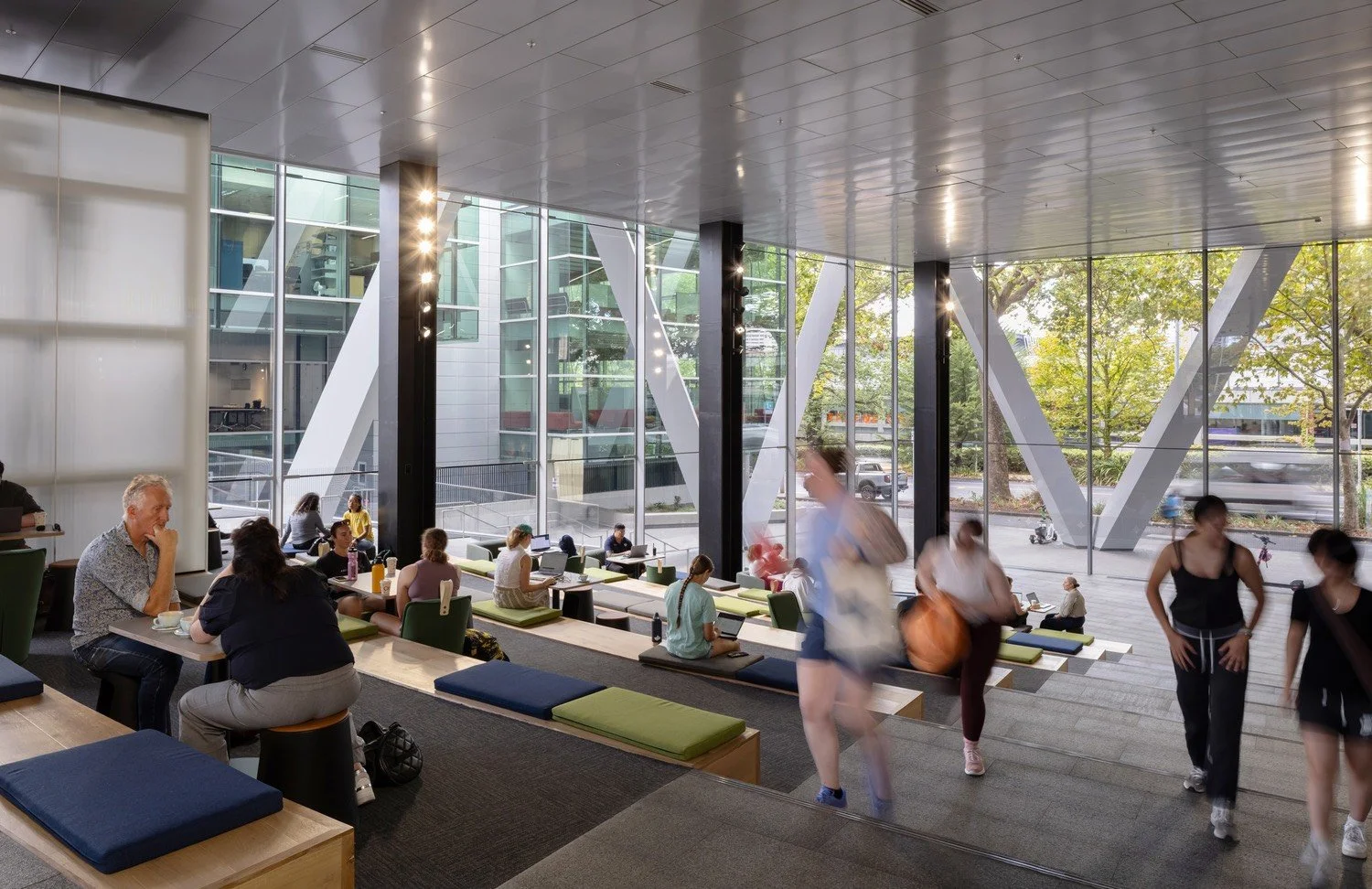
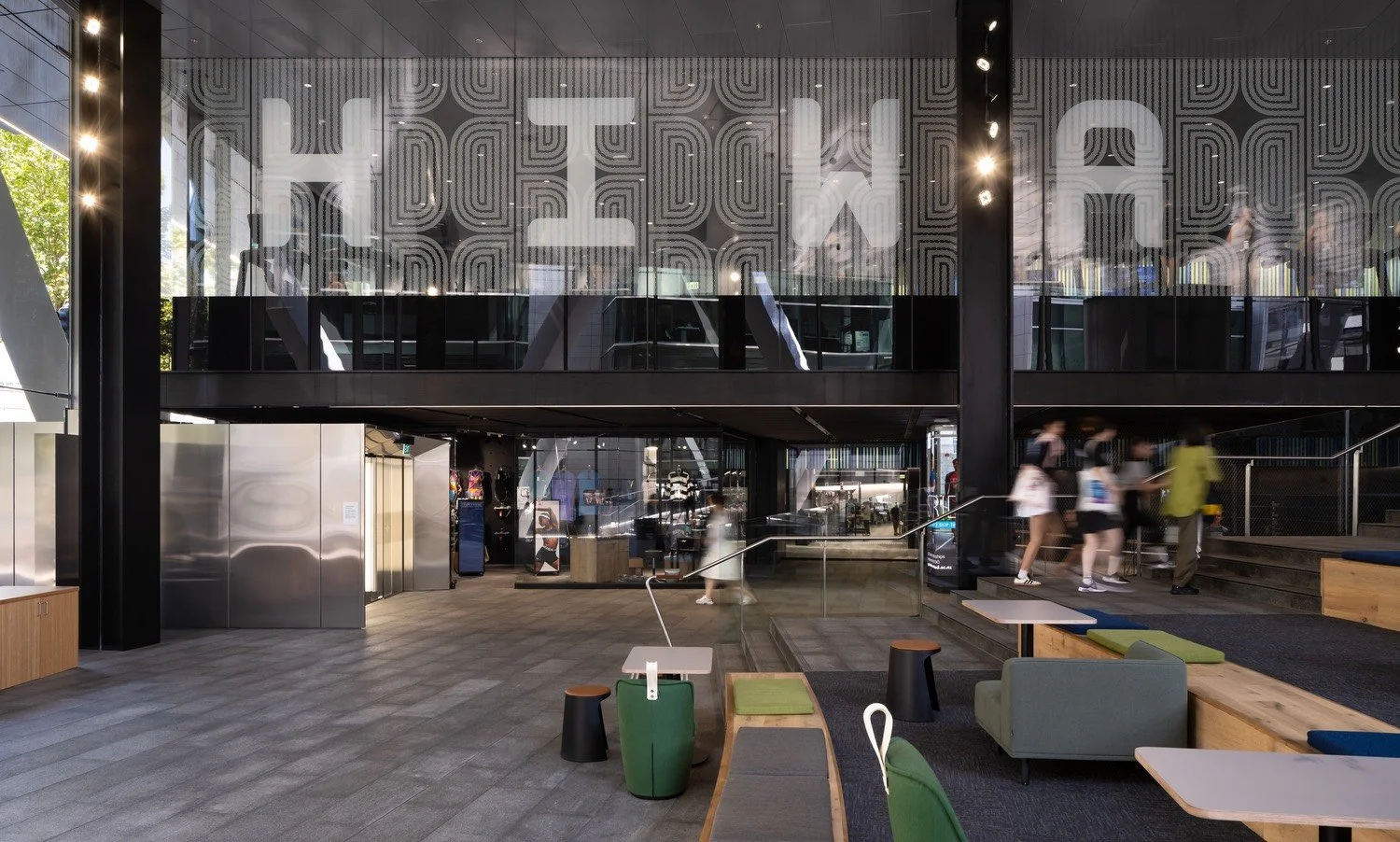
The tightly confined and steeply sloped site posed challenges for accessibility and serviceability, and the entire sector was poorly connected to the rest of campus and the city fabric. By raising the sports halls and placing the aquatic hall below grade, a freed ground plane allows fluid accessible movement through the precinct and creation of a new student plaza.
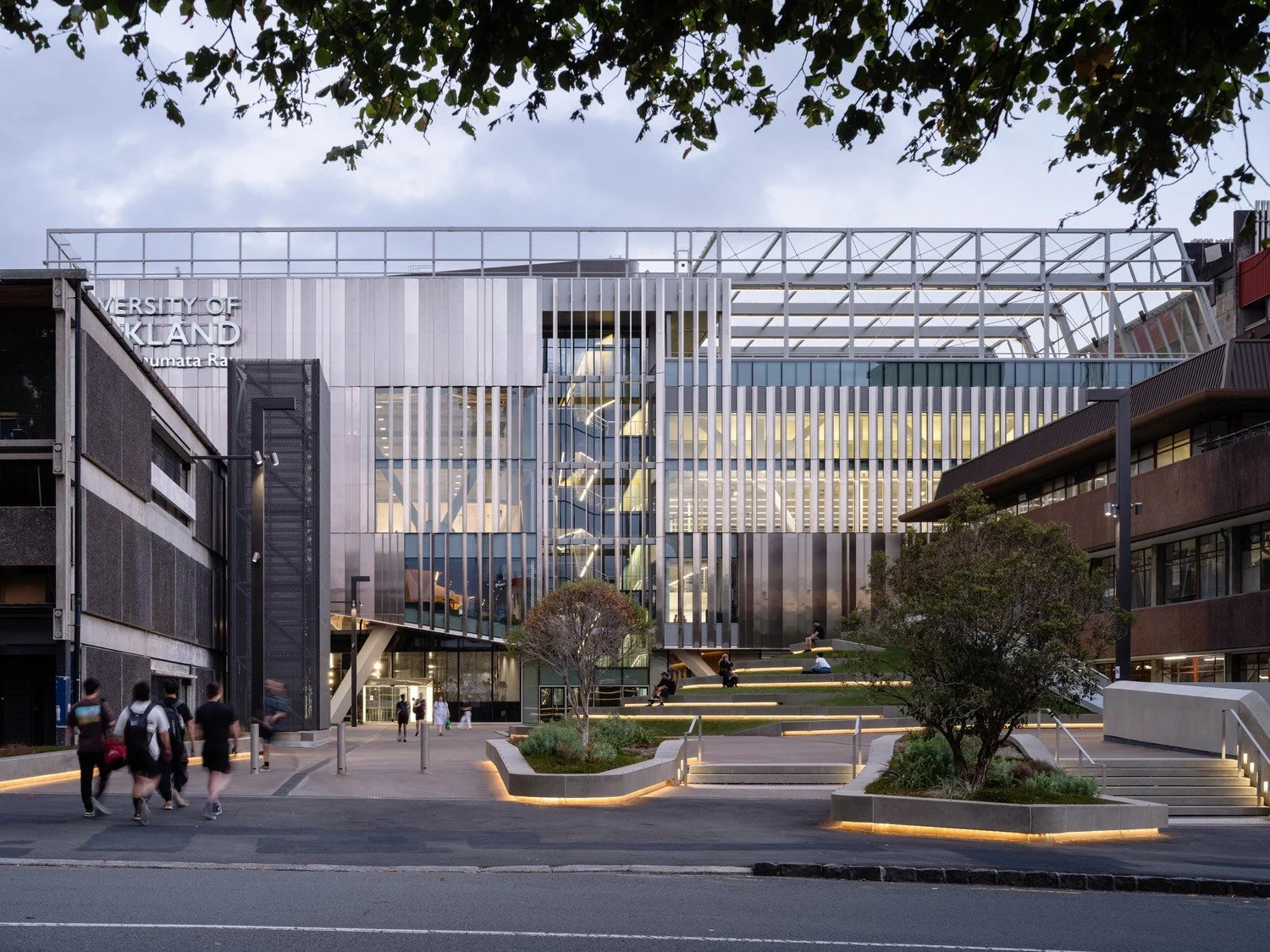
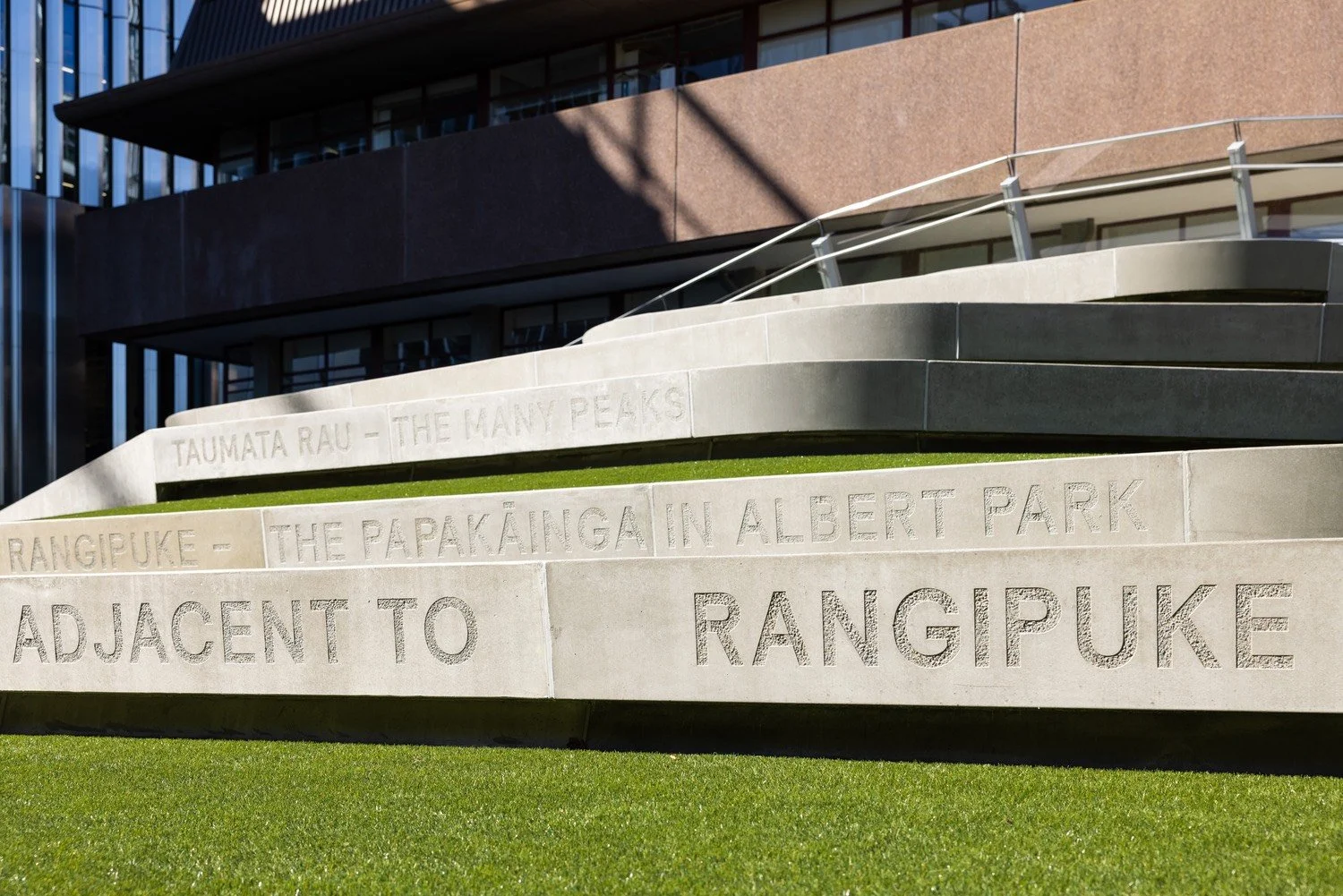
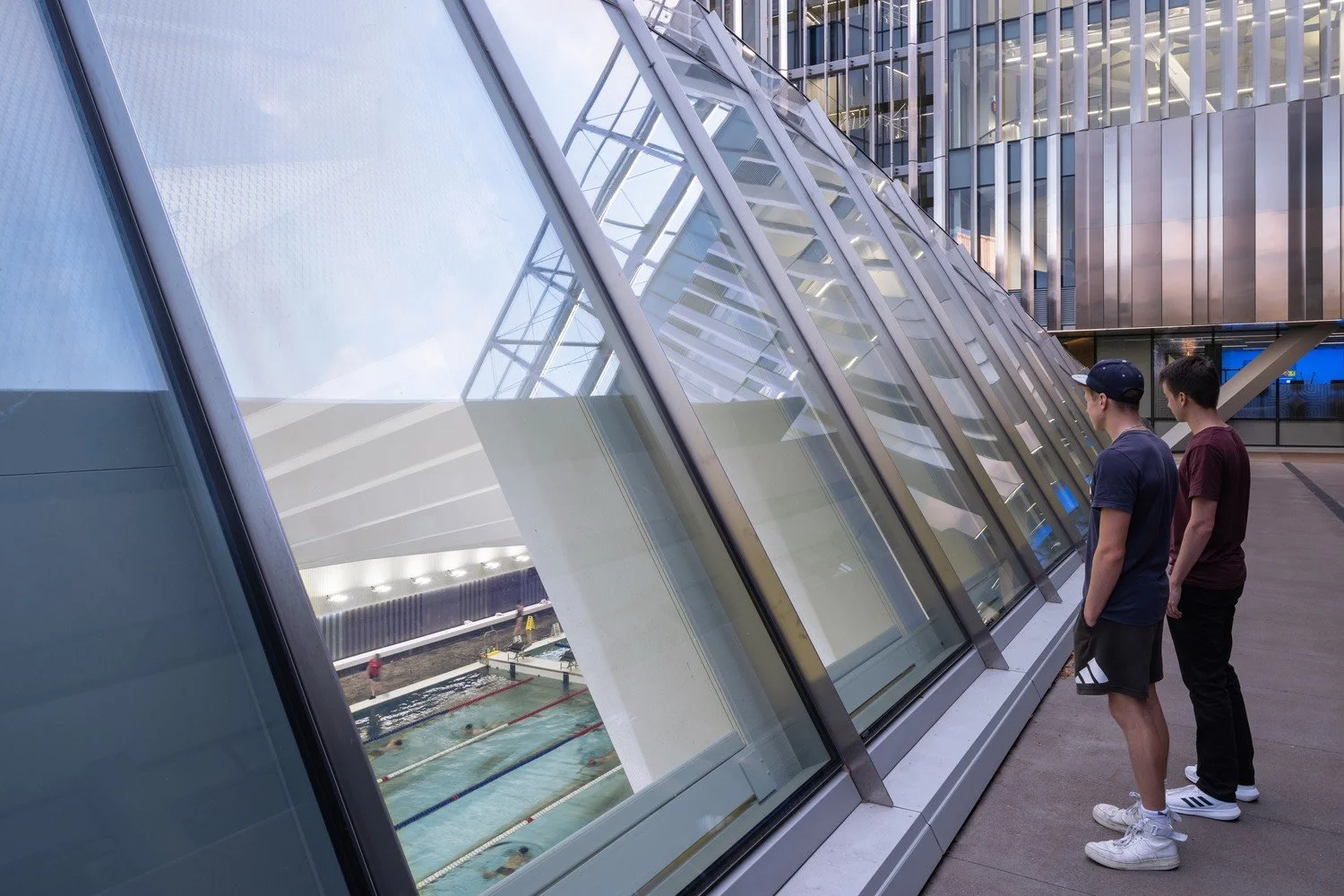
The shaped roof of the below-grade aquatics hall allows the required clearance at the dive tower and forms the terraced landform above – the plaza’s focal point and a symbol of the region’s topography. The Taumata (landform) references Rangipuke, the historic Māori settlement and hill adjacent to the site, now known as Albert Park. The glazed mound offers views below, while infusing the hall with soft indirect light.
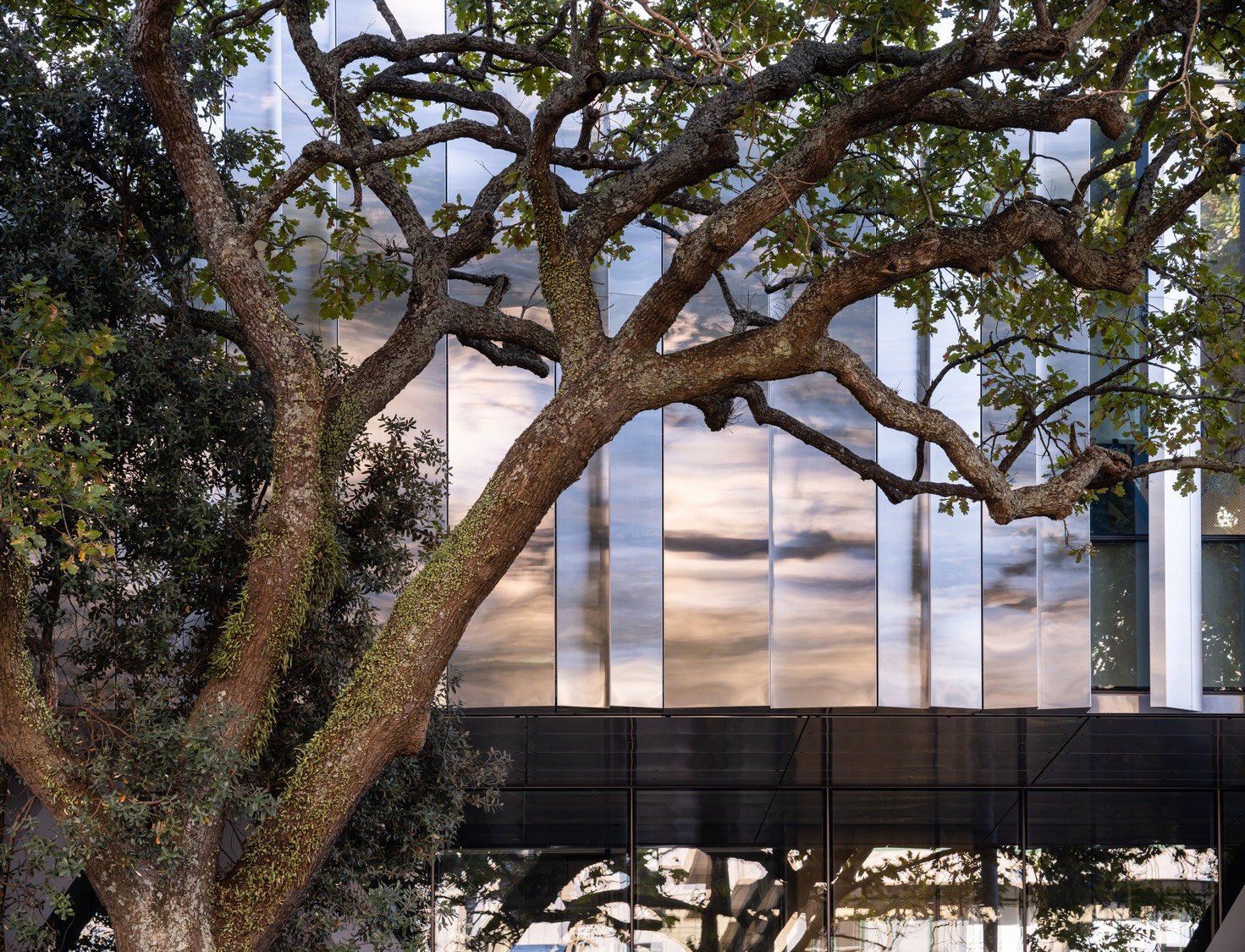
Ao Whakaata: A Reflected World:
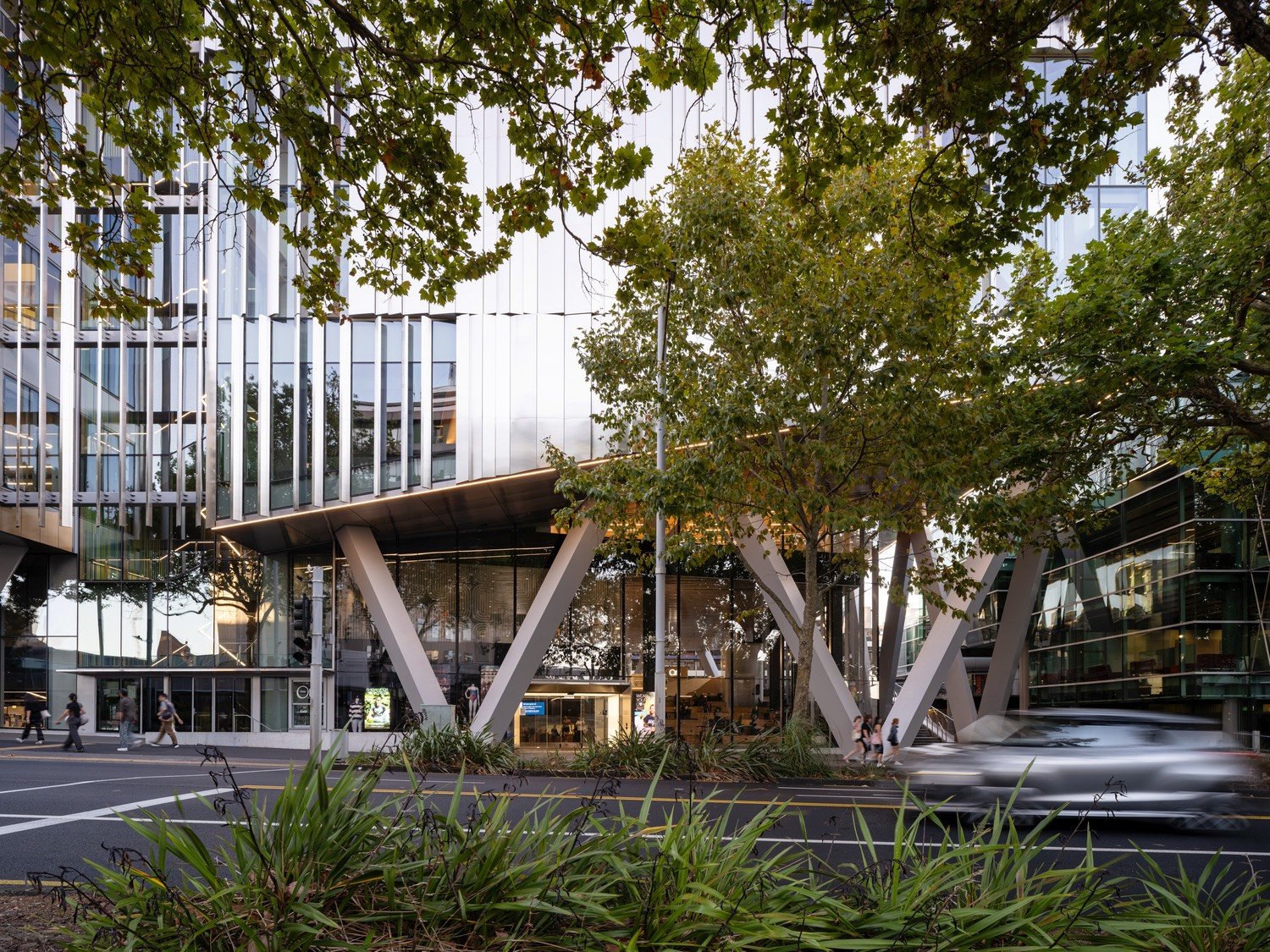
The tight urban site necessitated an eight-storey structure. The bulk of the building is nonetheless dematerialized by its shaped base and a cladding of stainless-steel panels and louvres that mitigate glare and heat gain inside the facility while capturing reflections of the dramatic, ever-shifting Aukland weather.
Ao Pumau: A Tethered World:
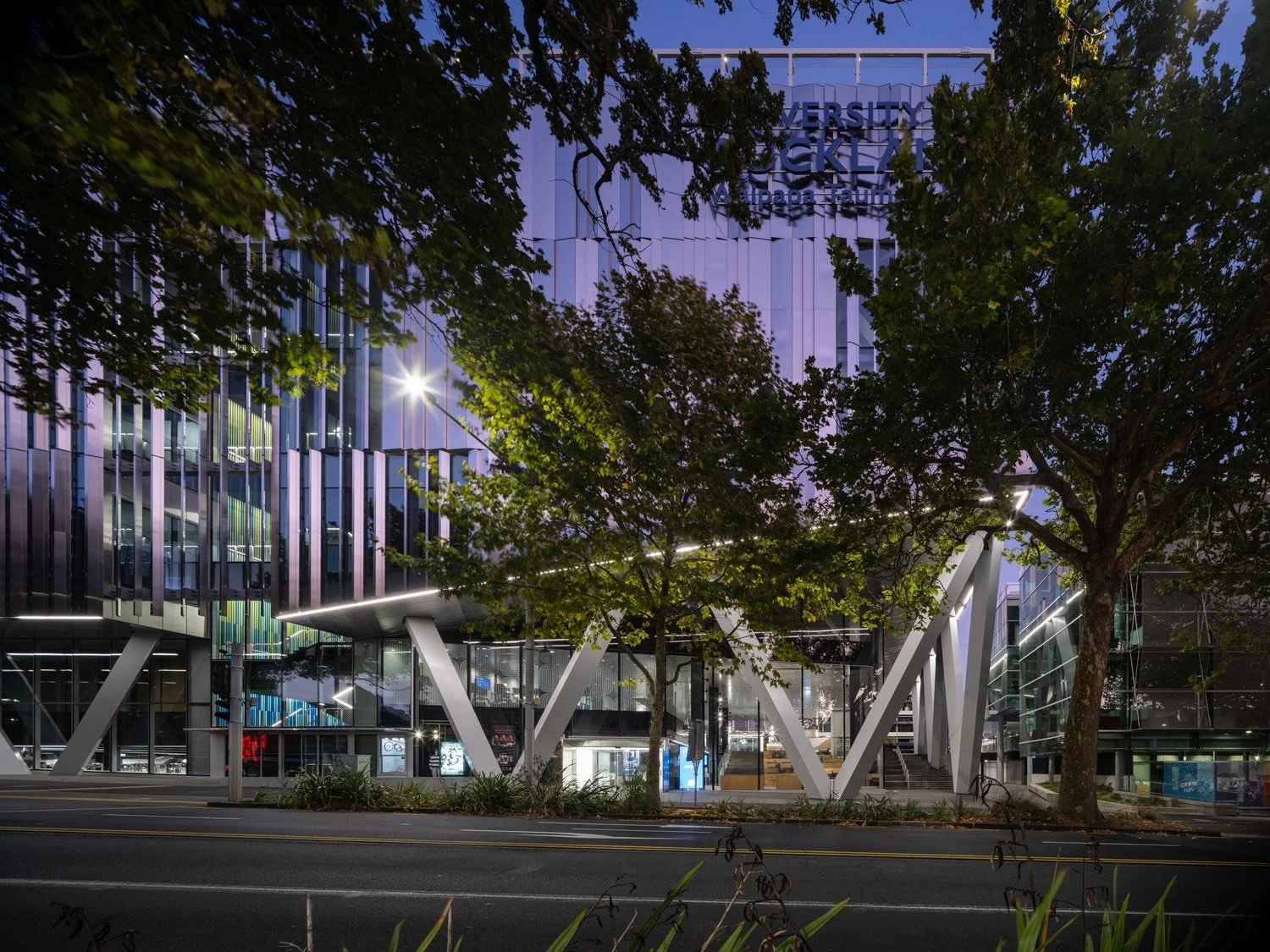
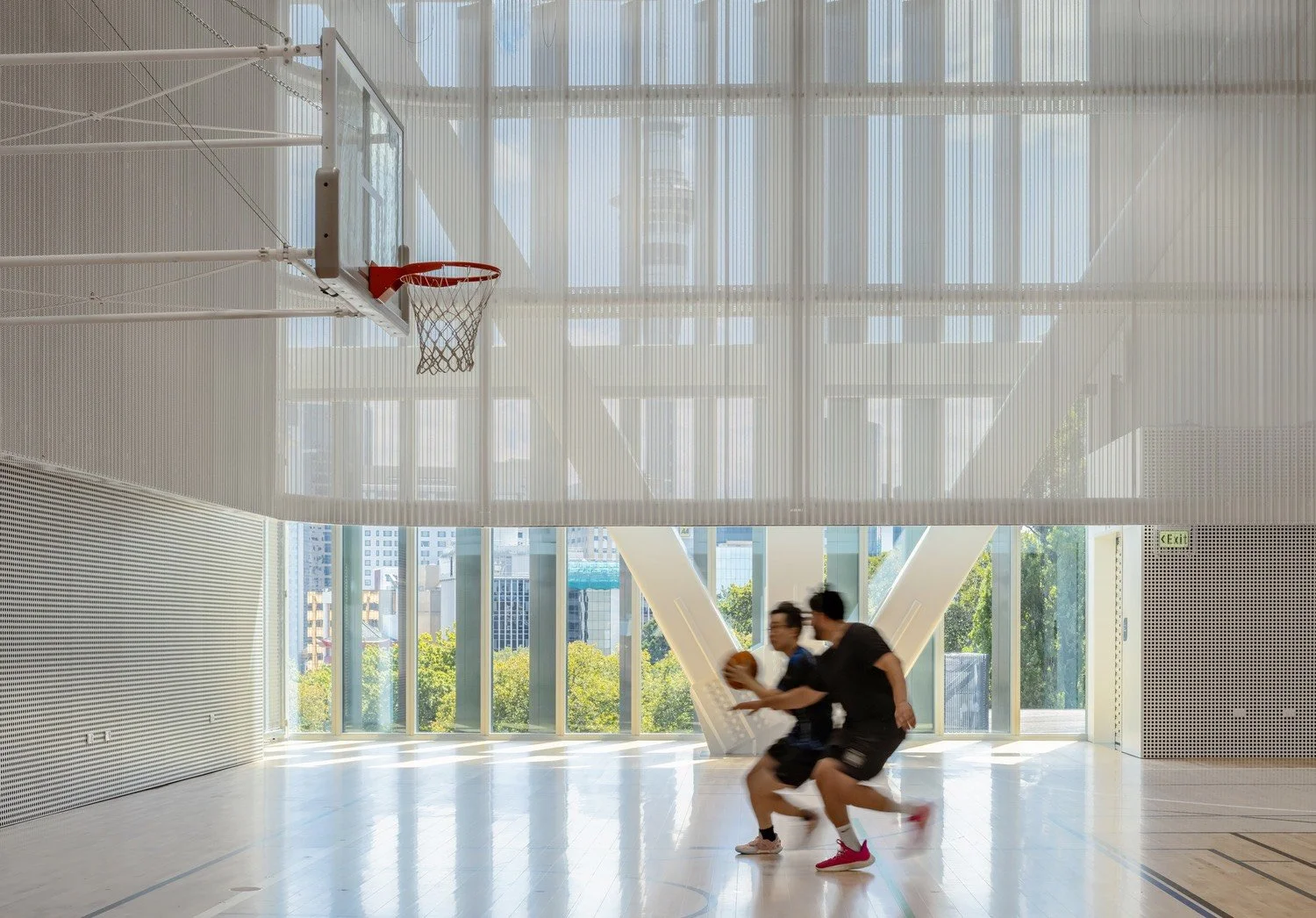
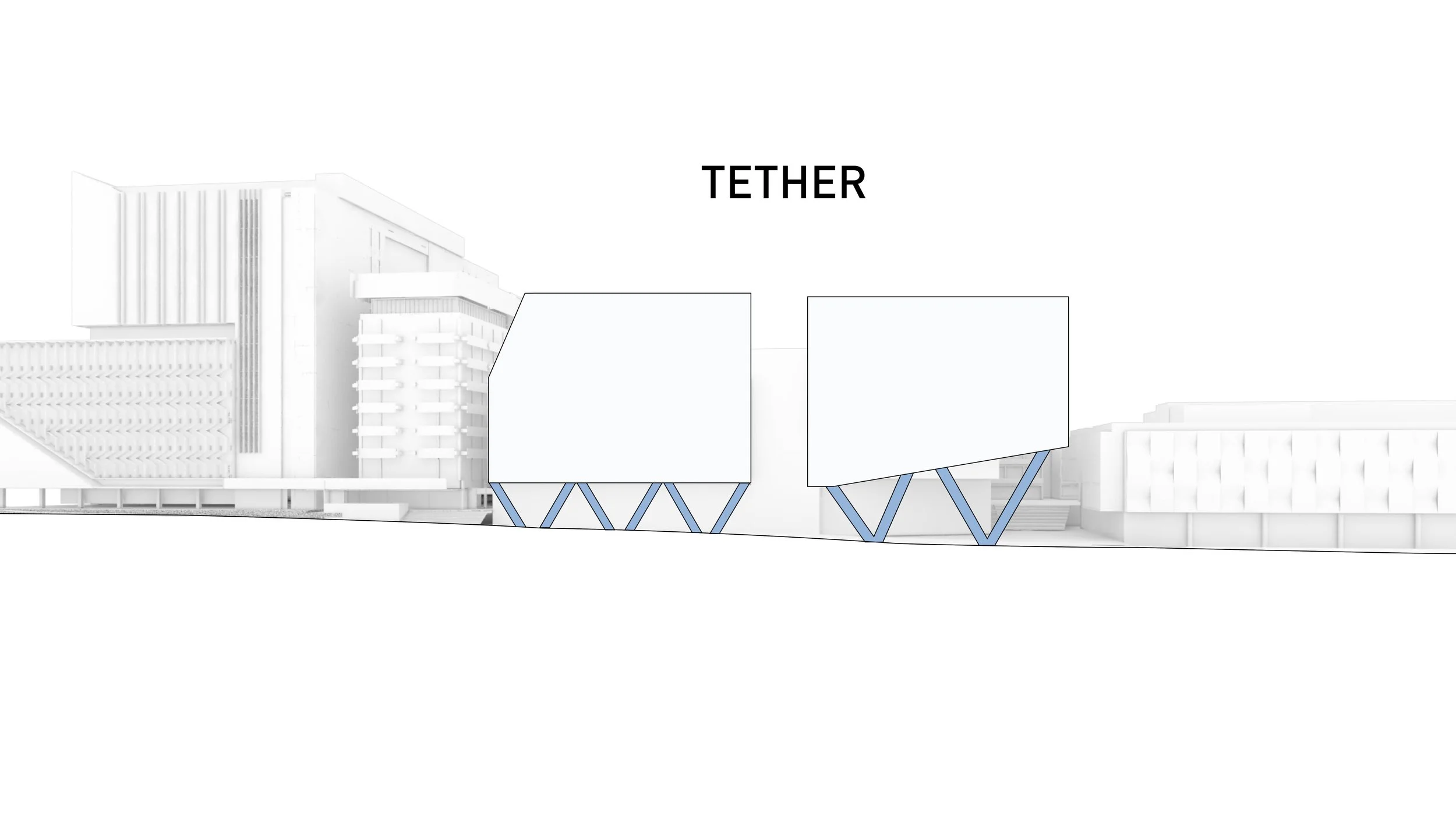
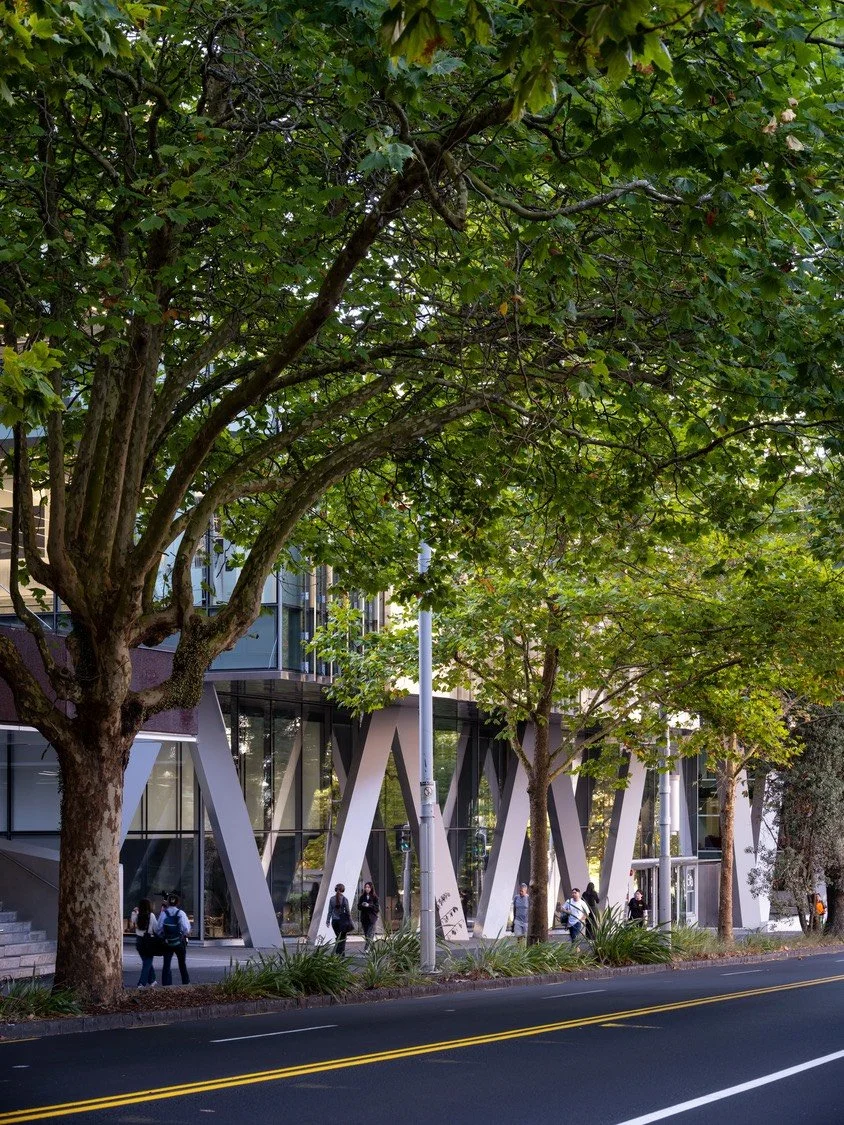
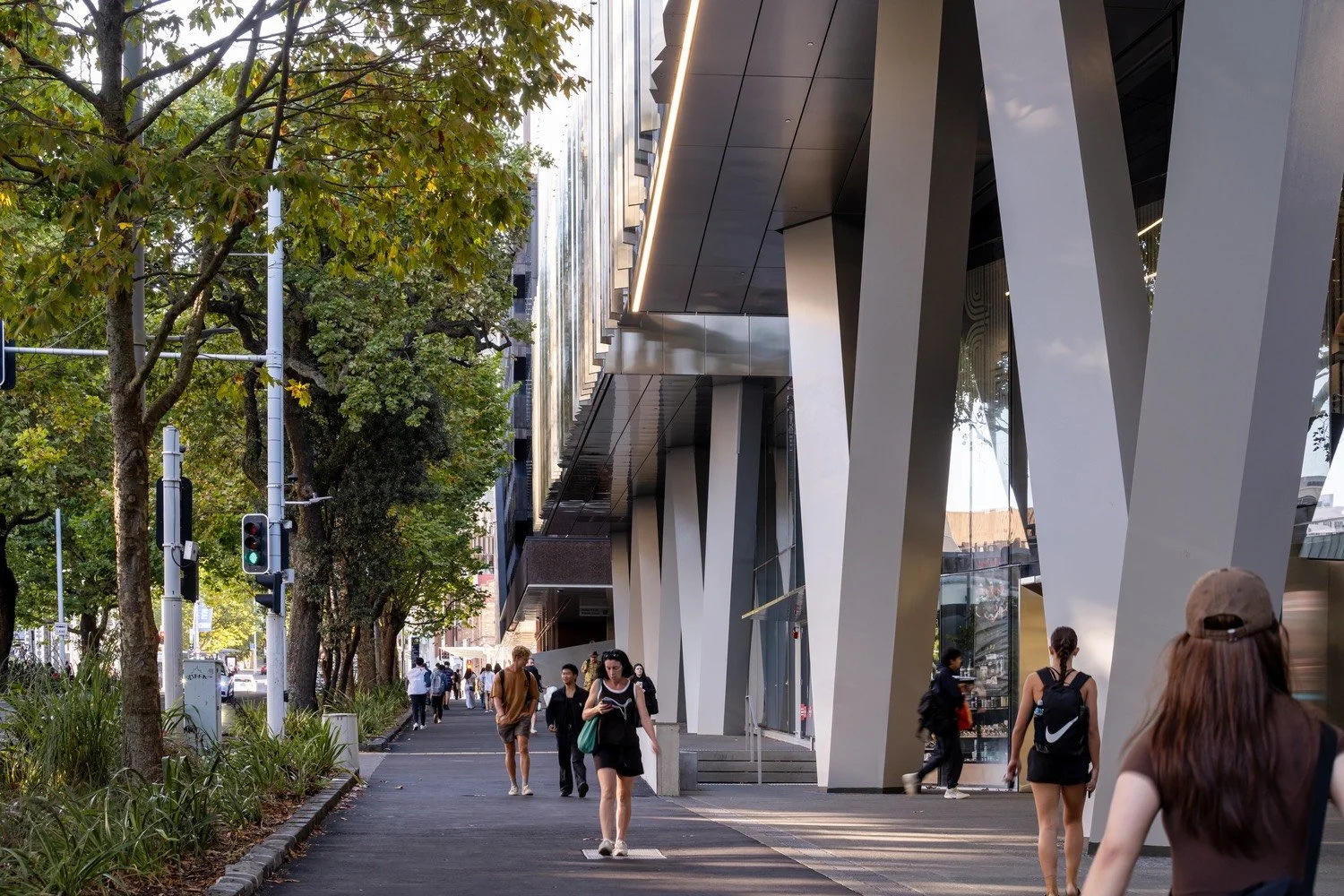
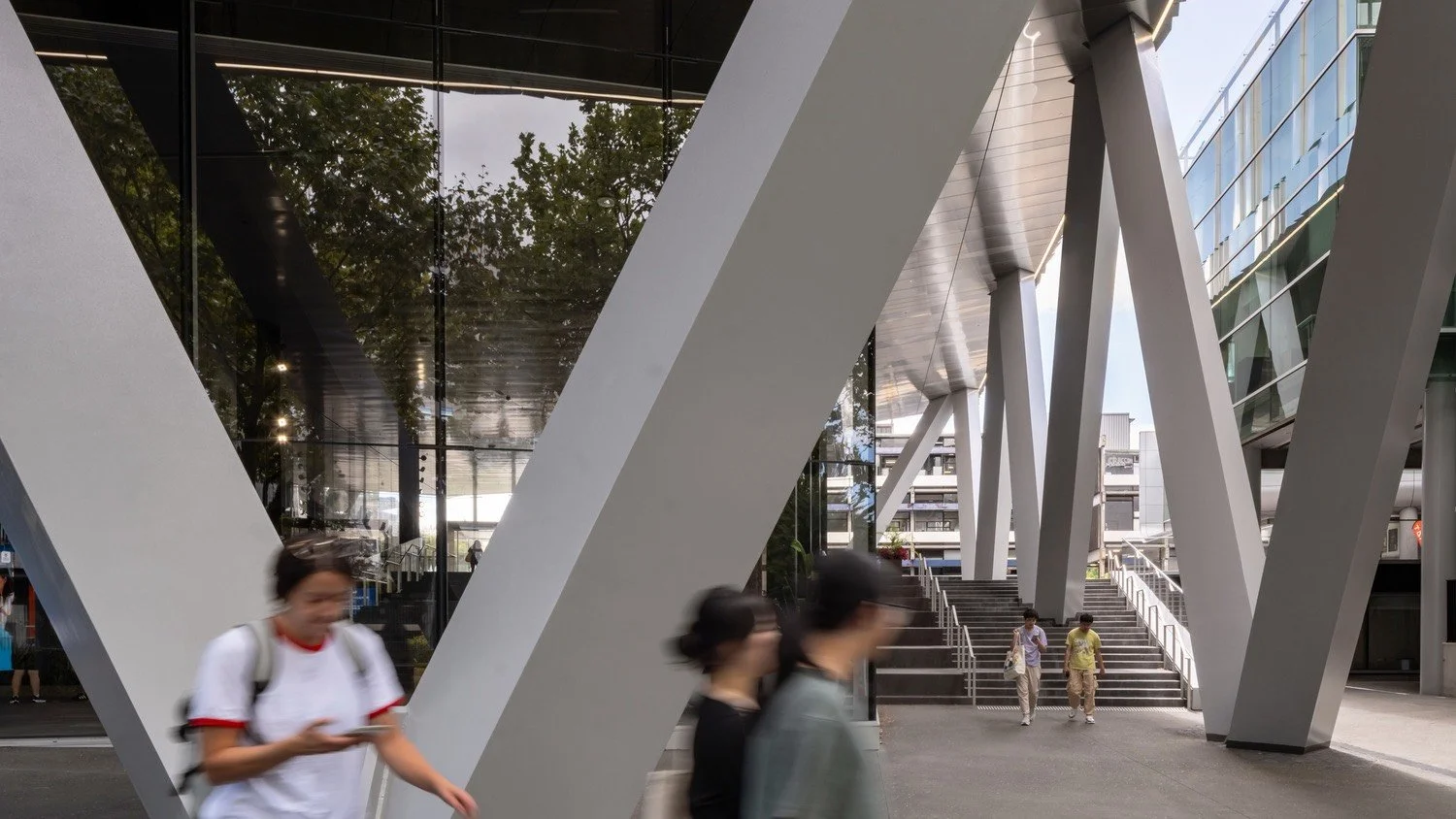
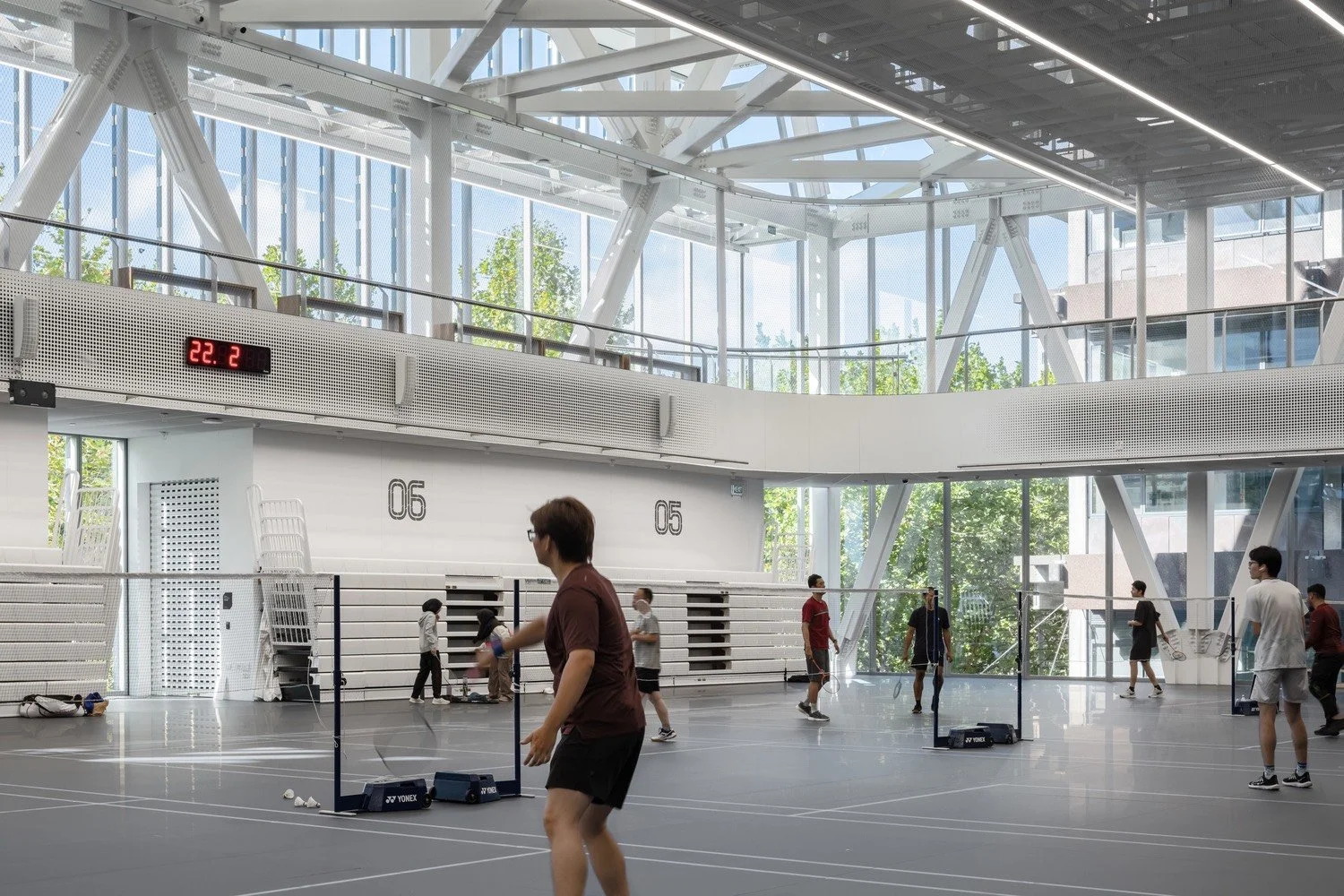
The challenge of spanning large, elevated sports halls was met with an expressed perimeter structural diagrid, liberating and animating the site experience. The dramatic ‘V-columns’ symbolize a tethering connection between Whenua (land) and structure it holds in place.
Ao Korikori: A World of Movement:
To maintain a sense of vibrancy and openness despite the dense programming, the plan is split: a major program volume occurs at each level and is alternated on either side of a central circulation core, increasing security and ease of wayfinding and allowing views and access across key spaces and levels to spark user interest and participation.
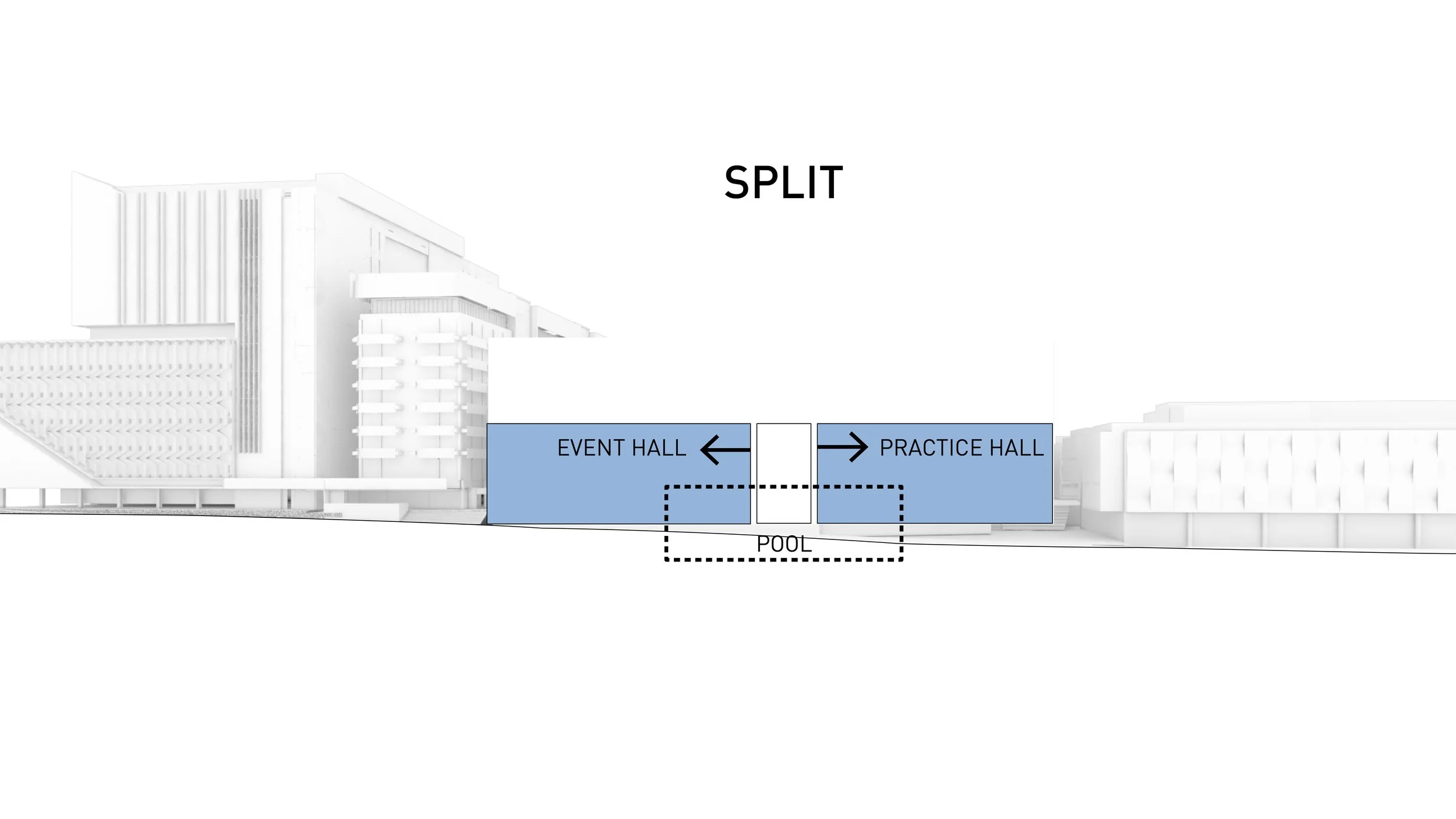
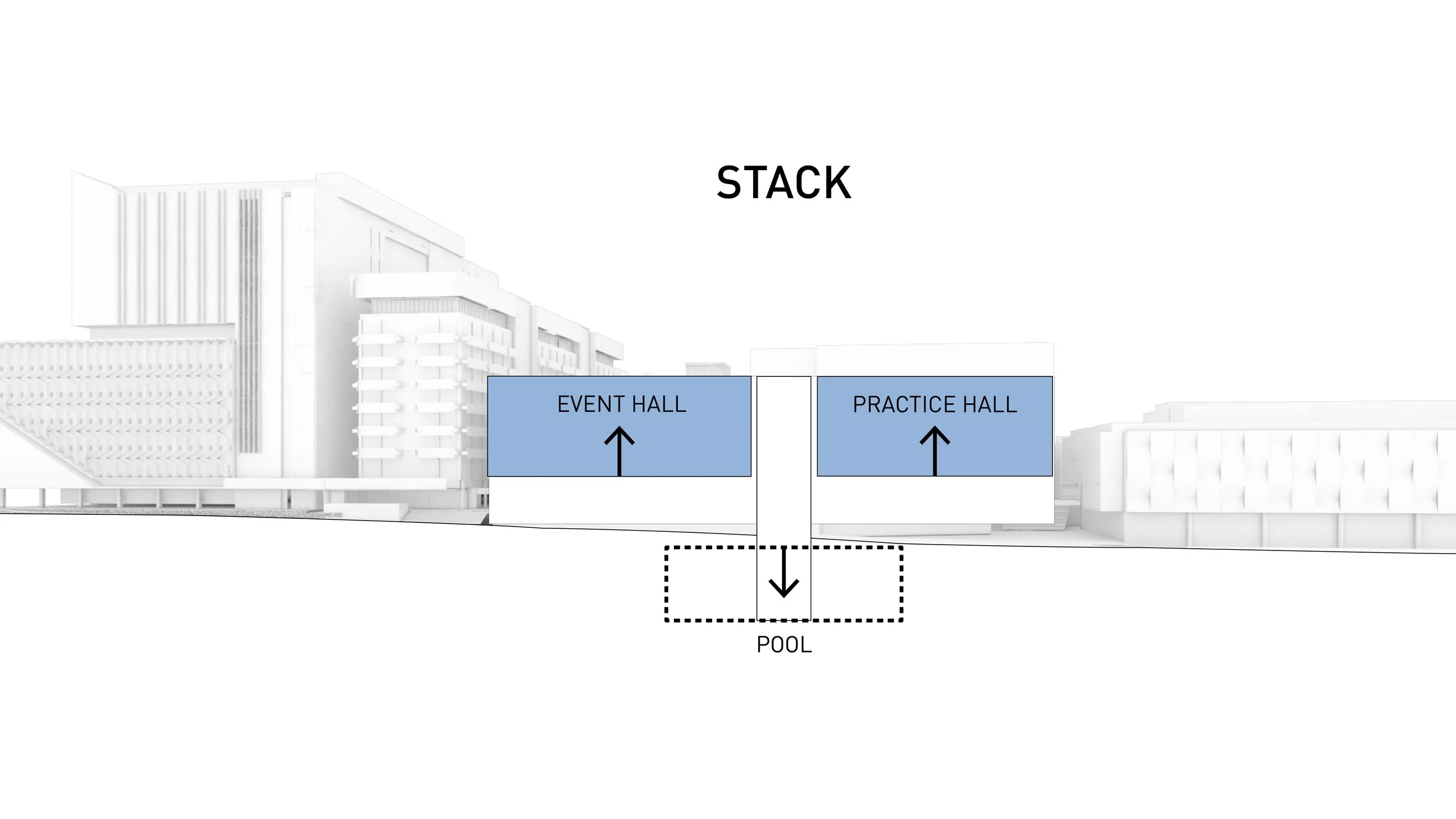
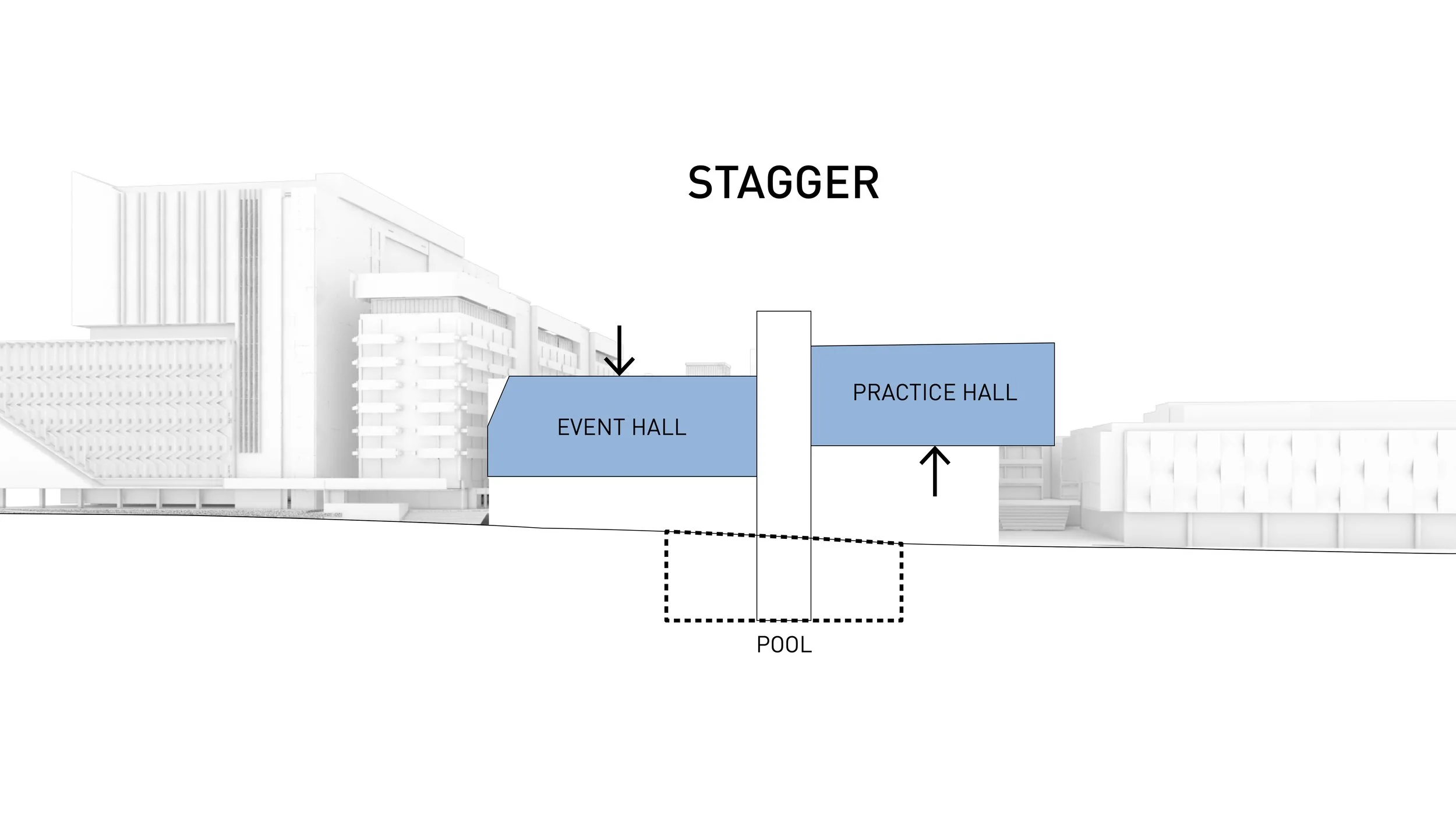
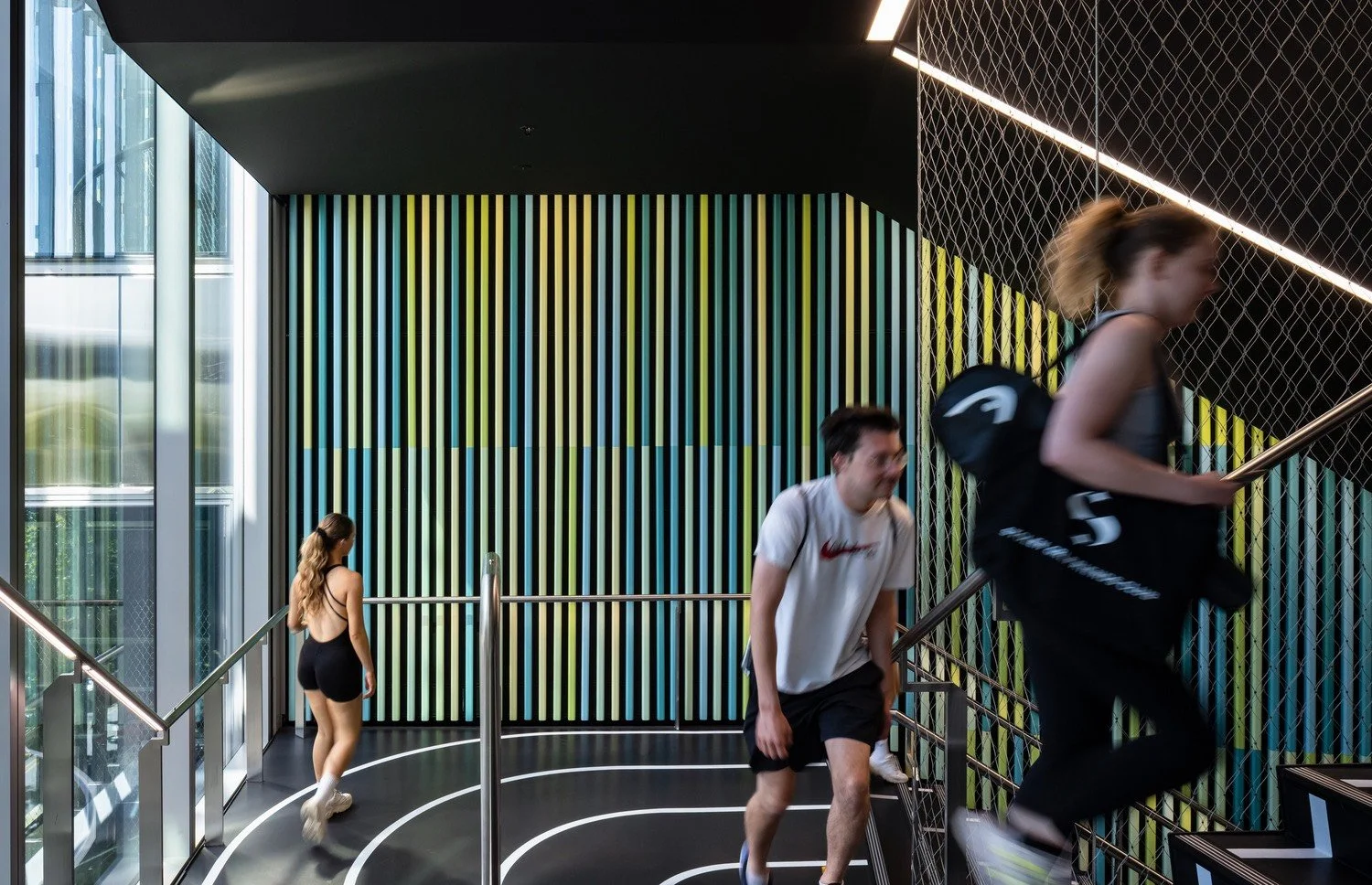
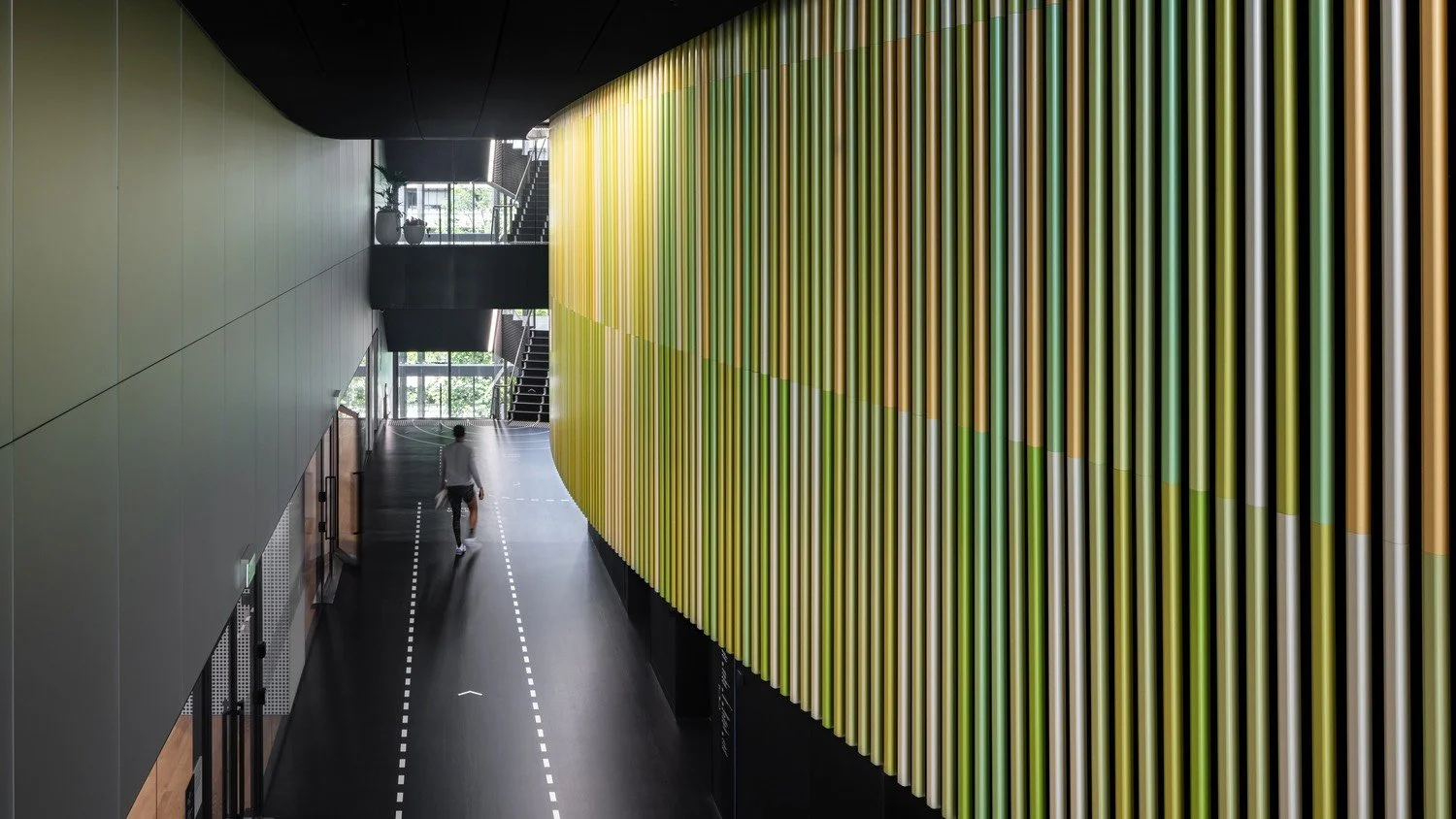
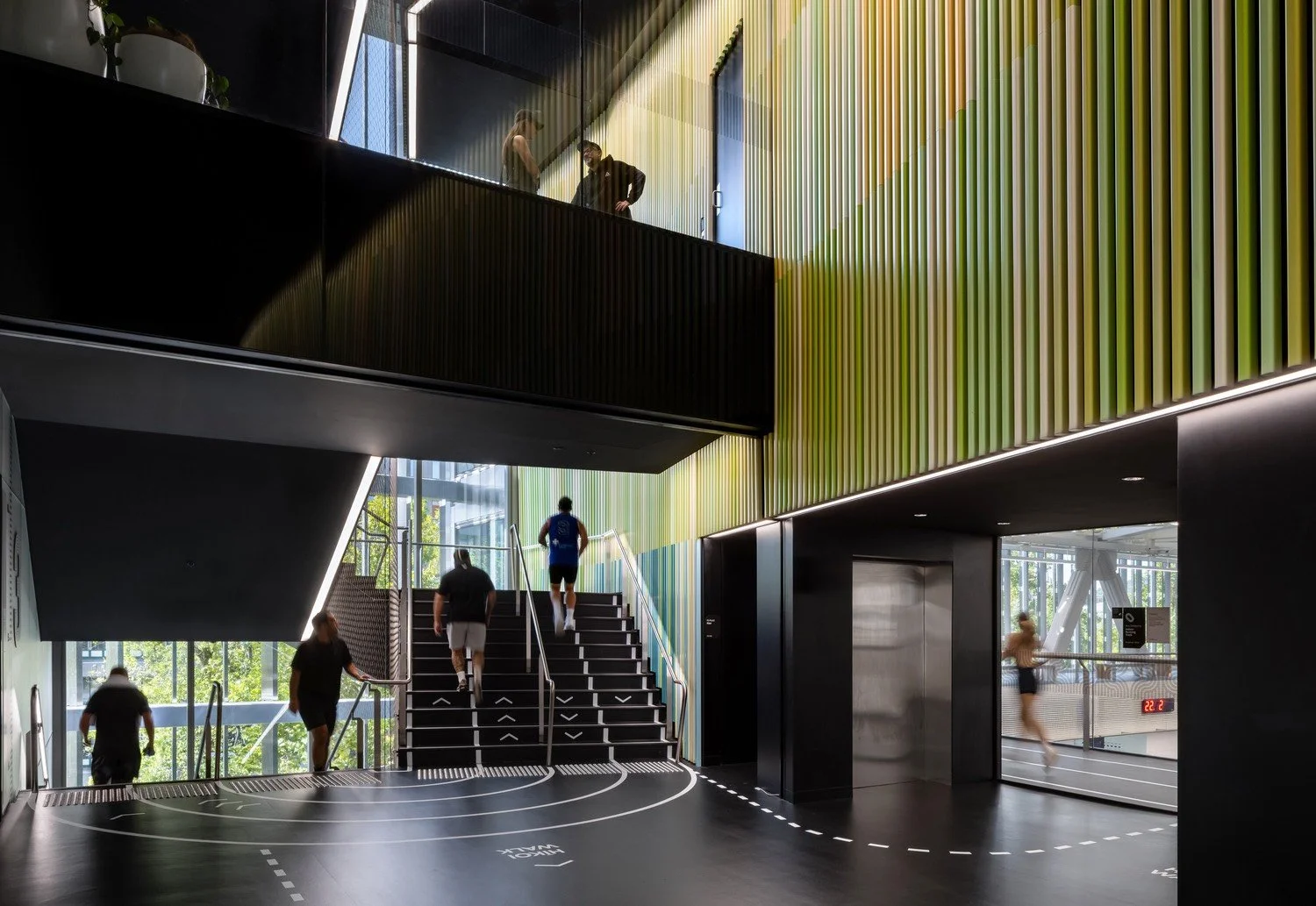
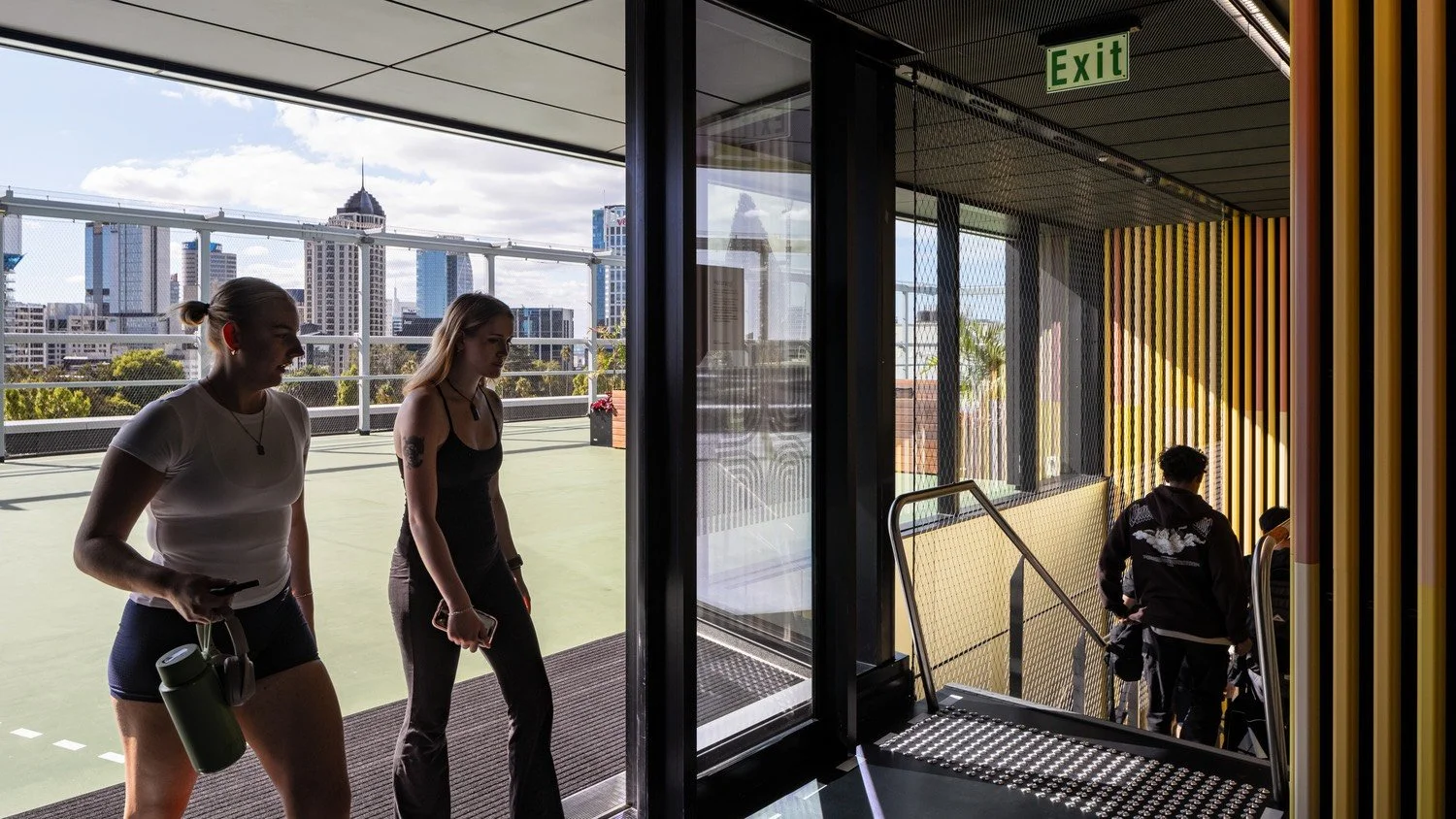
Vertical movement is the building’s key fitness and social animator. Two stairs positioned at either end of the central core deliver multiple functions: clear wayfinding, social convener, daylight provider, fire exiting, and an inventive ‘gamified’ fitness loop of 1km that connects a range of wellness and recreational program spaces while also linking the third-level track to the outdoor roof track.
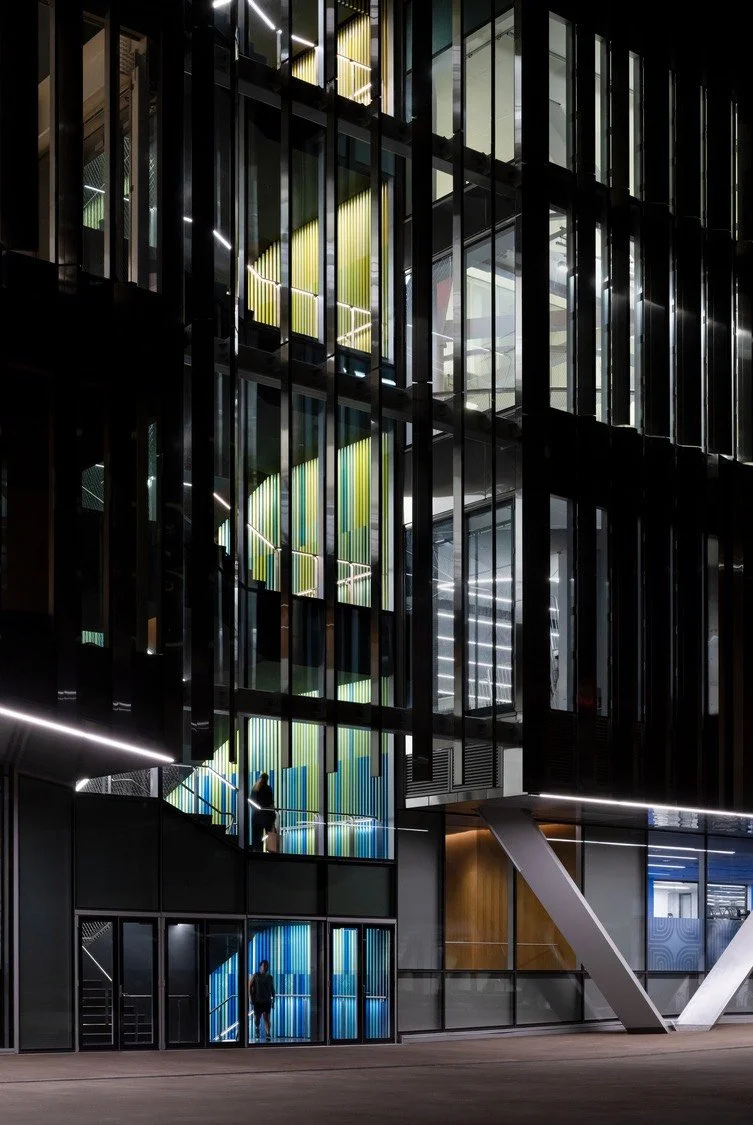
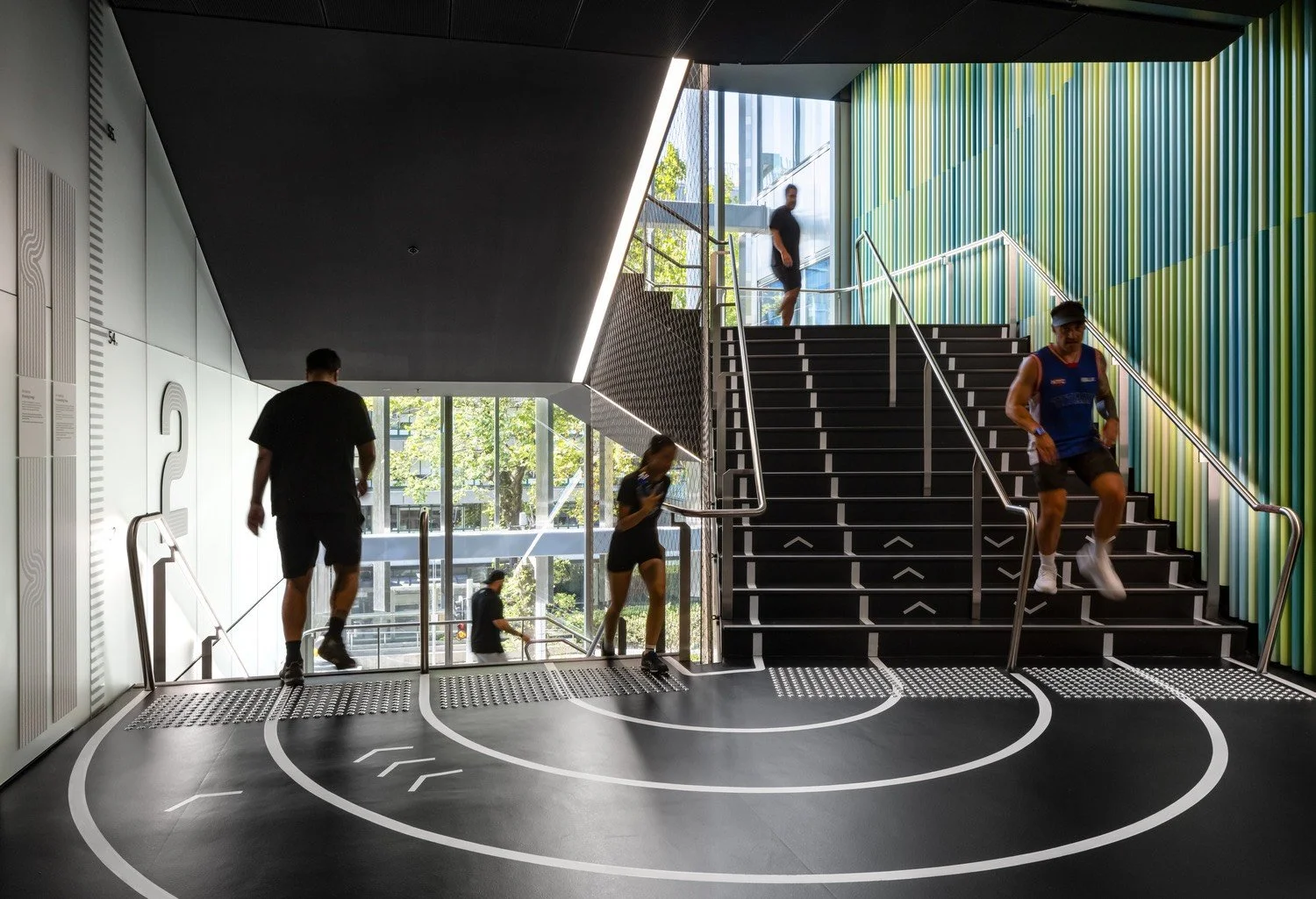

A vibrant colour core wall of varying aluminum battens symbolizes a journey from sea to sky, enriching the user experience and reinforcing a sense of place.
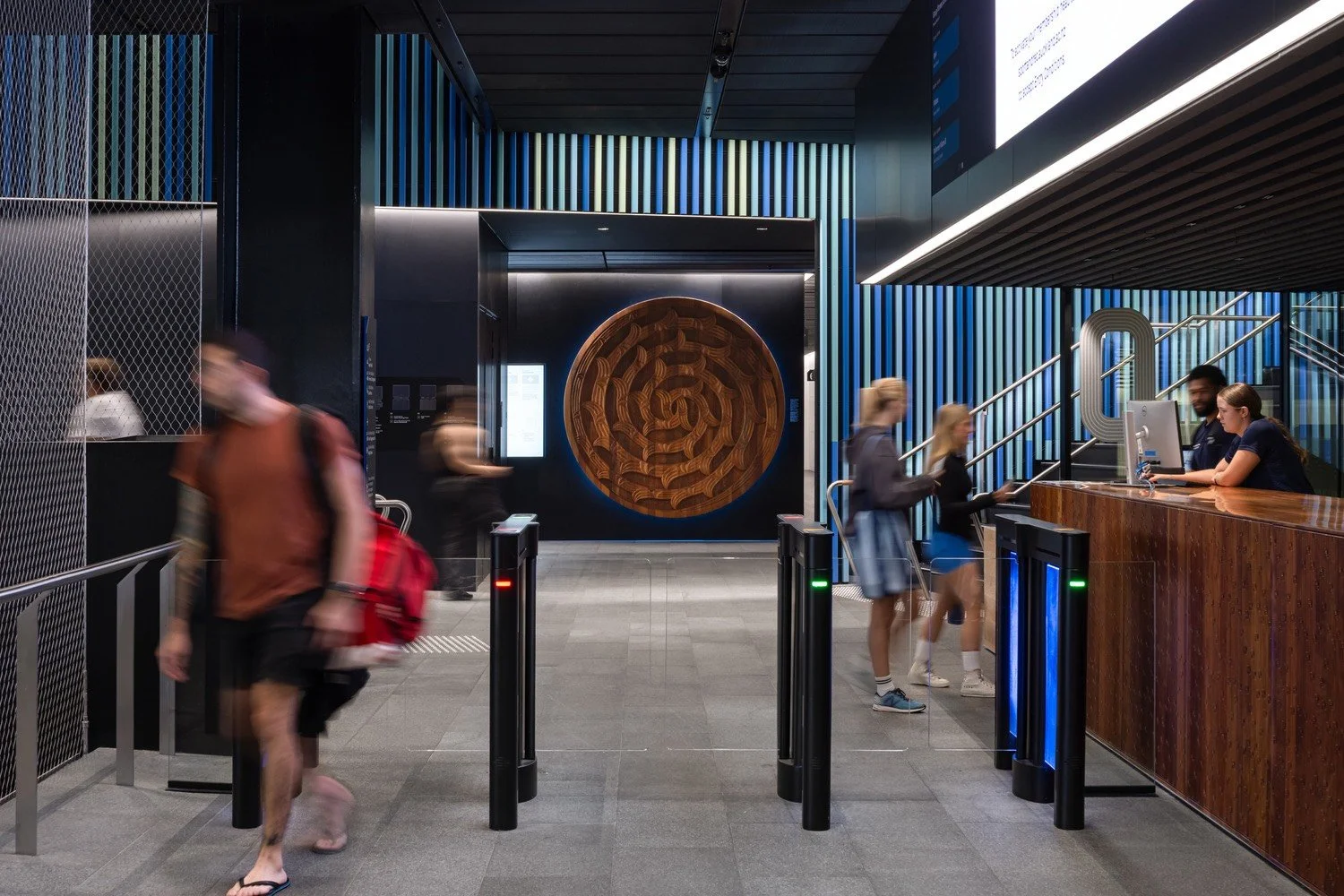
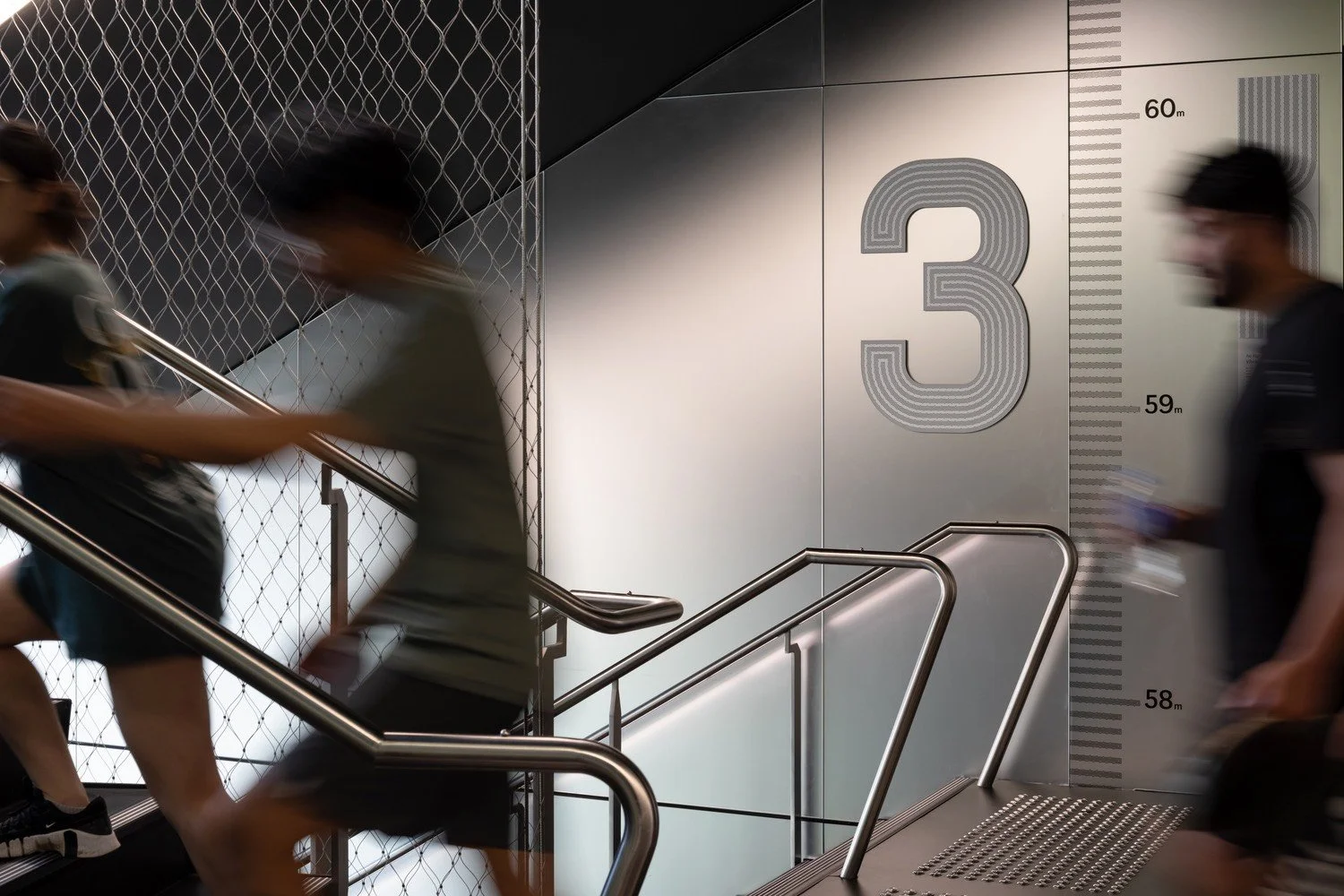
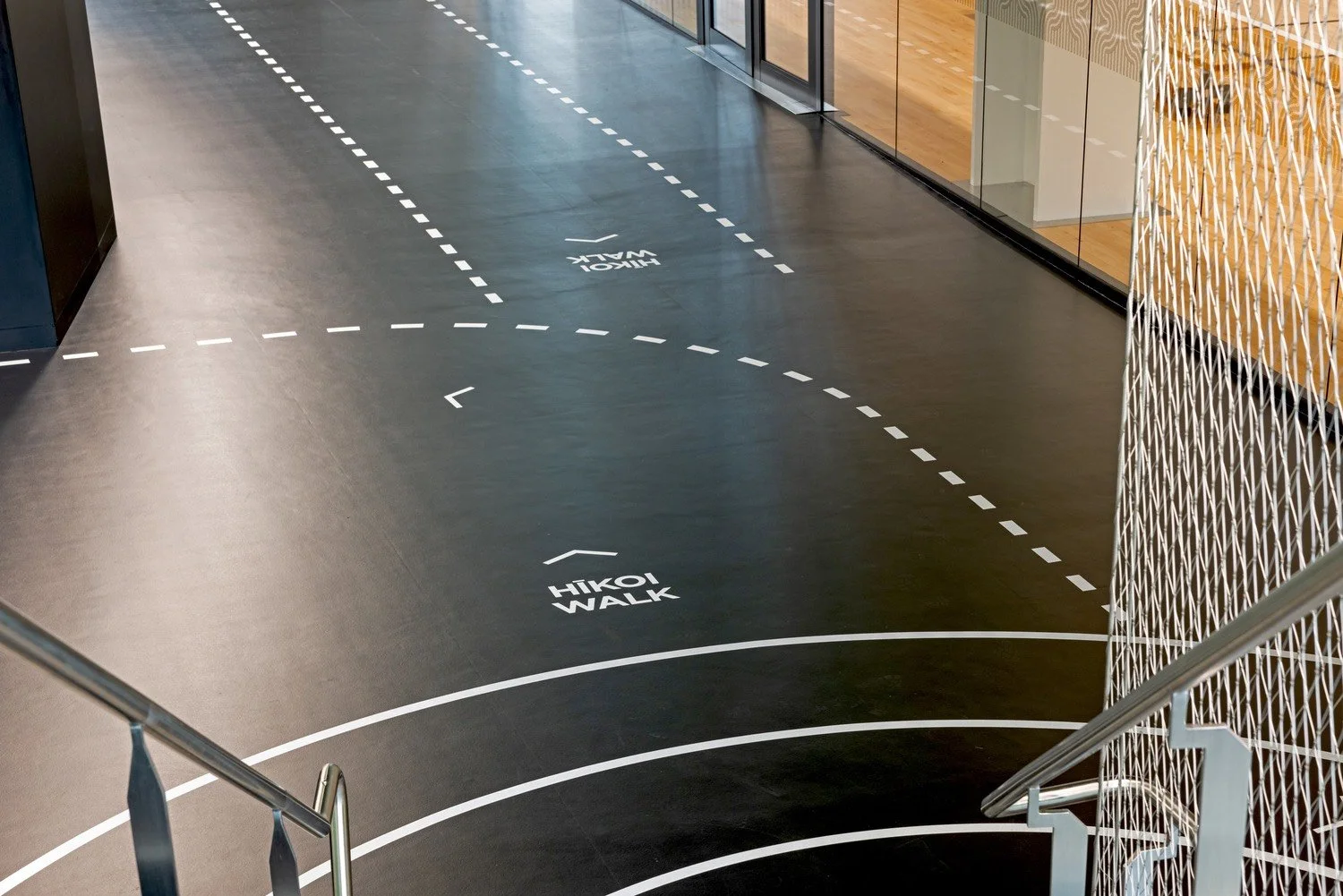
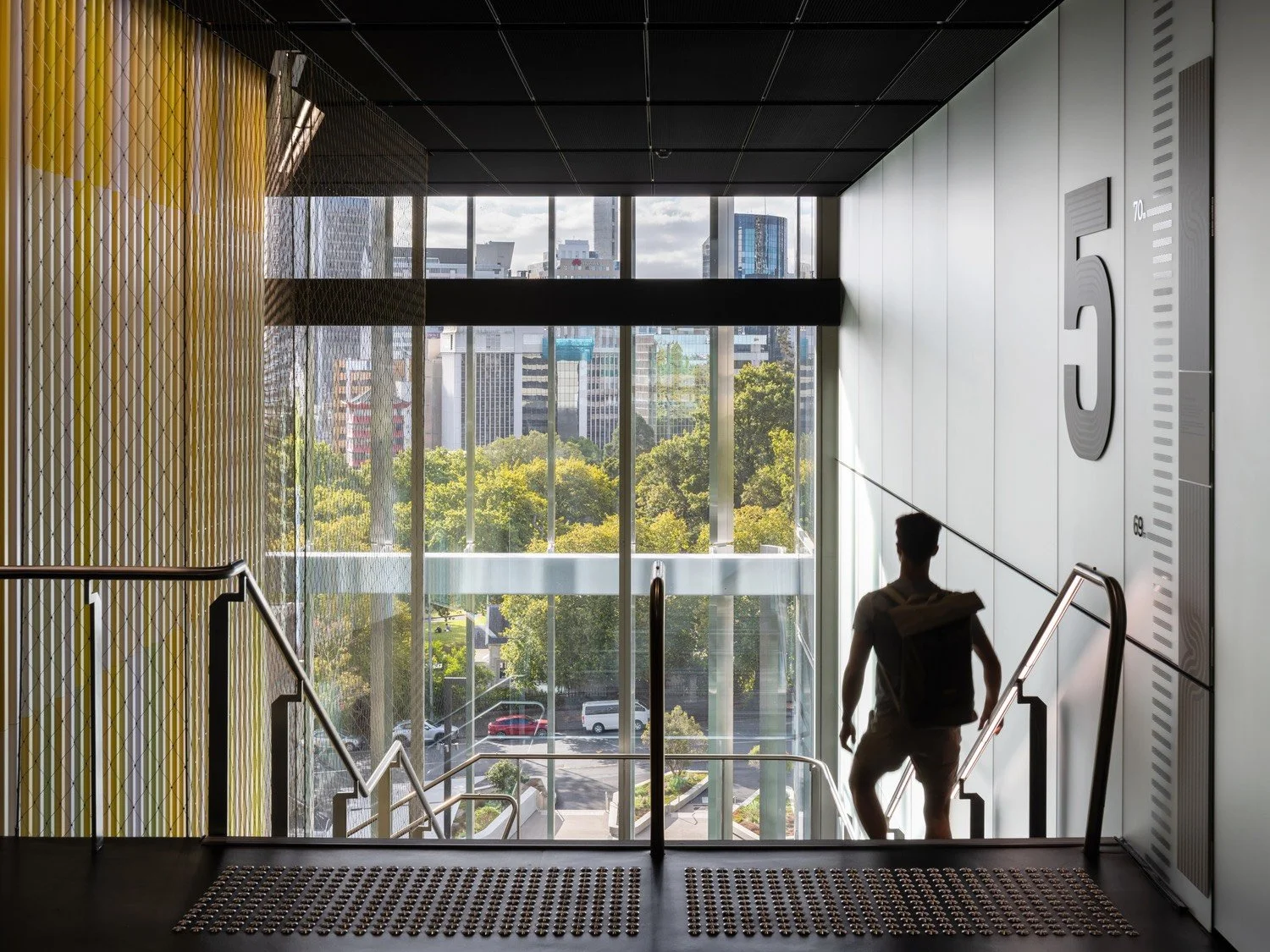
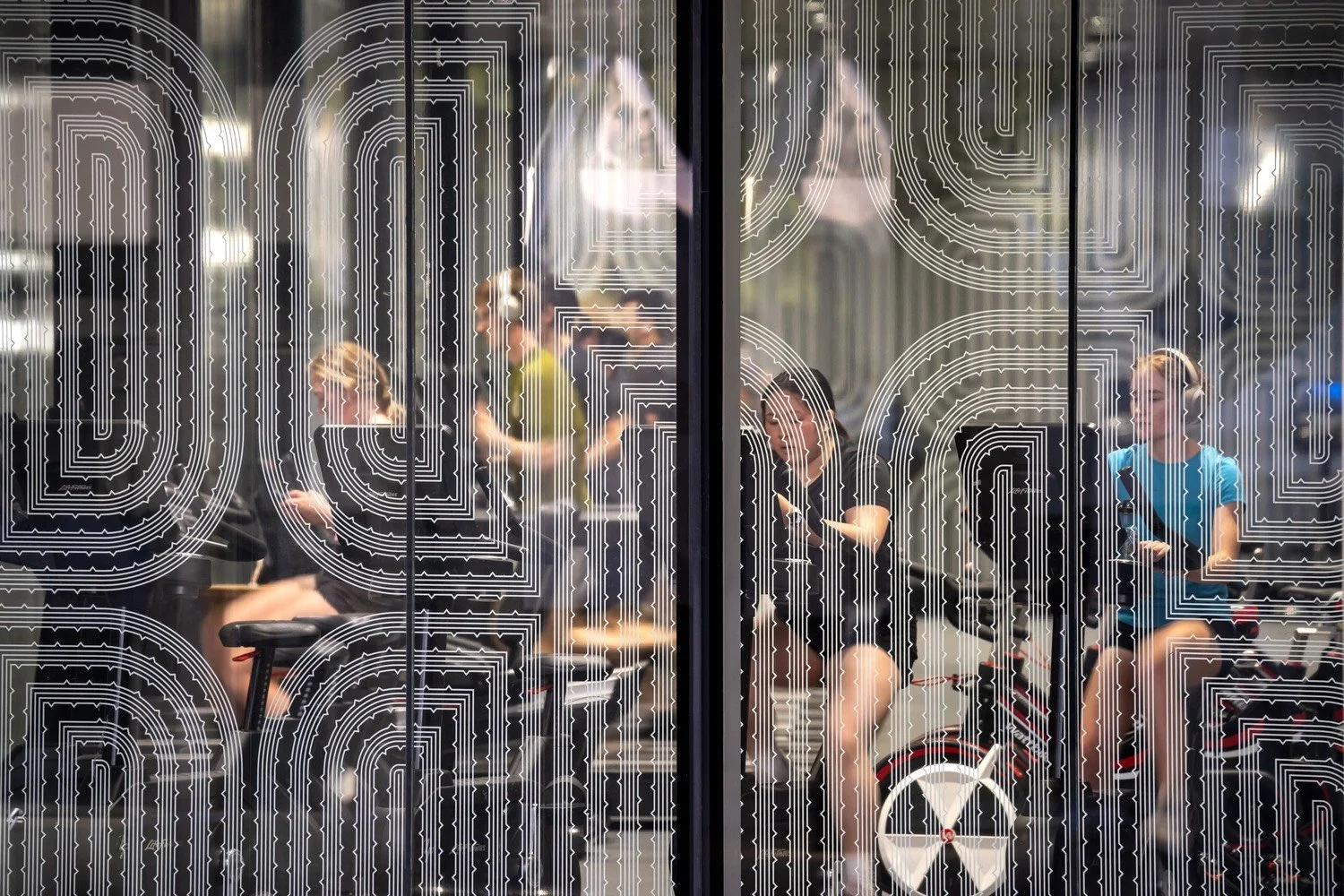
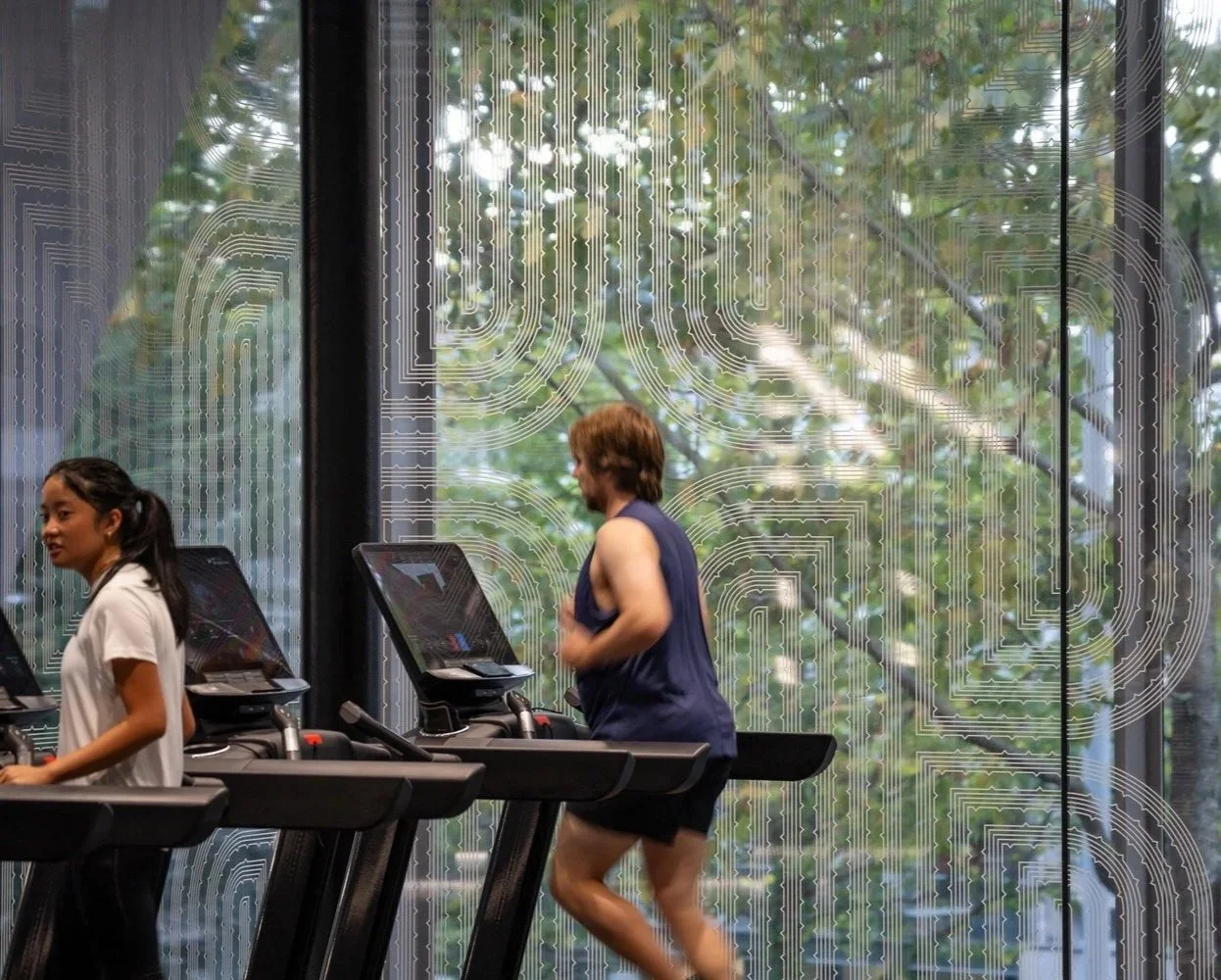
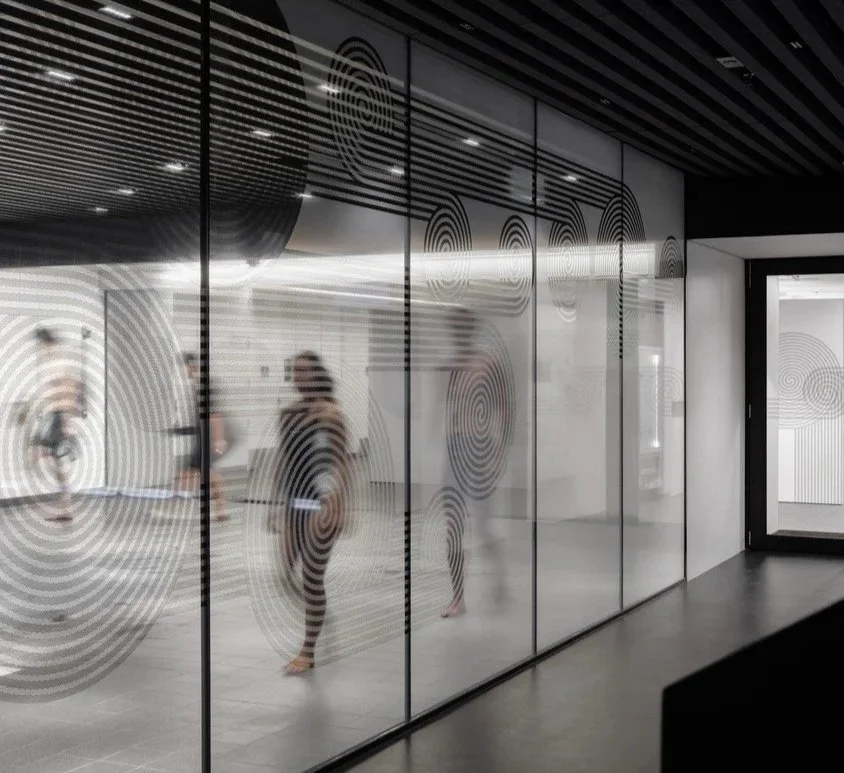
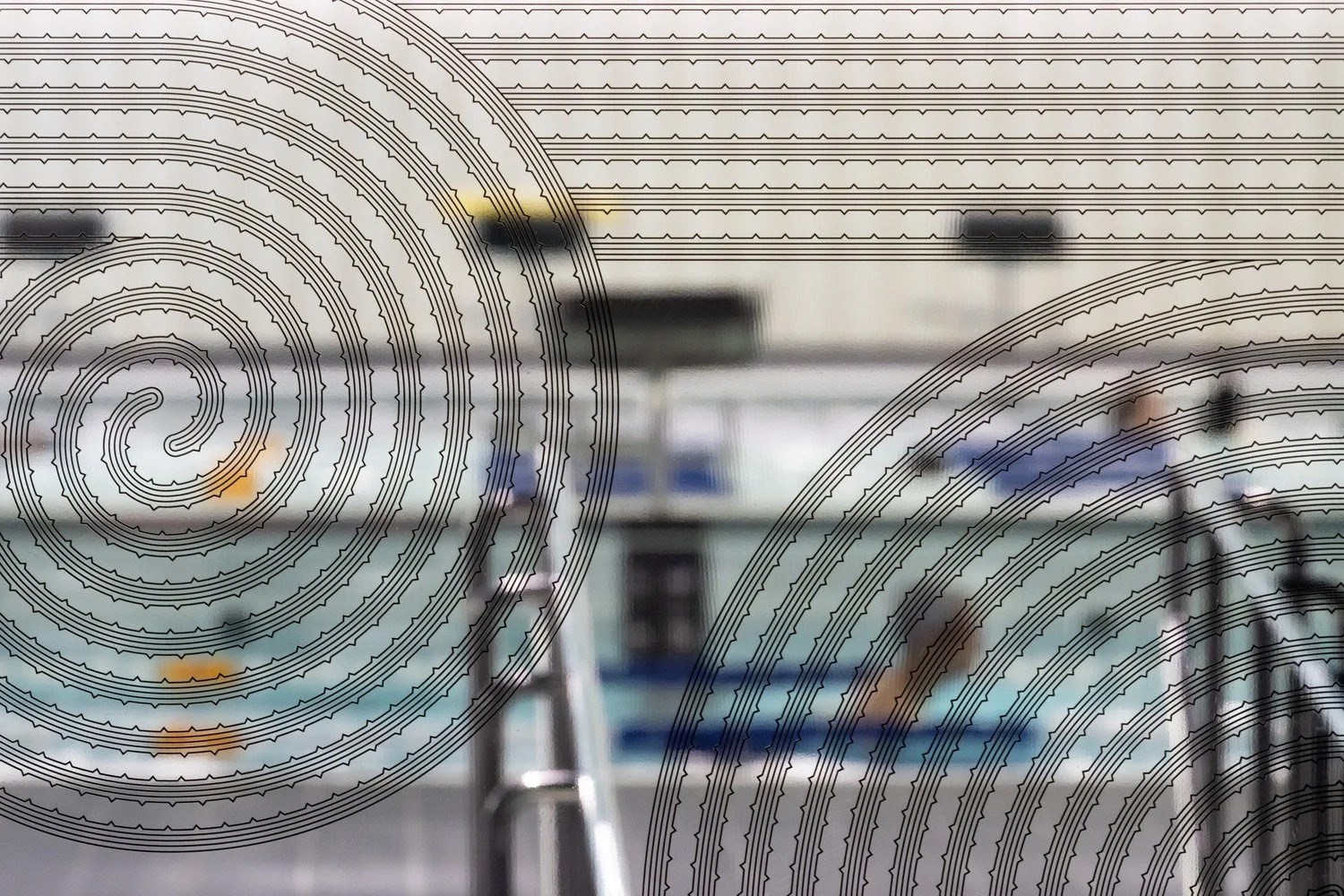
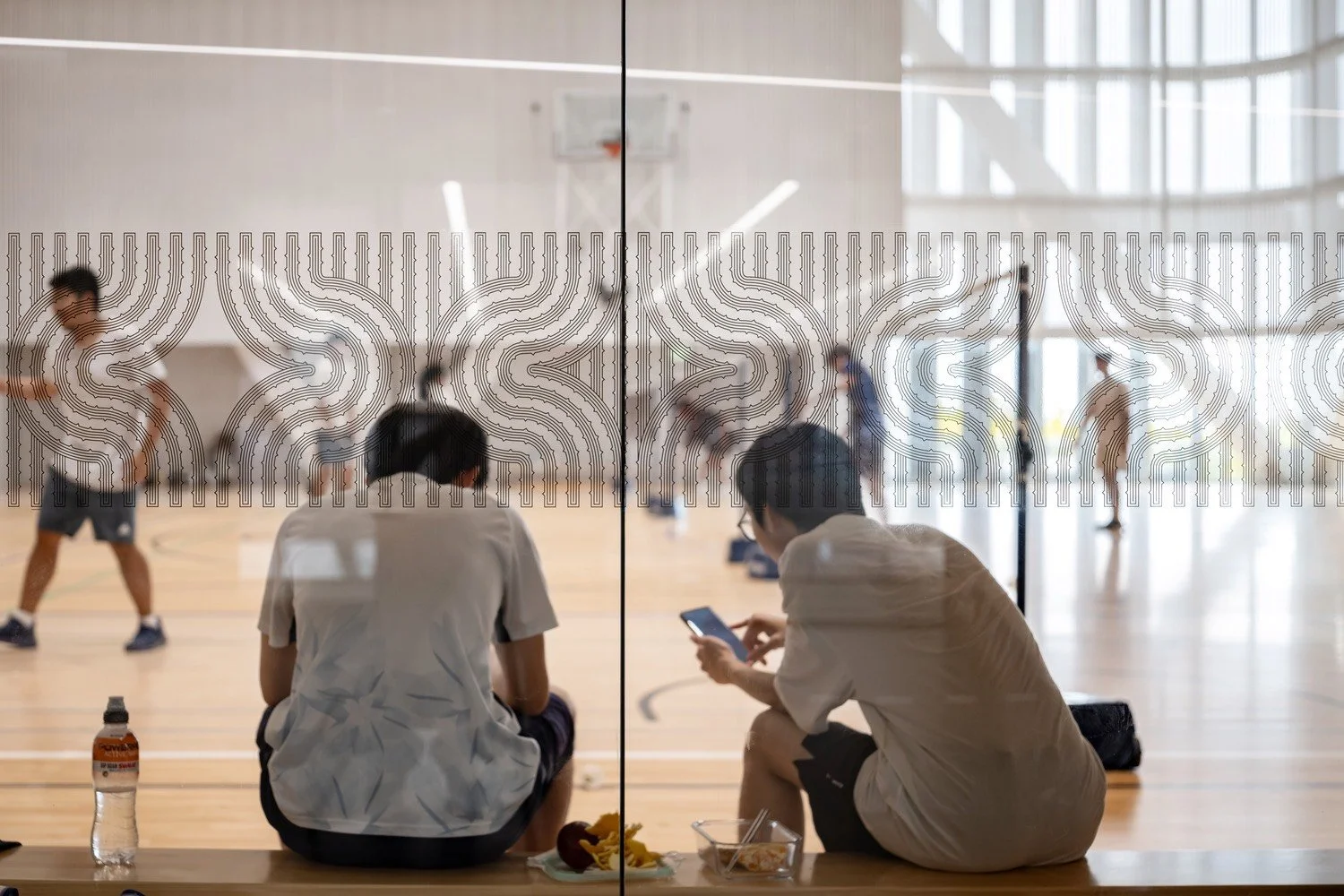
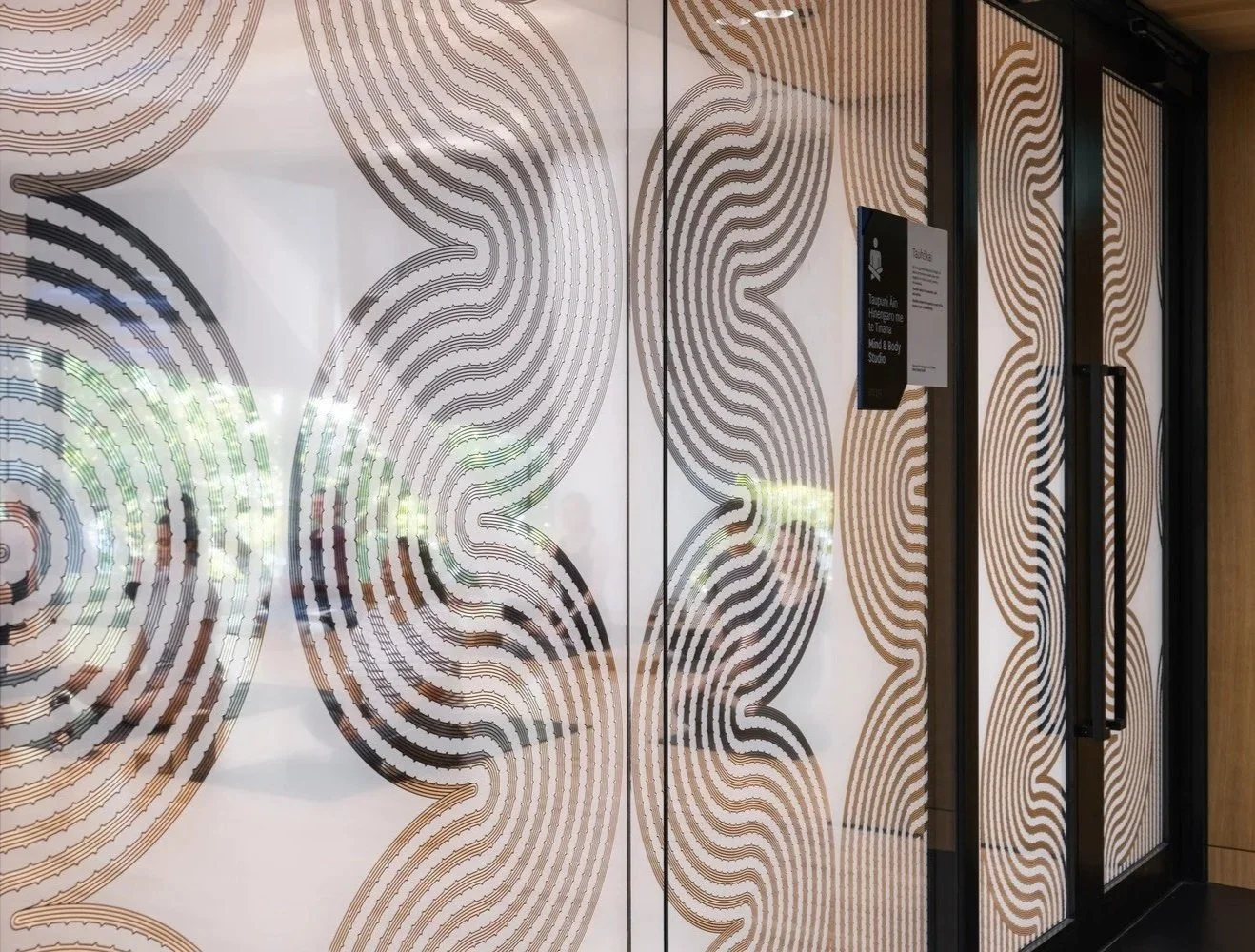
Custom tukutuku-like (traditional latticework) patterns denote energy, movement and flow, and to bind culture to programmatic spaces.
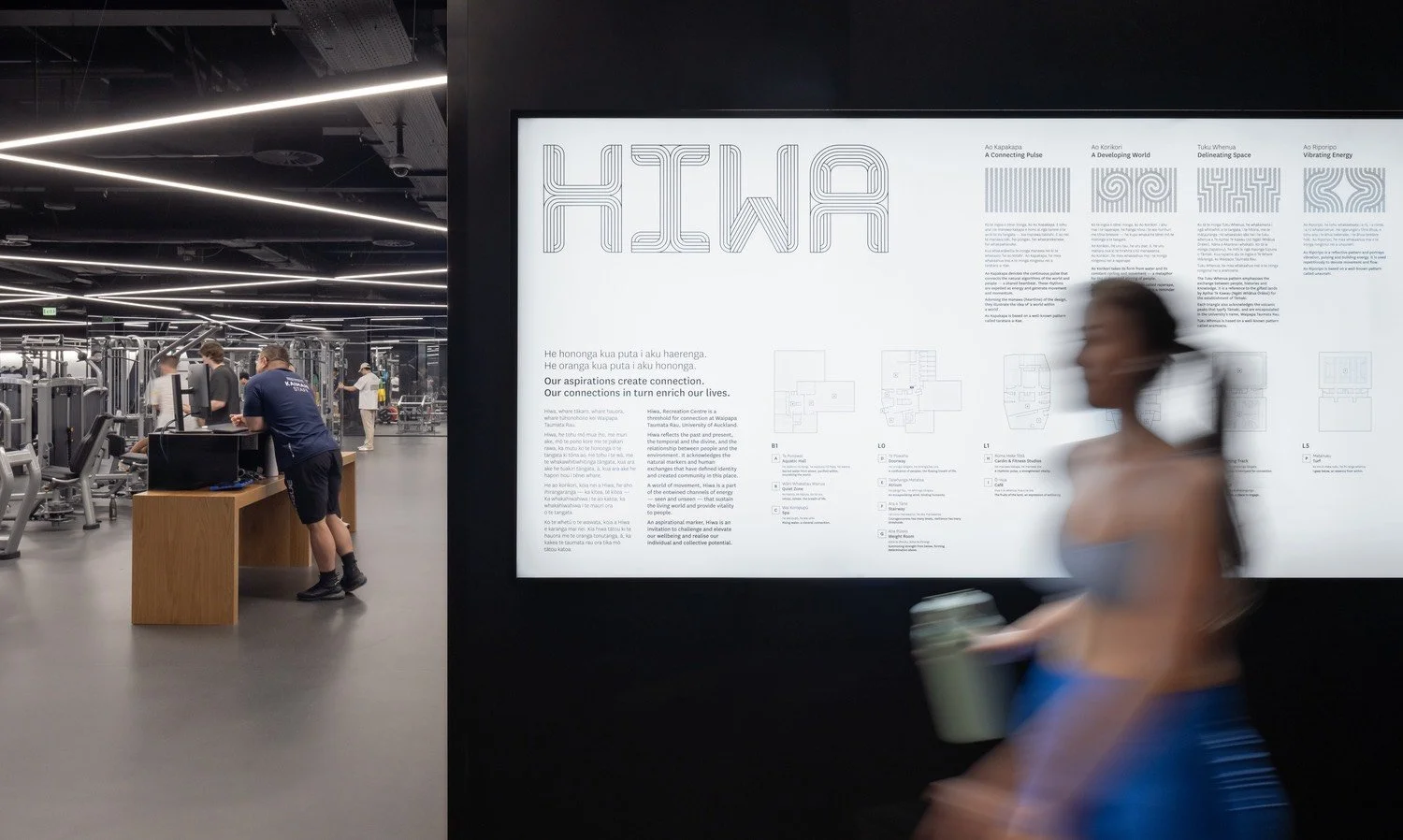
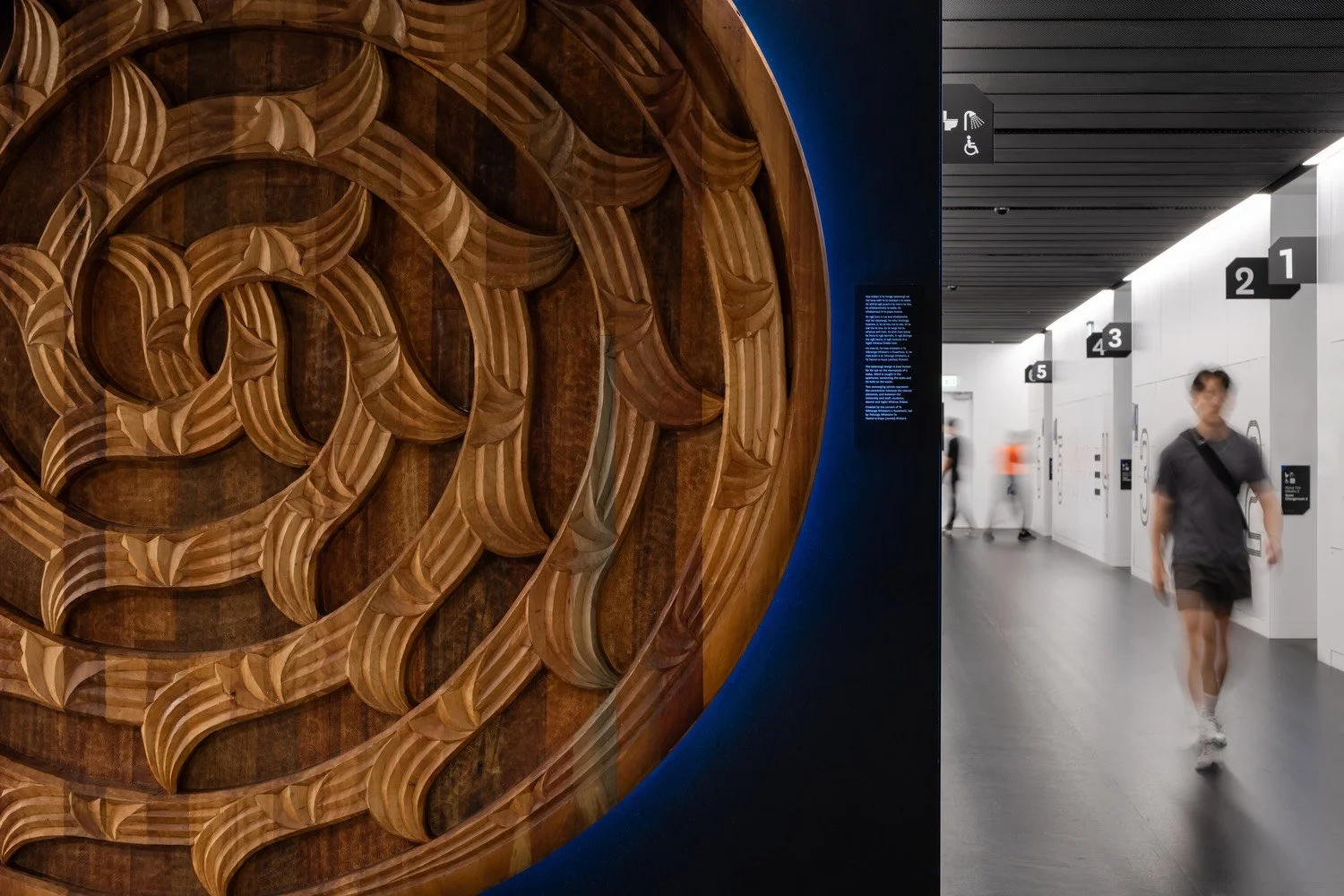
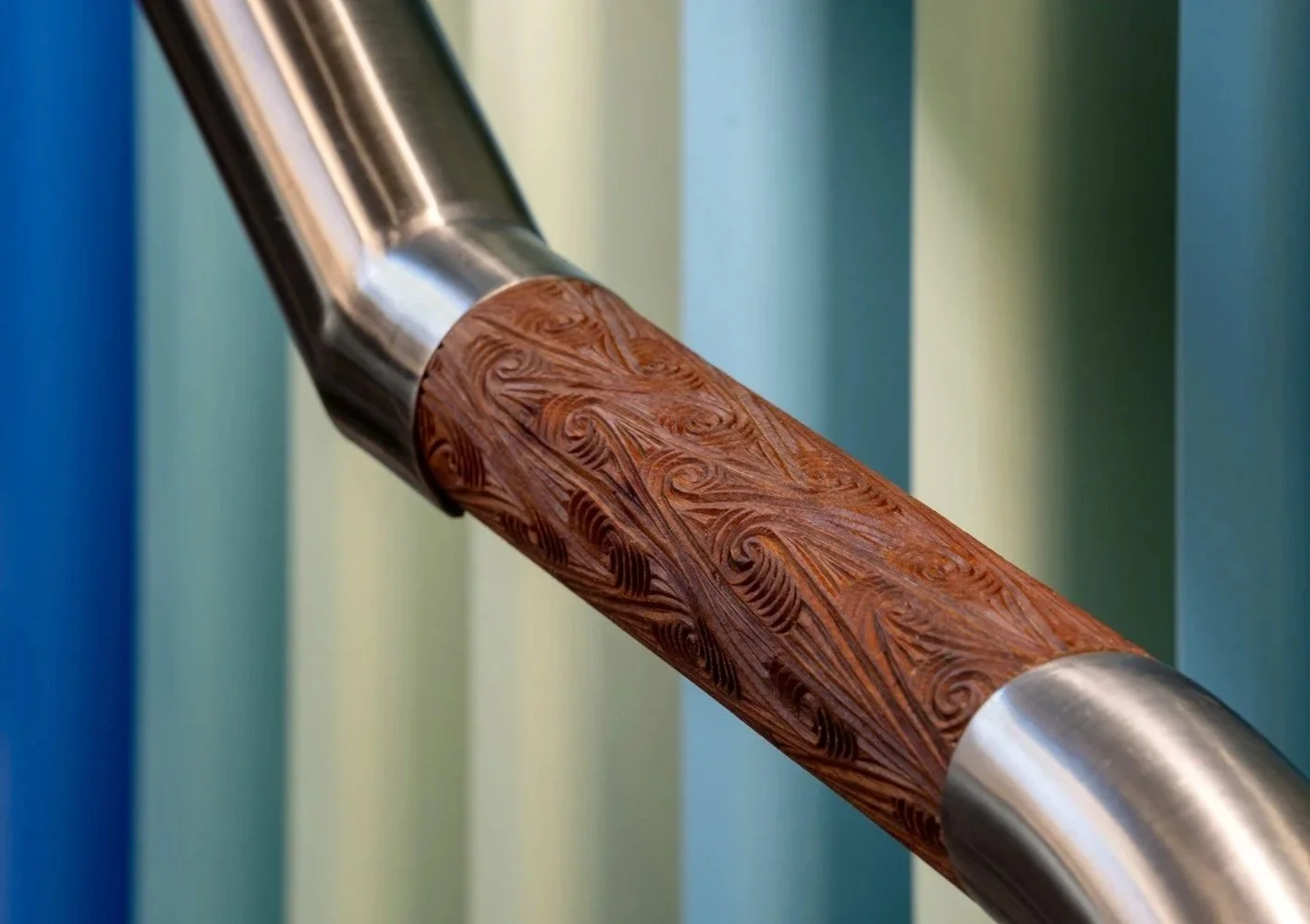
Ao Kotahi: A Connected World:
Ao Kotahi establishes Hiwa as a space of elevation, social exchange, and wellbeing – creating a world within a world.
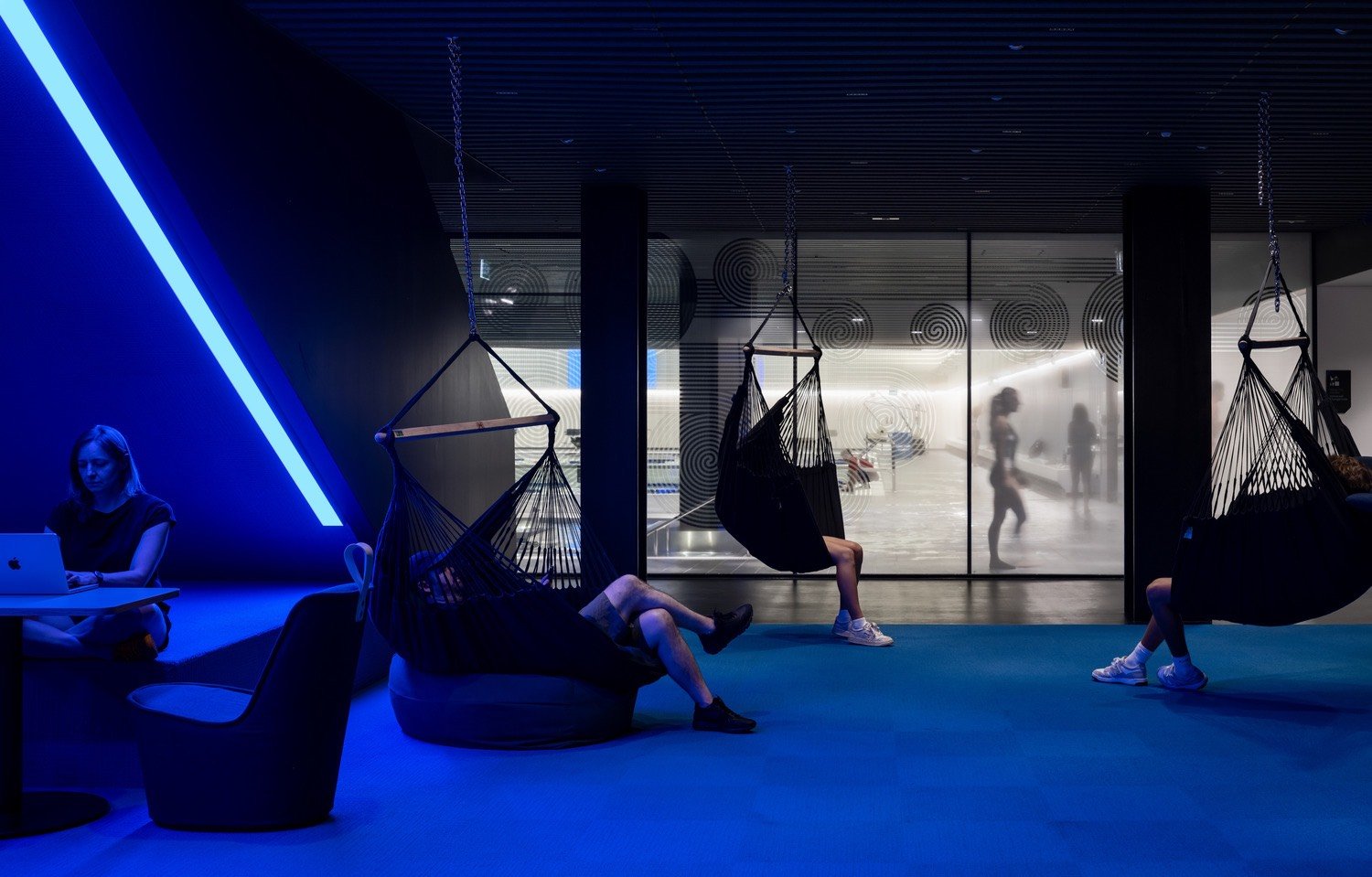
Students who may not identify with conventional ideas of athletics are welcomed to participate through deliberately integrated social, leisure and outreach spaces at all levels, including a café, therapy, napping pods, table tennis, soft seating, and touch-down spaces that create gateways to the larger sport spaces.