Hiwa Recreation Centre: Experiential Wayfinding
Tāmaki Makaurau Auckland, Aotearoa New Zealand
In Collaboration with Haumi and Warren & Mahoney
-
Aquatic Centre (Lap Pool, Leisure Pool, Spa Pool, Sauna, Diving Tower, Wet Classroom), Gymnasium, Racquet Sports Courts, Fitness Space, Weight Rooms, Circuit Studio, Immersive Spin Studio, Dance Studio, Yoga Studio, Boxing Studio, Events Sports Hall, Practice Sports Hall, Indoor Track, Bouldering Wall, Lounge, Cafe, Retail, Student Plaza, Rooftop Pitch, Rooftop Fitness and Track
-
2026 Society for College & University Planning (SCUP): SCUP/AIA-CAE Excellence in Architecture Award
2025 Graphic Design USA (GDUSA): Design Award
2025 Association of Registered Graphic Designers (RGD) Branding Award: Environmental / Experiential
2025 Association of Registered Graphic Designers (RGD) Branding Award: Social Good Award
2025 D&AD Pencil Award: Graphic Design (Environmental)
2025 Applied Arts Design Award (Cultural Overlay)
2025 Applied Arts Design Award (Gamify Movement)
2025 New Zealand Architecture Award: Education
2025 New Zealand Institute of Architects (NZIA): Auckland Architecture Award
2025 New Zealand Property Industry Award: Supreme Award
2025 New Zealand Property Industry Award: Education Property Award
2025 World Architecture Festival (WAF) Award: Completed Buildings (Sport)
2025 International Olympic Committee (IOC) / International Association for Sports and Leisure Facilities (IAKS): Architecture Prize
2025 Designers Institute of New Zealand: Best Design Award (Private, Public & Institutional Spaces)
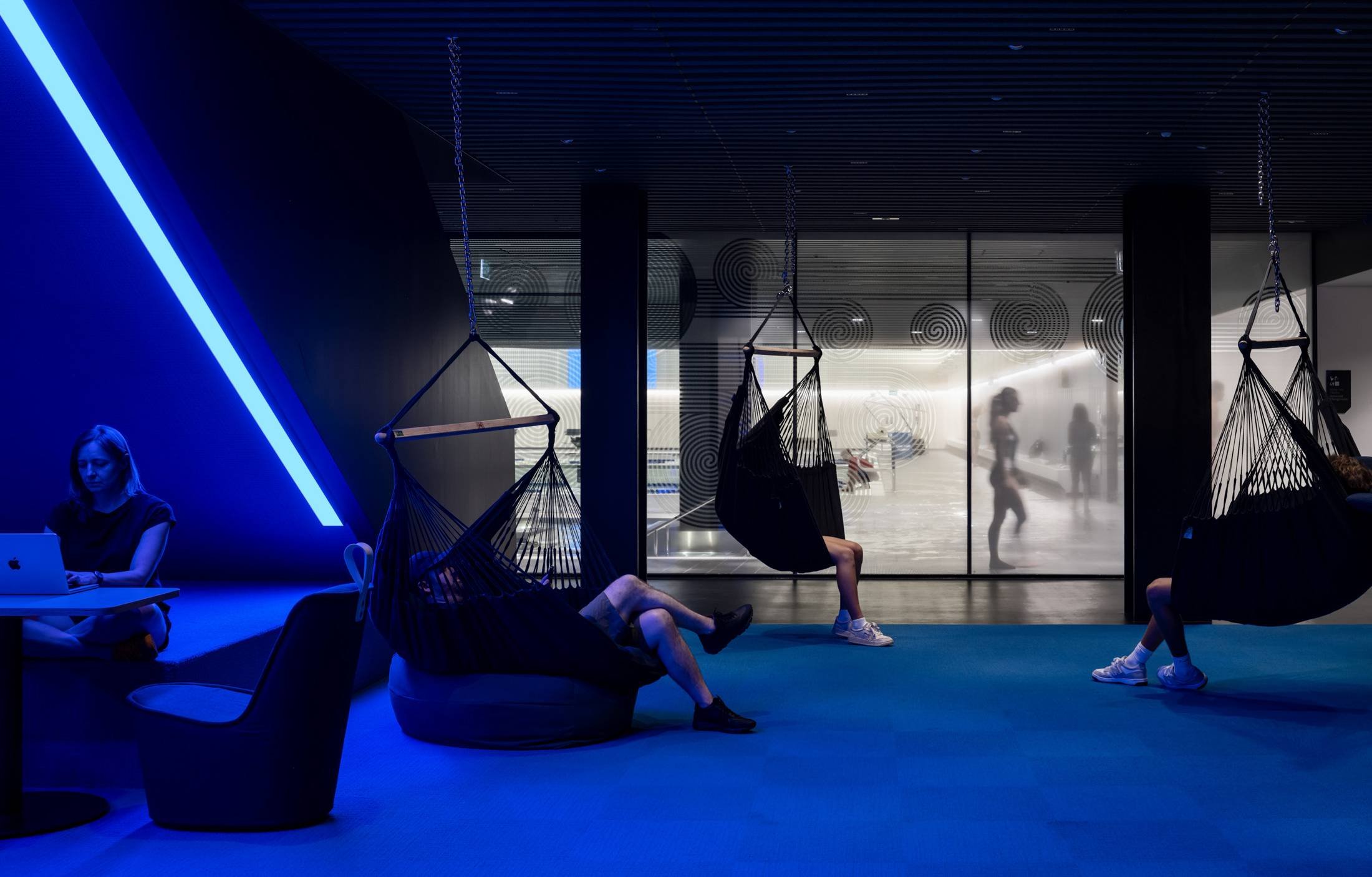
Through extensive collaboration with local Auckland design studio, Haumi, that specializes in reflecting Māori culture and principles in the design process, the wayfinding program was developed as graphic identity for the Hiwa Recreation Centre. This graphic overlay enriches the facility’s purpose, especially enhancing how it engenders connections — water to air, body and mind, people and place — all with the aim of fostering cultural, social, and individual wellness.
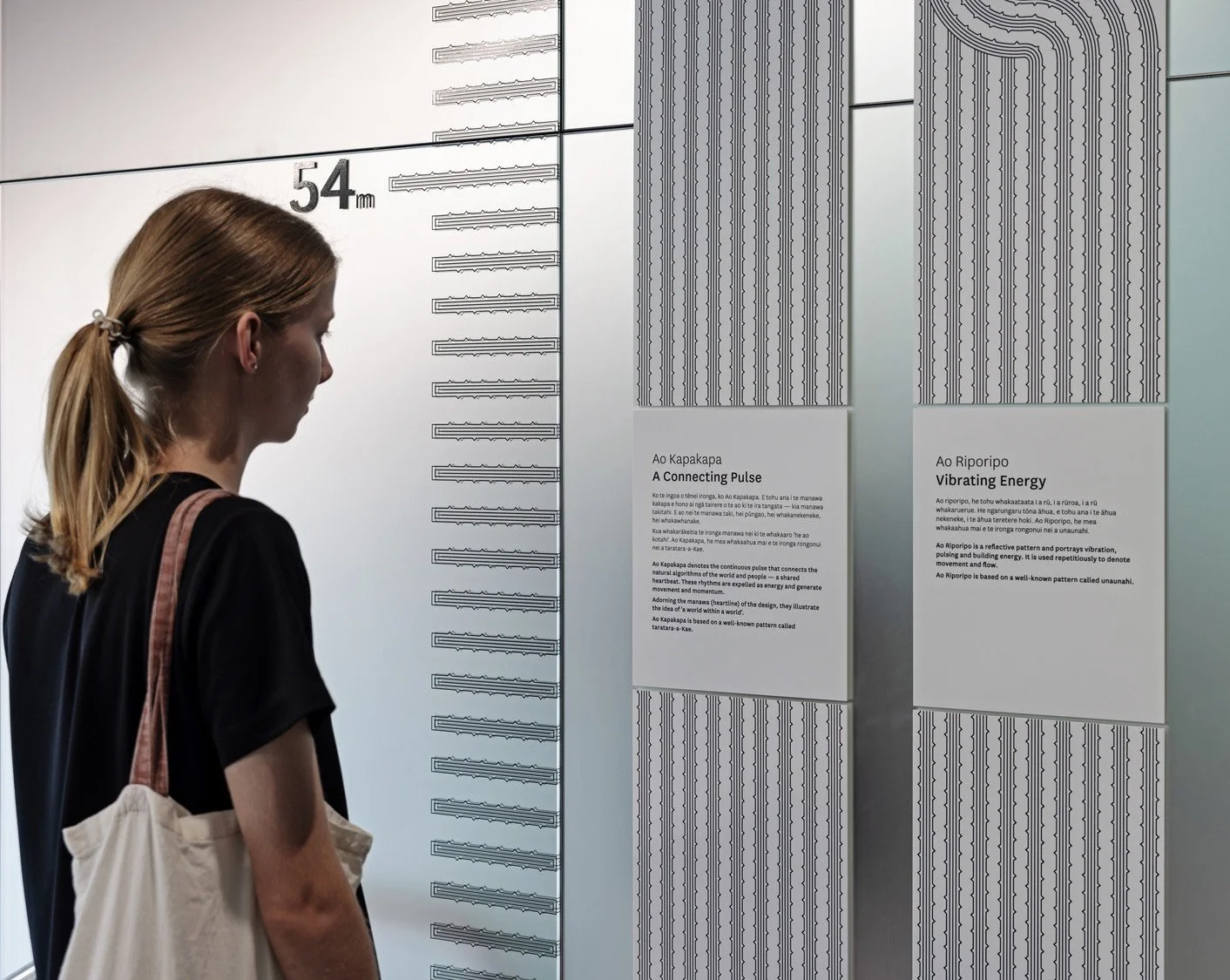
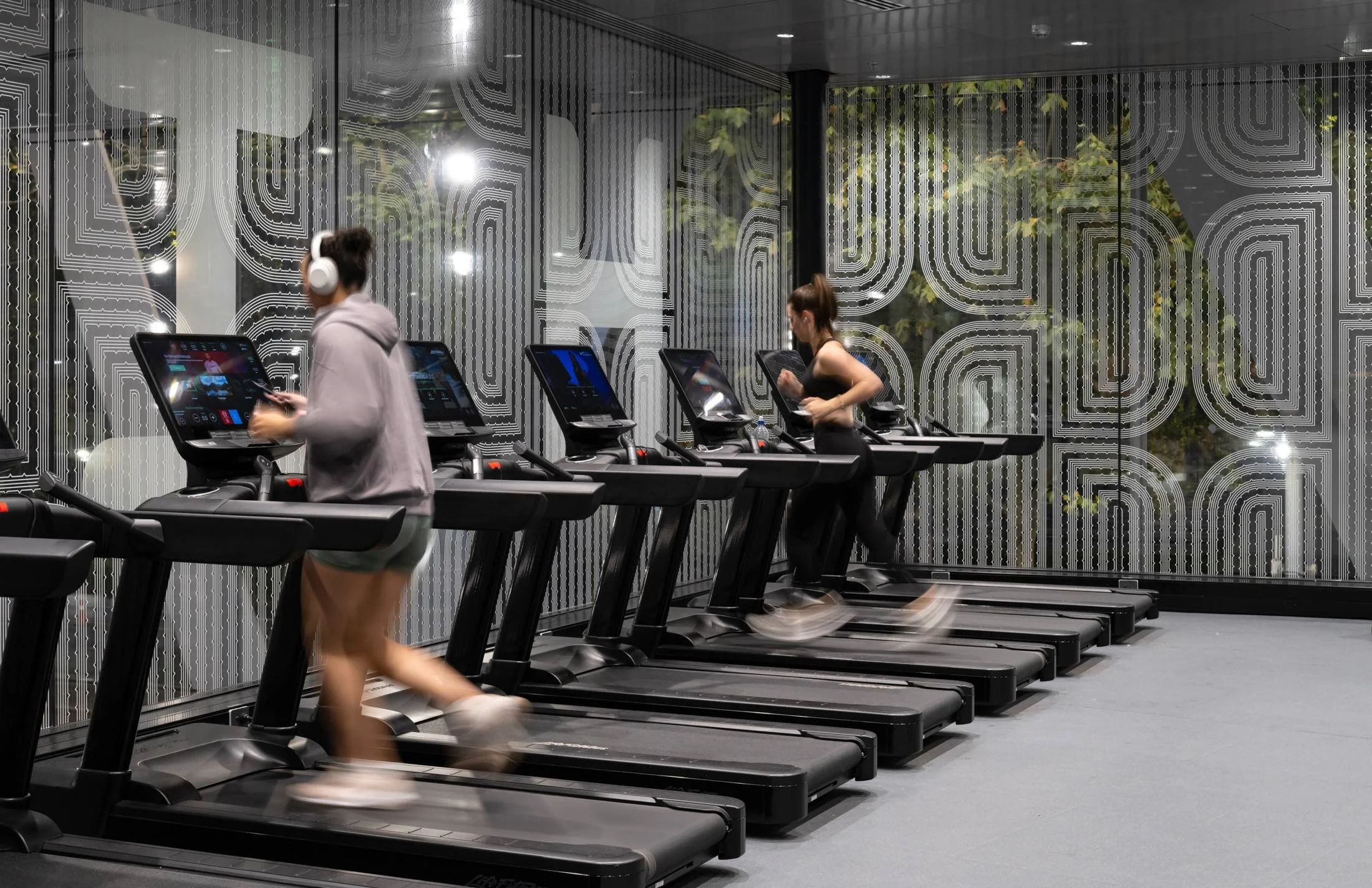
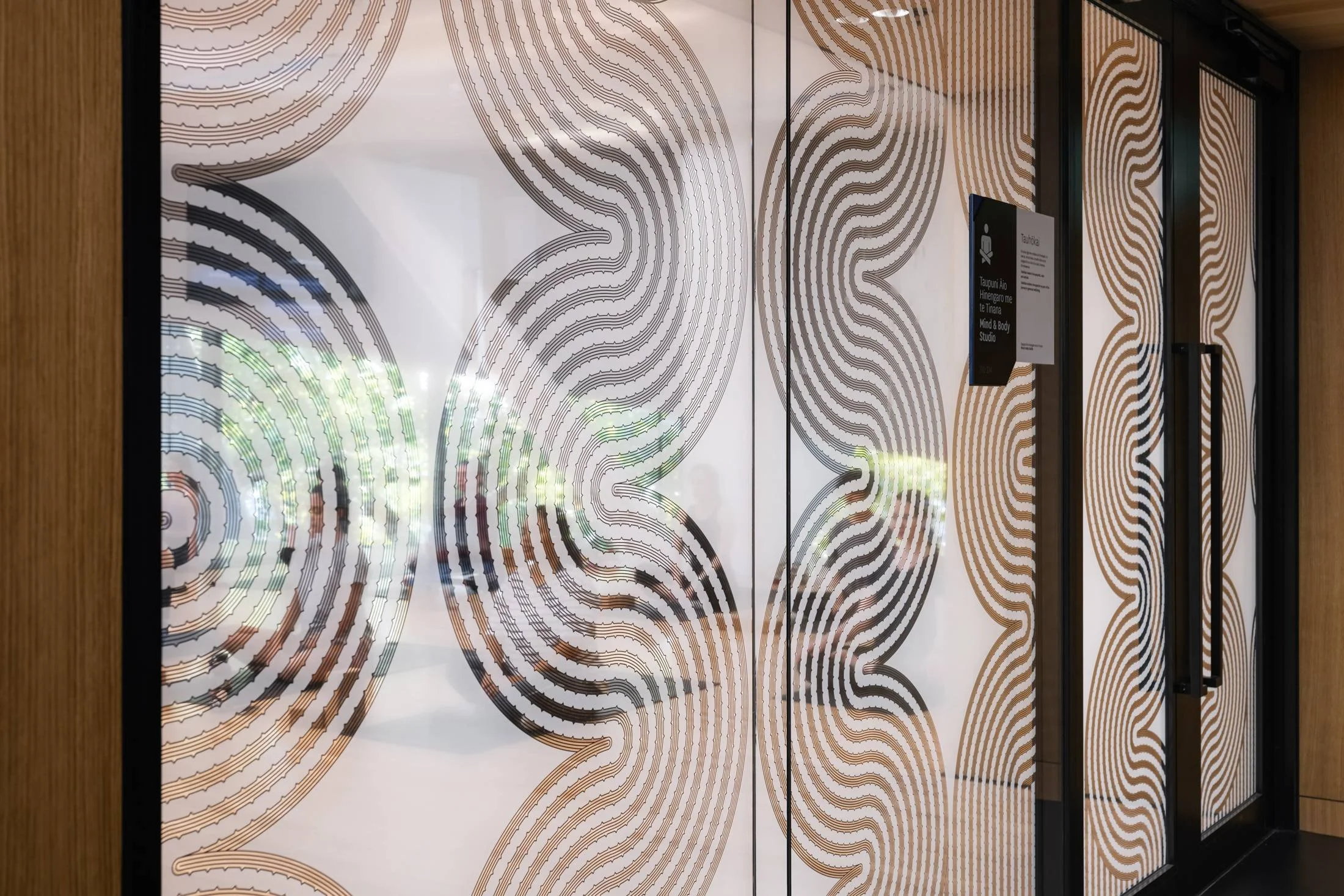
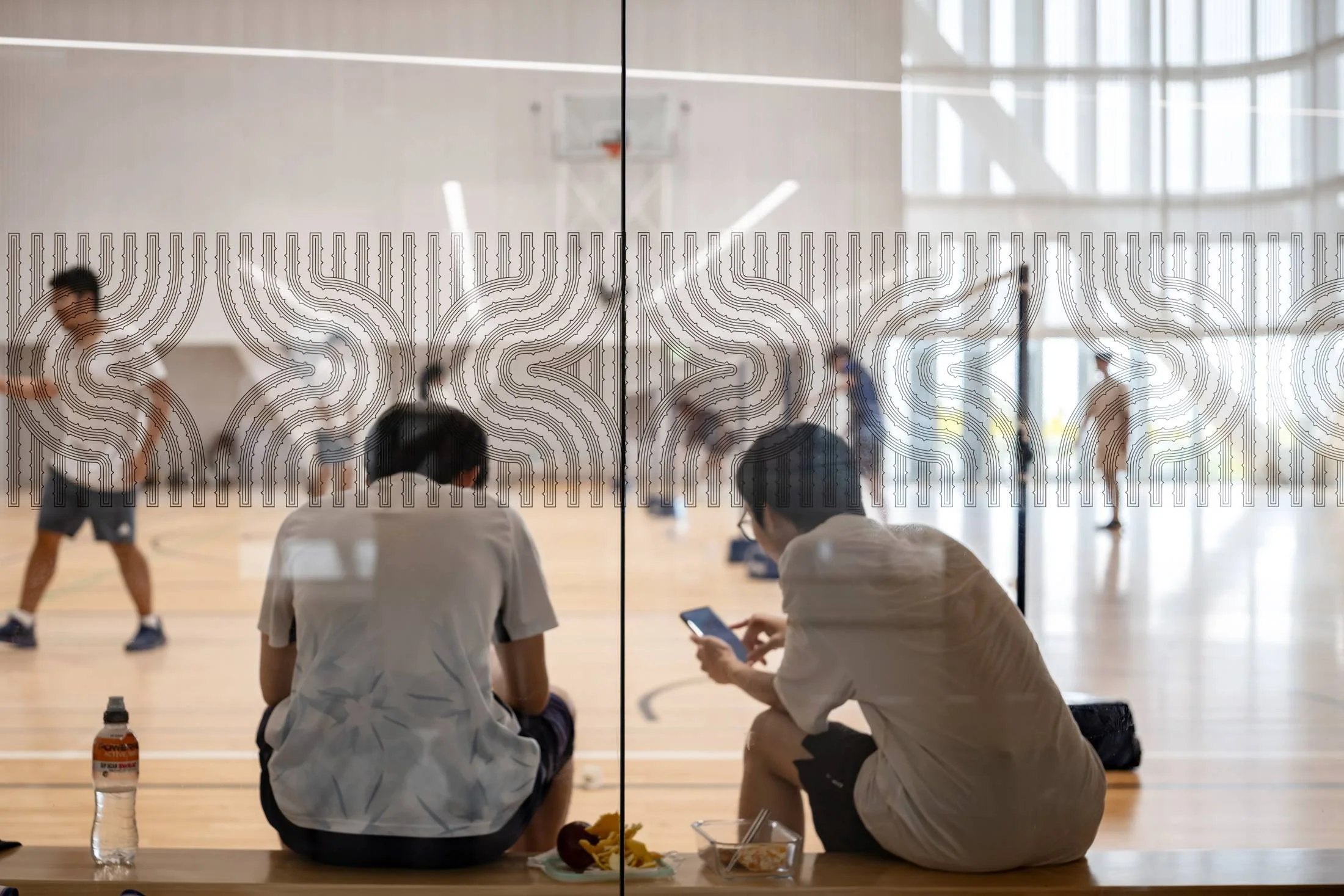
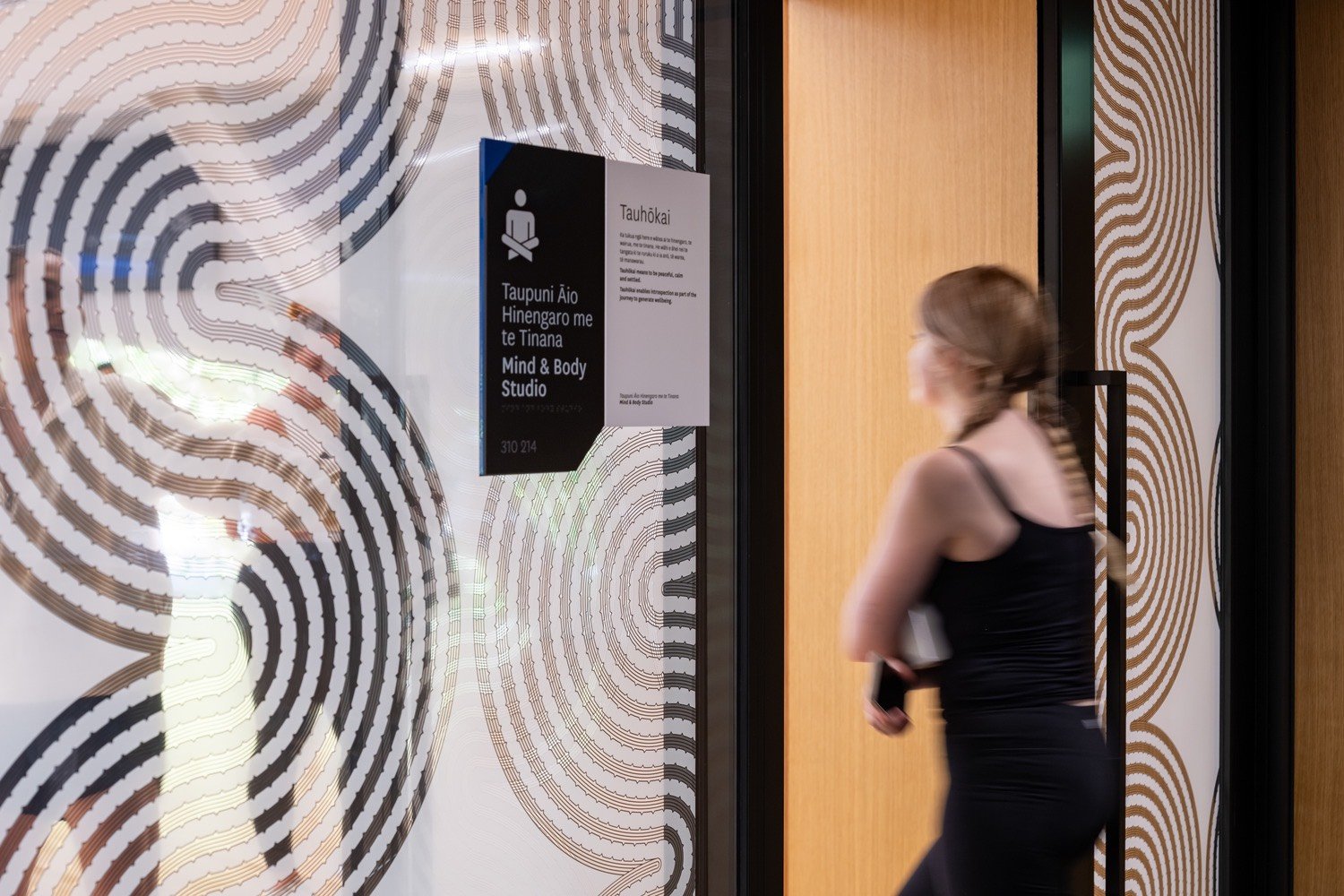
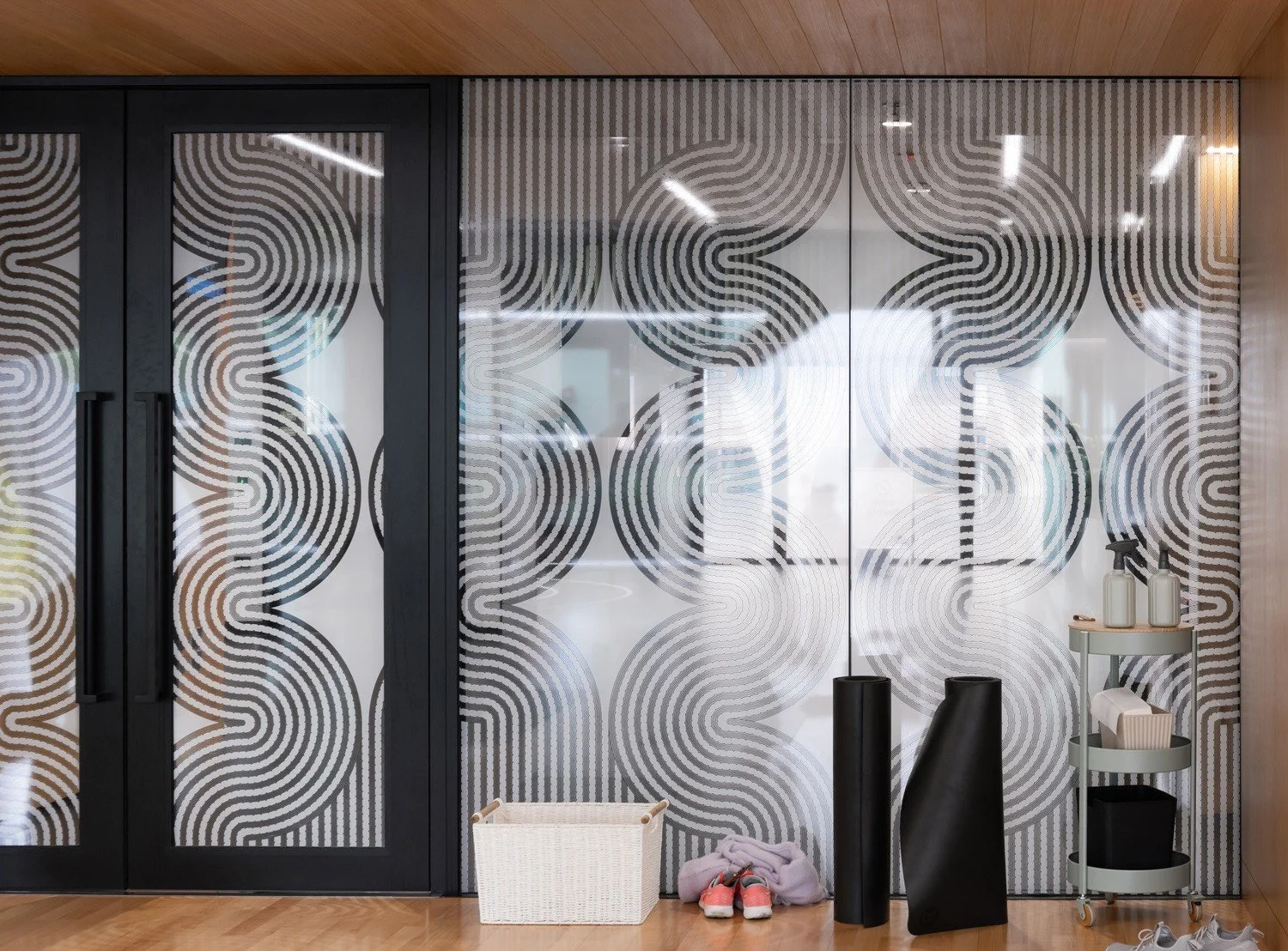
A Kaupapa (connection logic), established a set of principles and narrative that runs throughout the facility. The graphic results are found primarily in two modes — carvings and patterns. The tukutuku-like (traditional latticework) patterns developed, enhance the meaning and experience of programmatic spaces. Tukutuku patterns are found within a wharenui (meeting house). These designs emphasize repetition and the interplay of negative and positive space. Here they are choreographed with the visitor’s movement through the building.
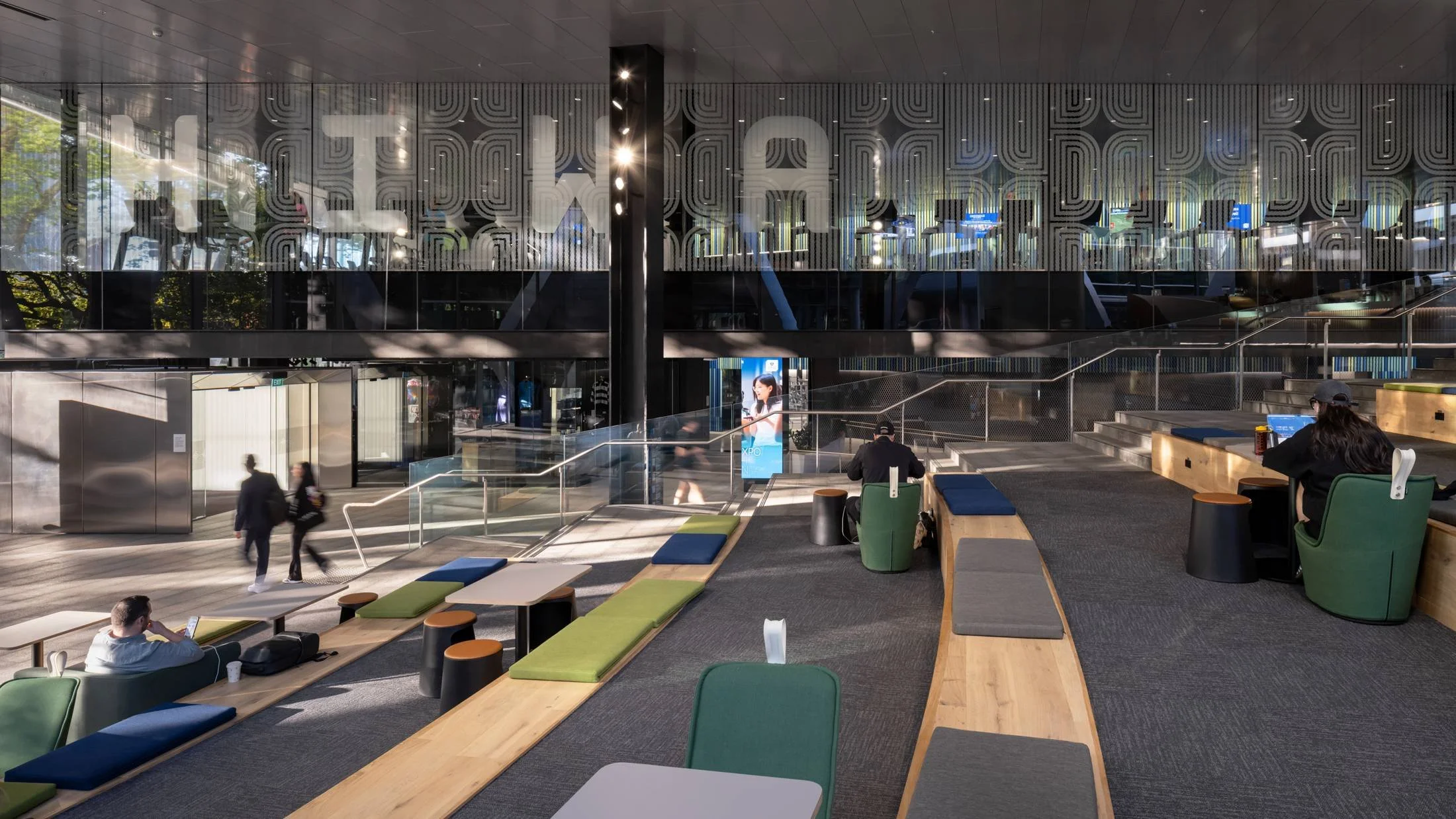
Ao Tukupū Pattern (A World with No Barriers): highlights the stars as a unifying element of day-to-day life. Hiwa, the project's gifted name, references the ‘wishing star’ where Māori place their hopes for the year ahead.
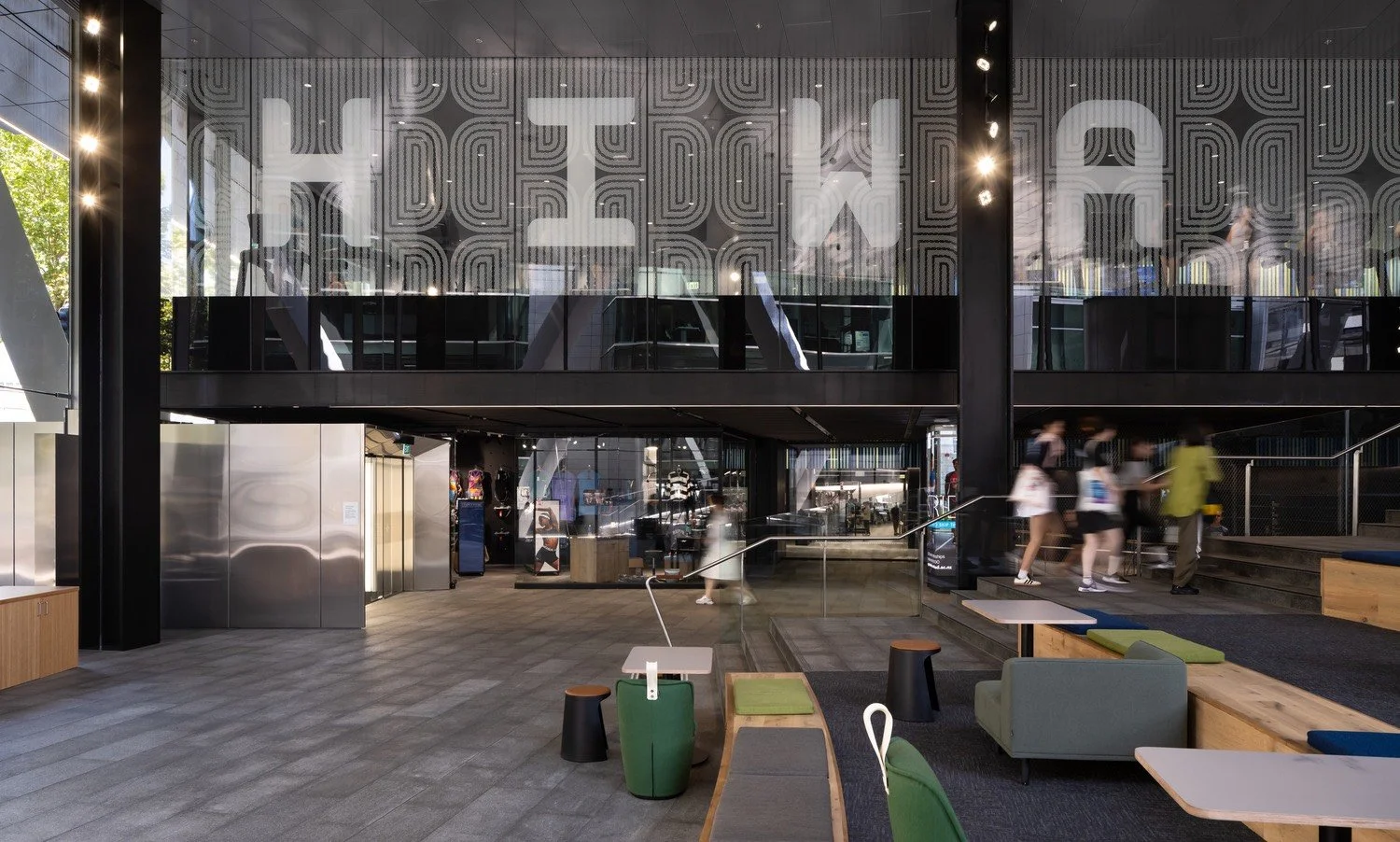
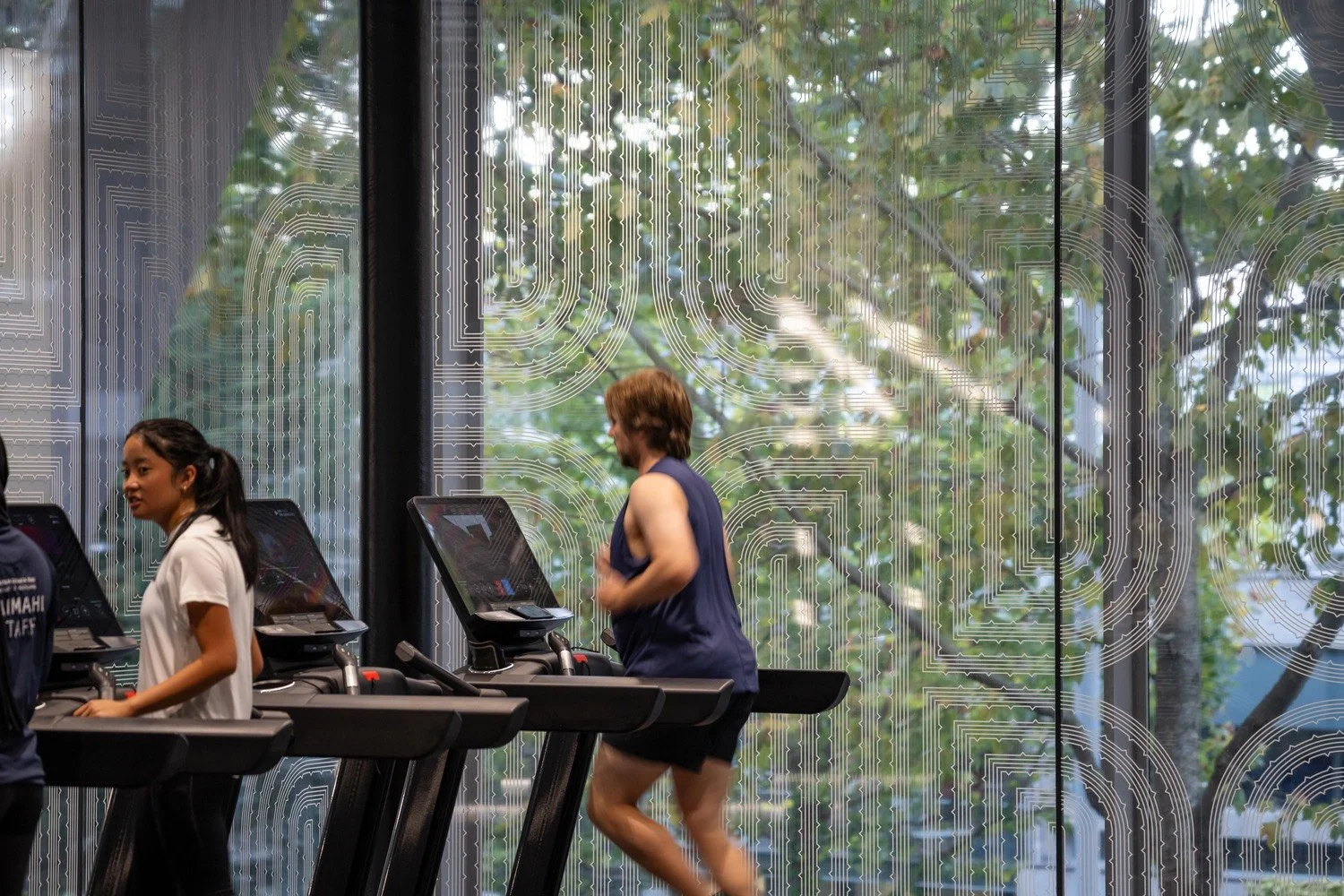
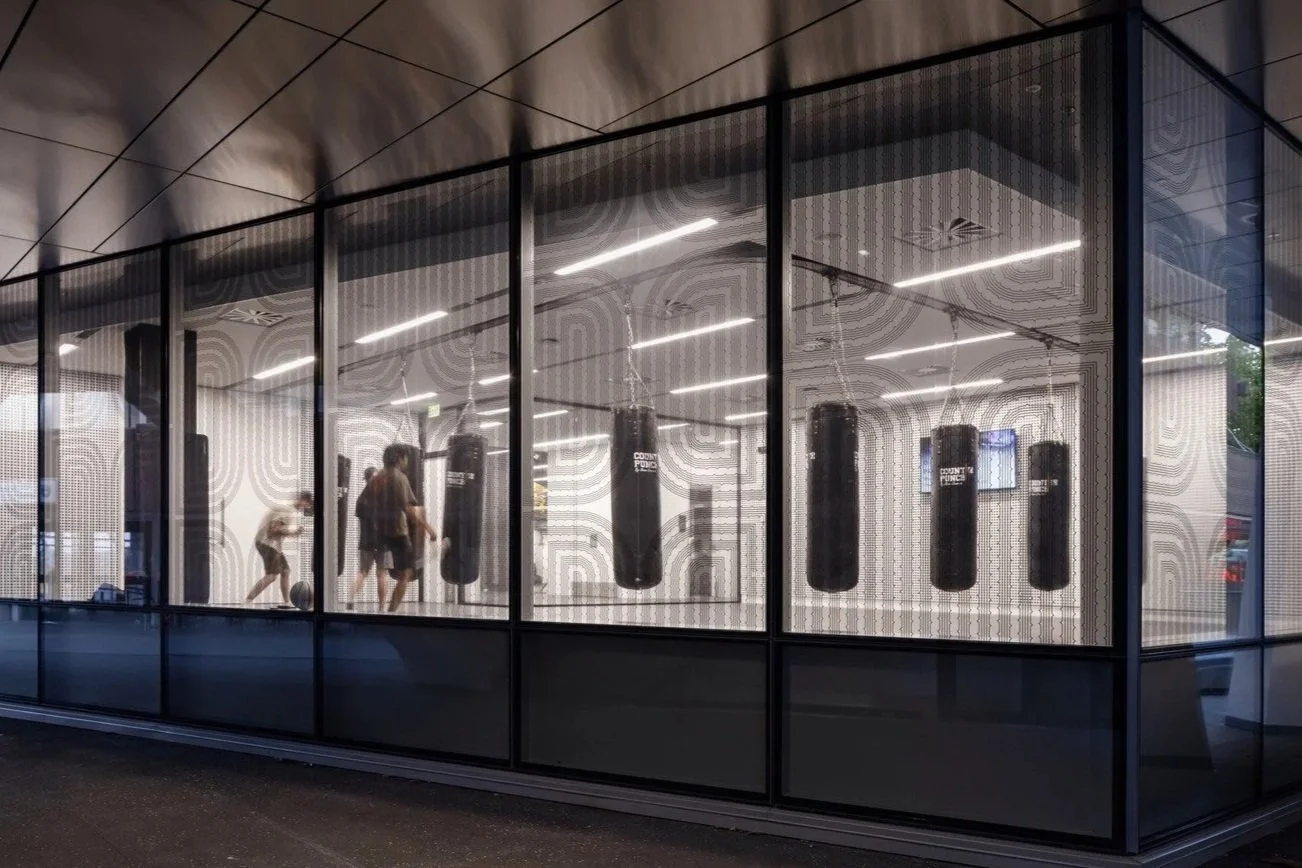
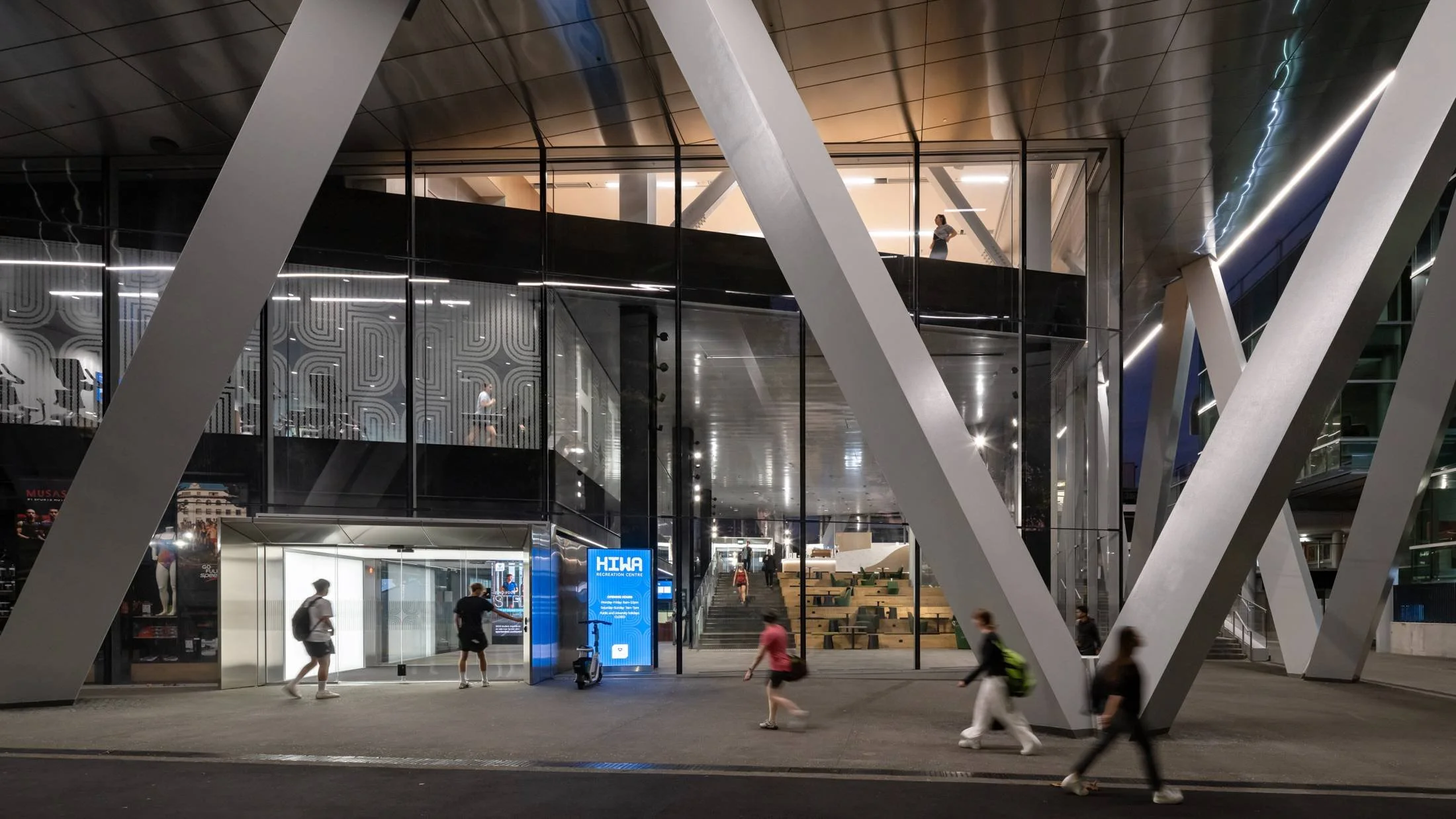
The Ao Tukupū pattern wraps the entire ground level. Openings in it are scaled to create portal views to the sky and the surrounding nature.
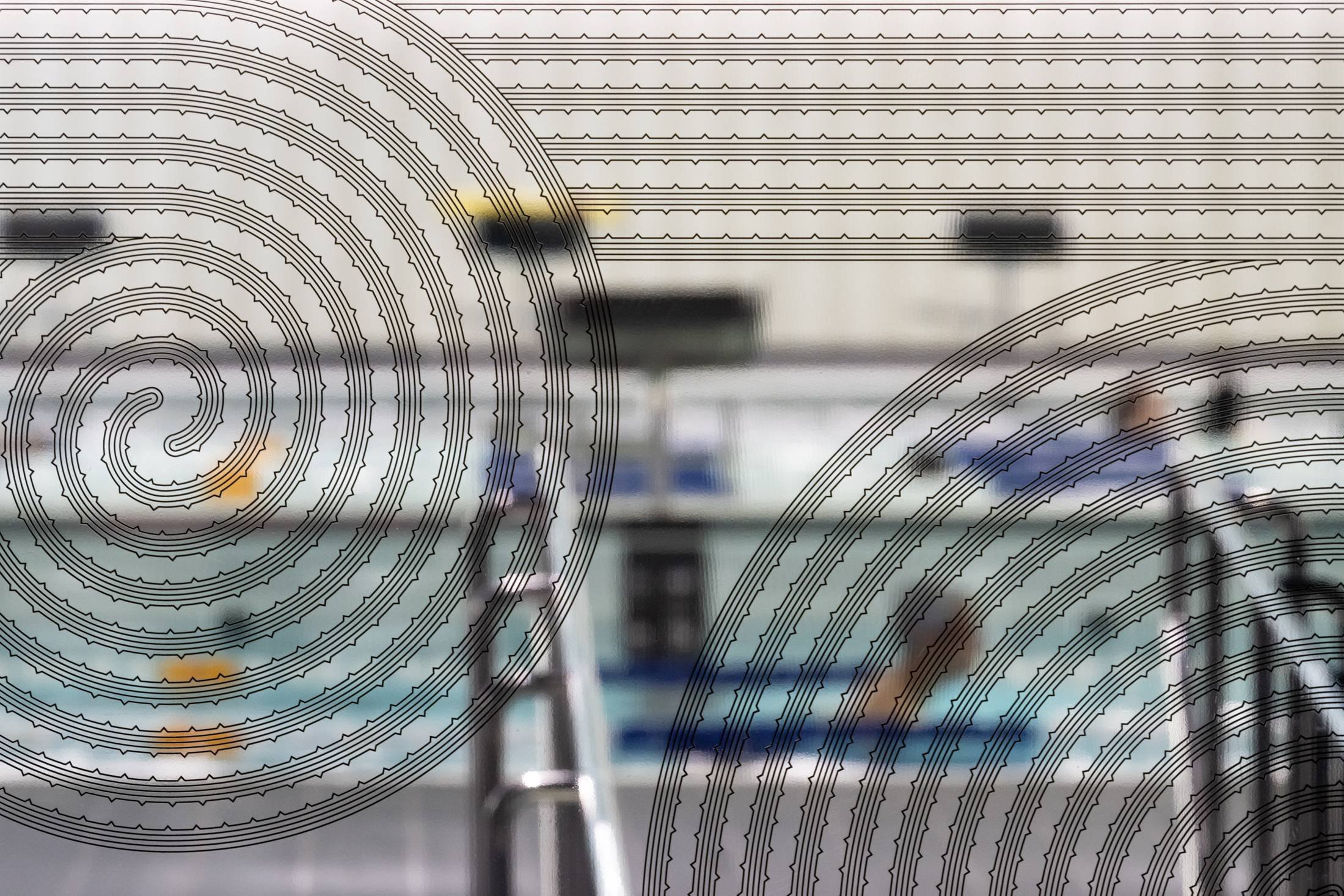
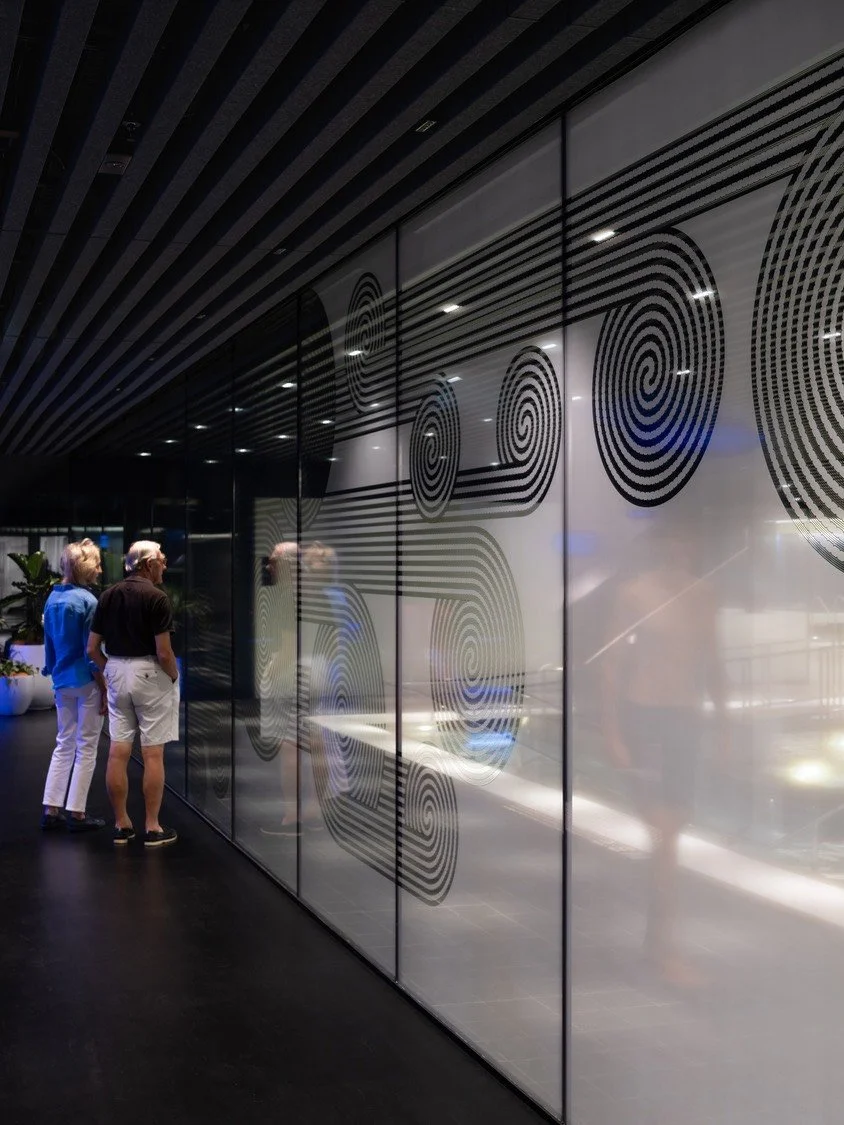
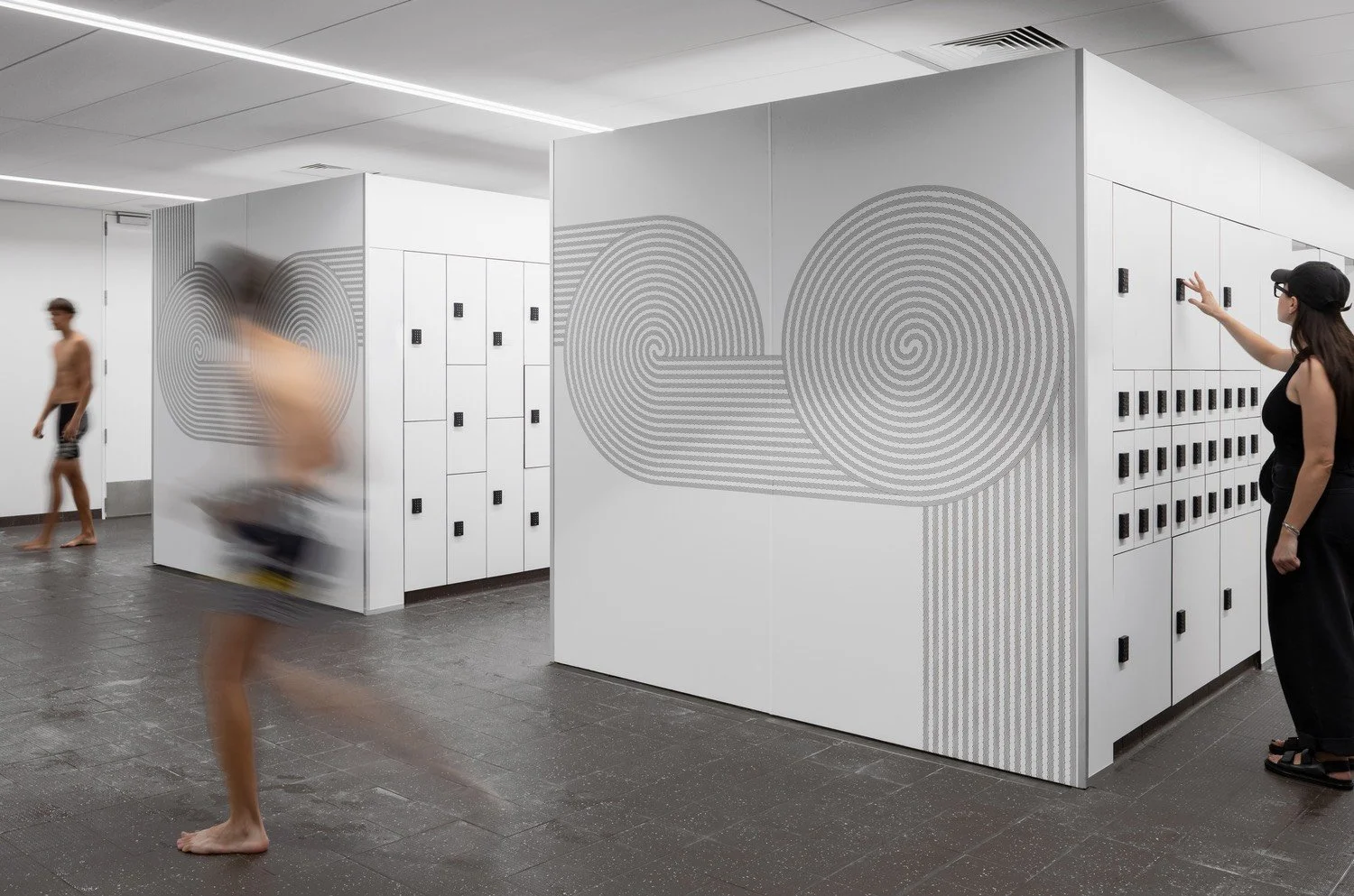
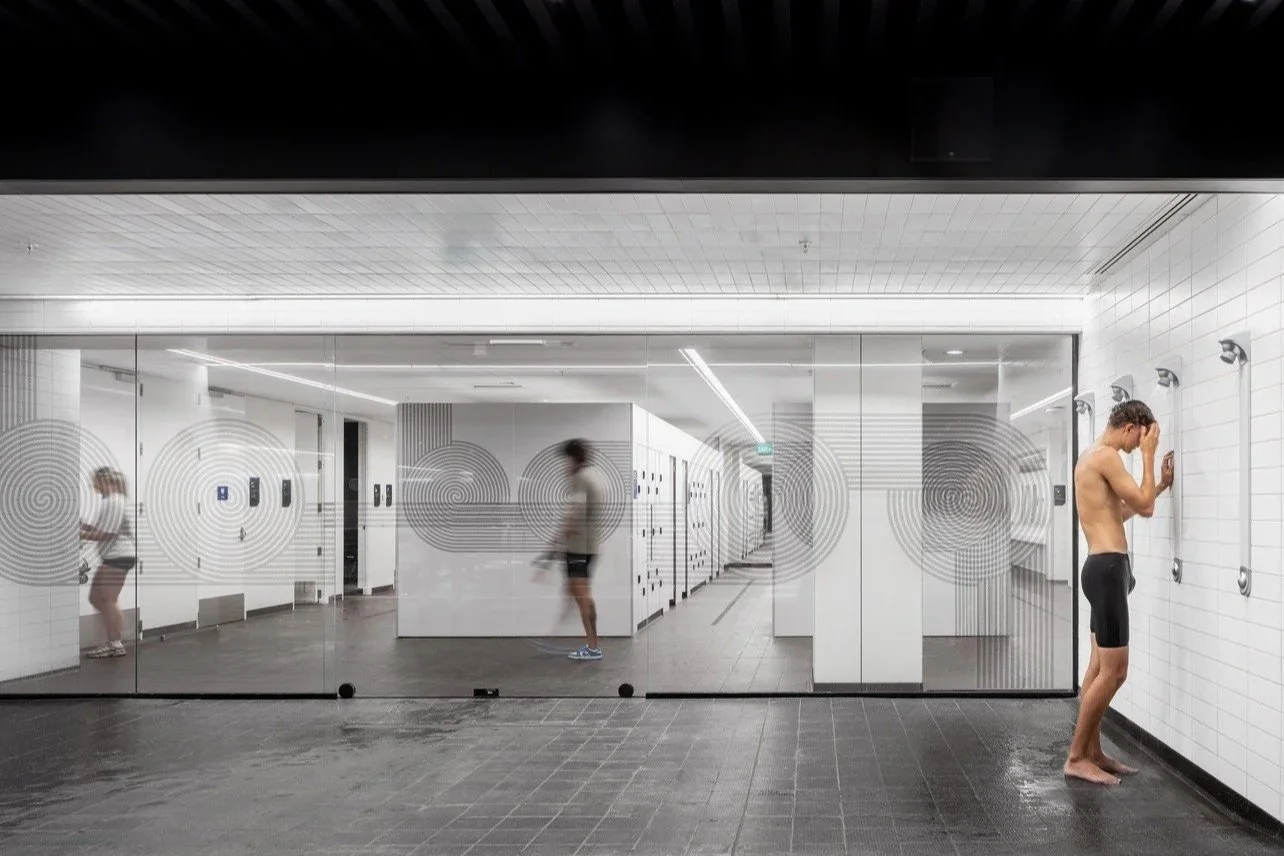
Ao Korikori Pattern (A Developing World): represents the continuous flow of water. Reflecting the dynamic energy of the aquatic centre, the pattern gradates filtering views into the on-deck showers.
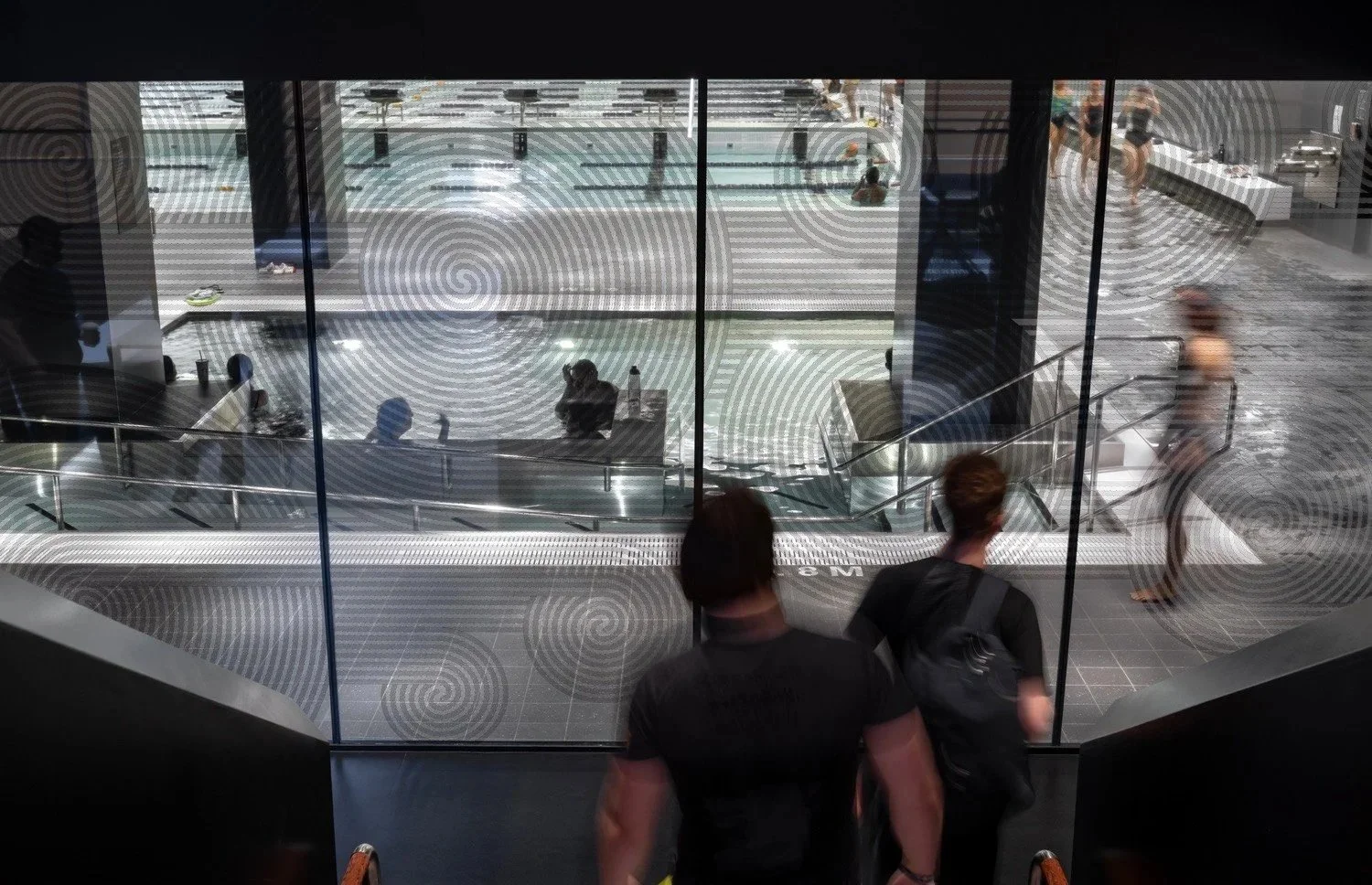
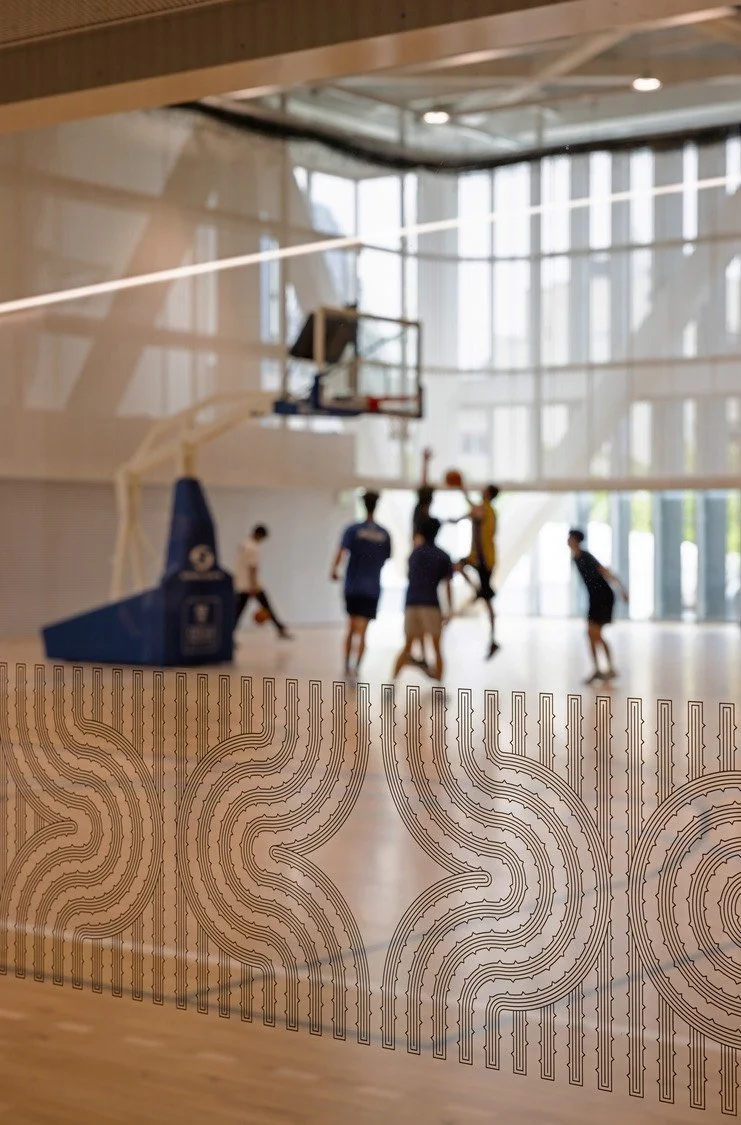
Ao Riporipo Pattern (A Vibrating Energy): refers to vibration and vitality, and plays on the energy of recreation within the facility.
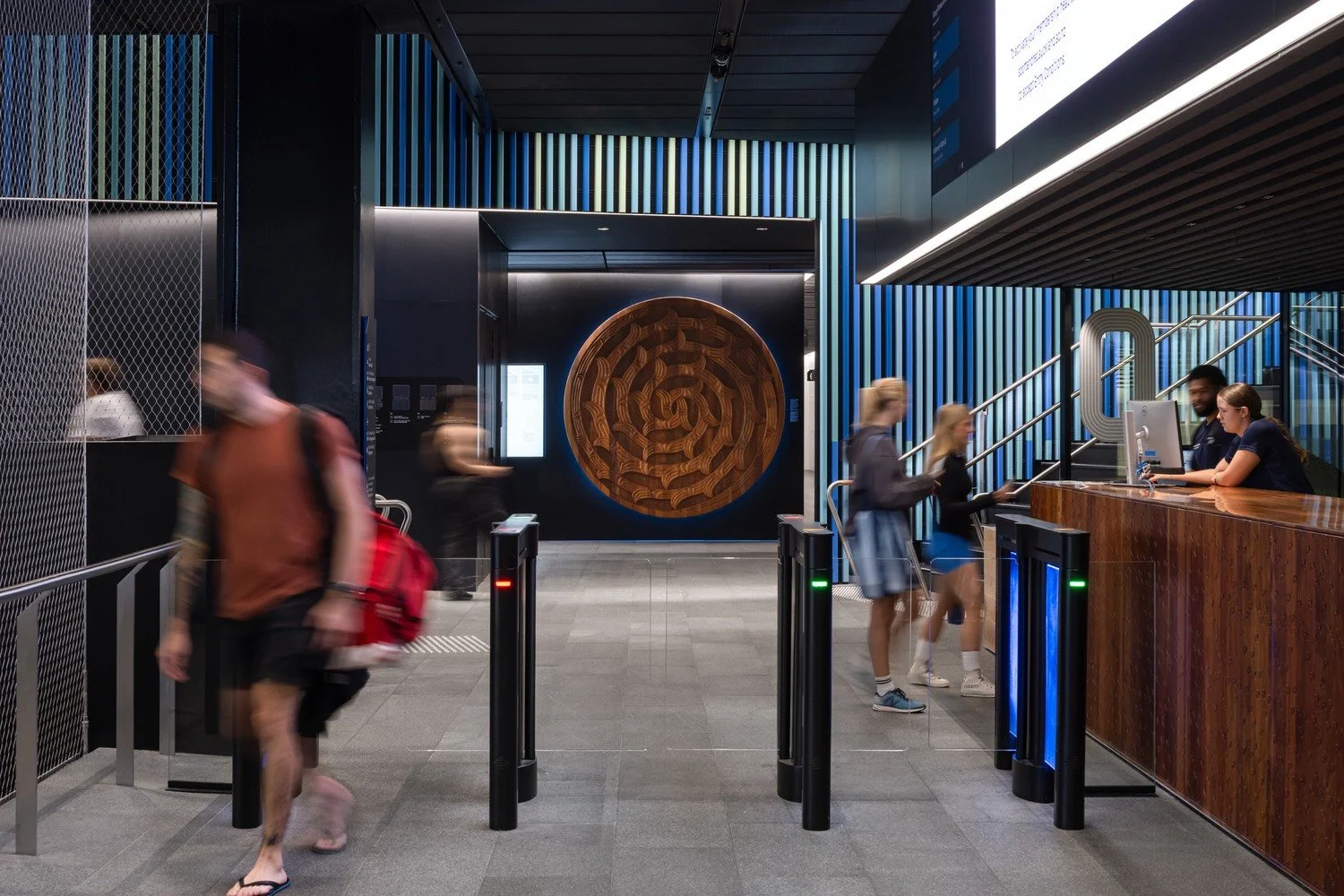
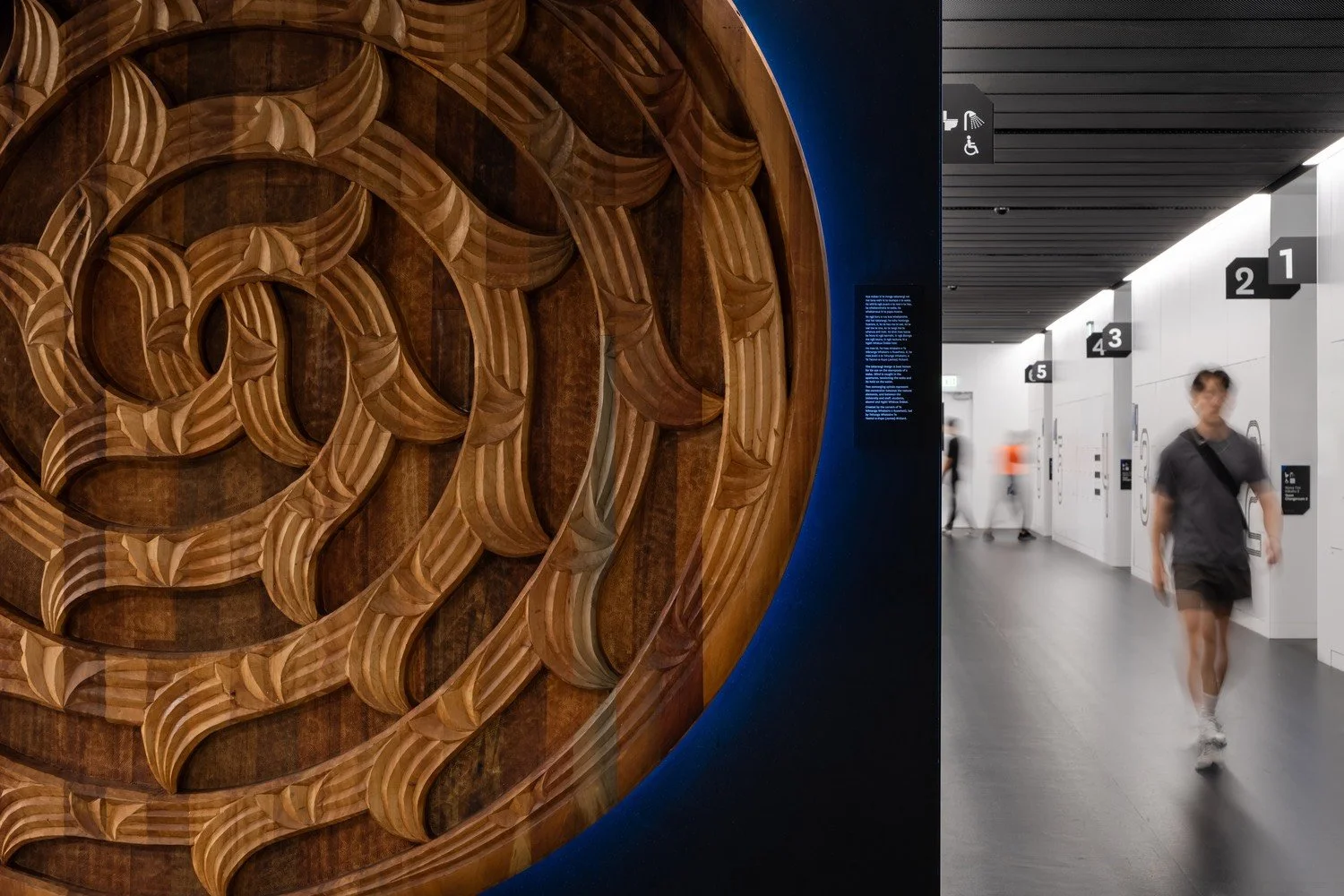
Ao Kotahi Pattern (A Connected World): on axis with the turnstiles hangs a 2.6-metre-diameter carving of a takarangi double spiral pattern, made from 35,000-year-old reclaimed swamp kauri wood, an ancient tree with deep significance.
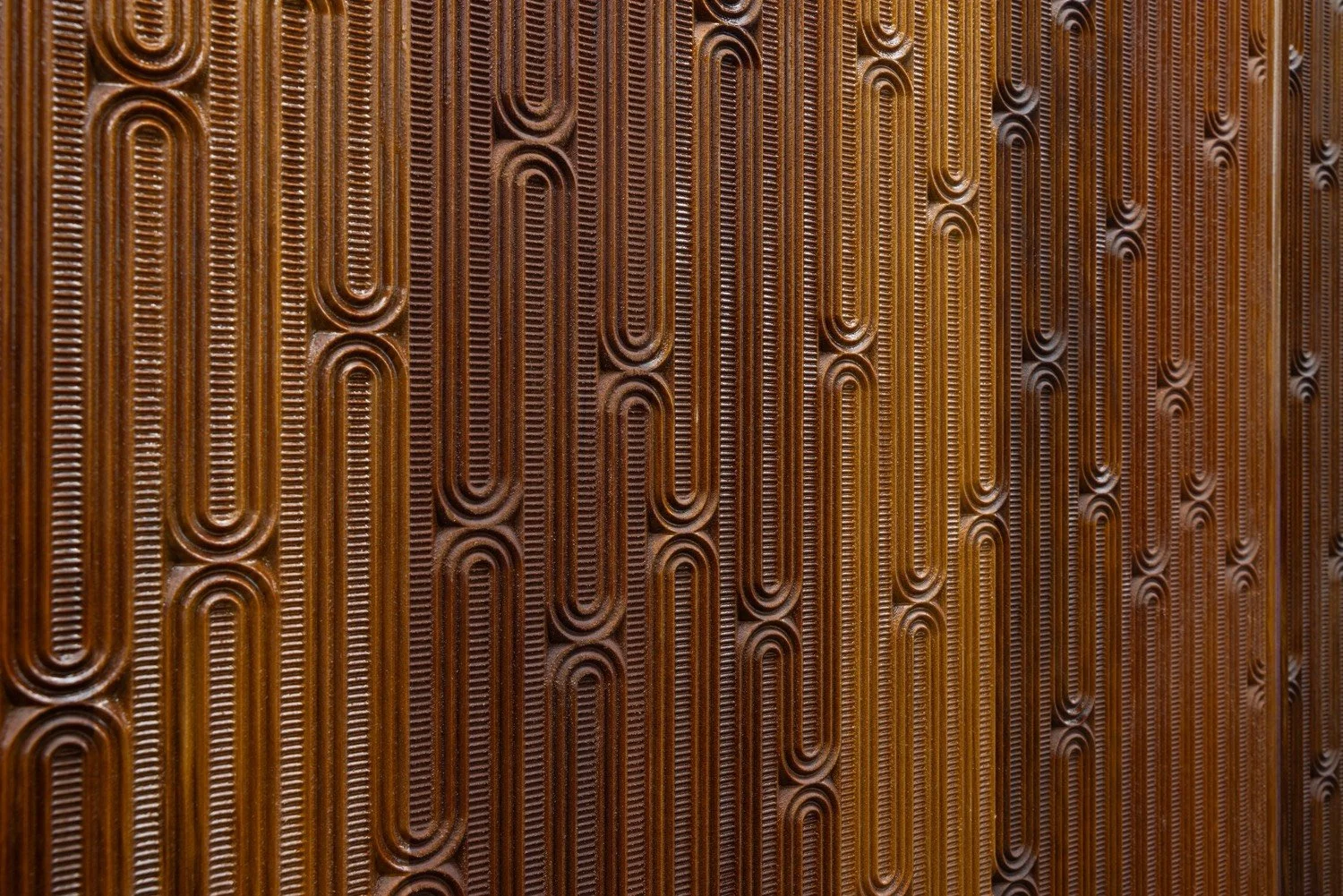
The 35,000-year-old kauri wood was also used for the carved reception desk, welcoming visitors to the recreation centre at their first point of contact.
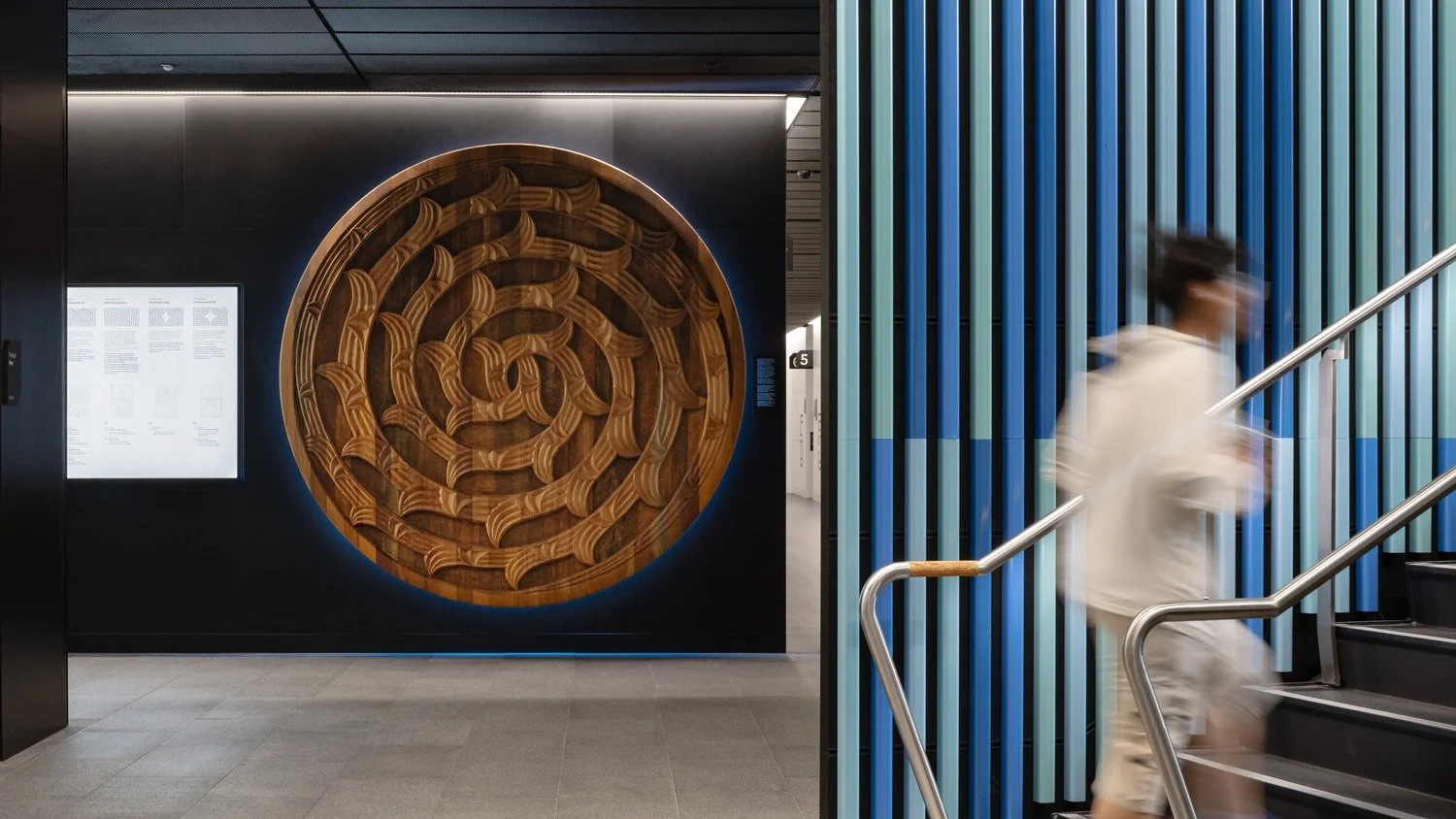
The takarangi is best known on the stern post (taurapa) of a waka (canoe). It provides stability and symbolizes wind passing through, binding the land and water.
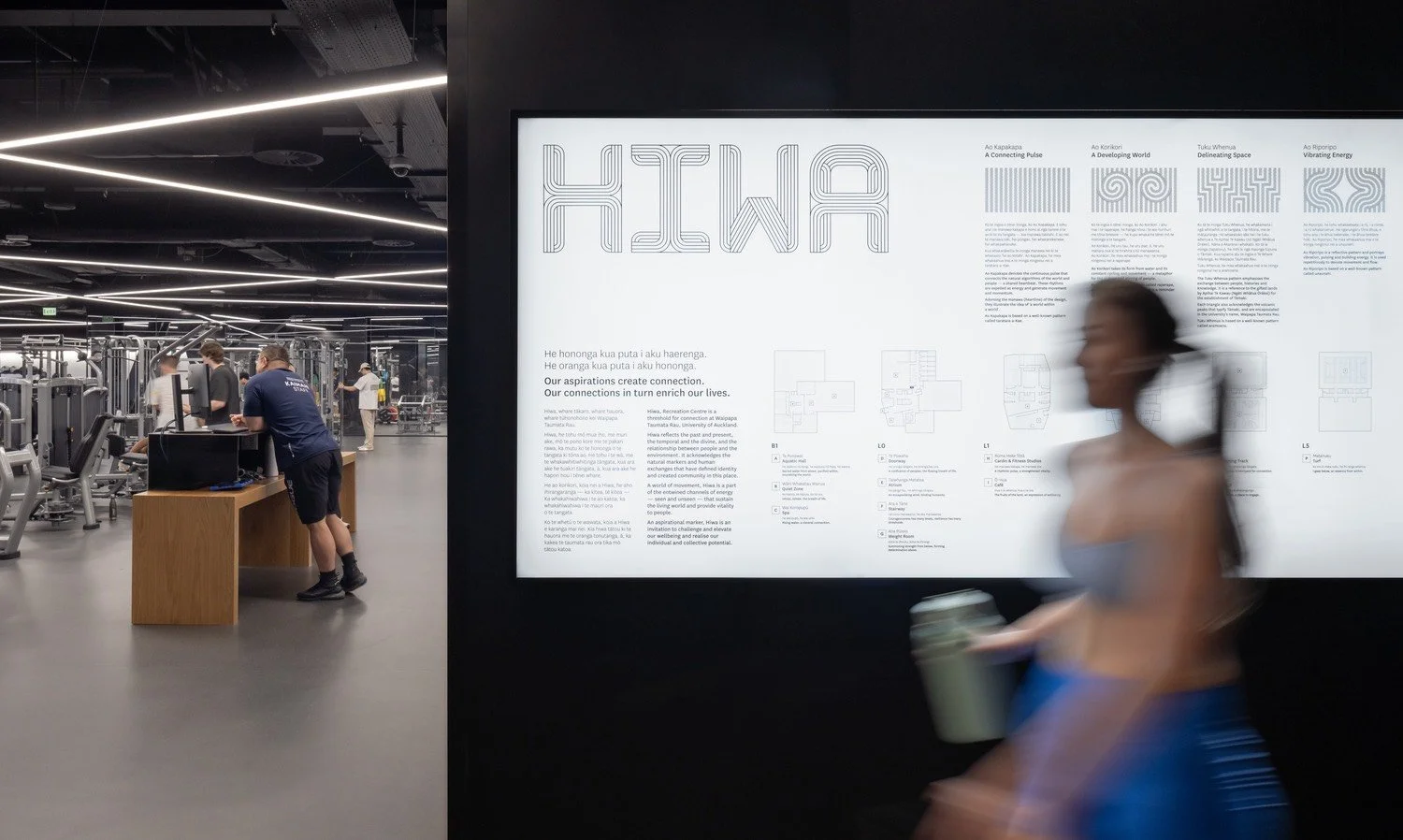
A lightbox next to the takarangi features floor plans that show the locations of the patterns throughout the facility.
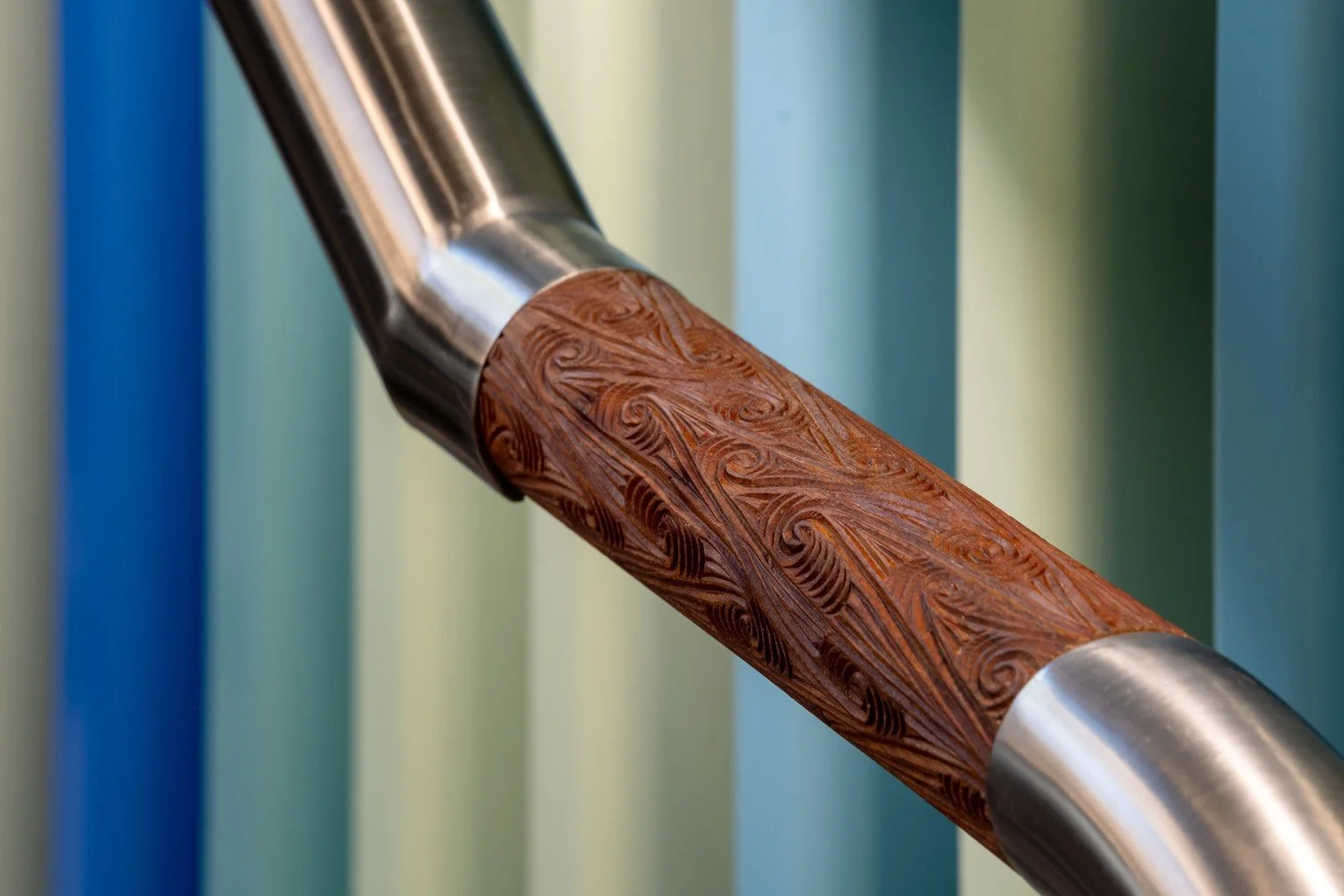
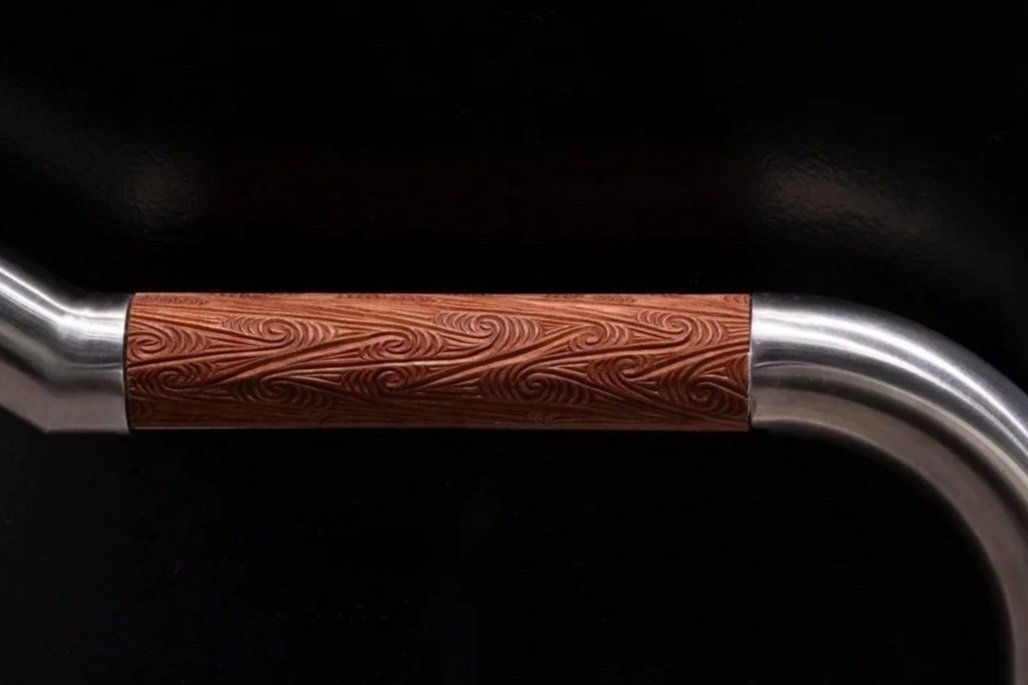
Additional patterns are carved into handrail cuffs at circulation stairs using Pohutukawa wood, repurposed from a tree removed onsite. These carvings offer a warm, textured, and human-crafted touch before transitioning to the machine-made handrail.
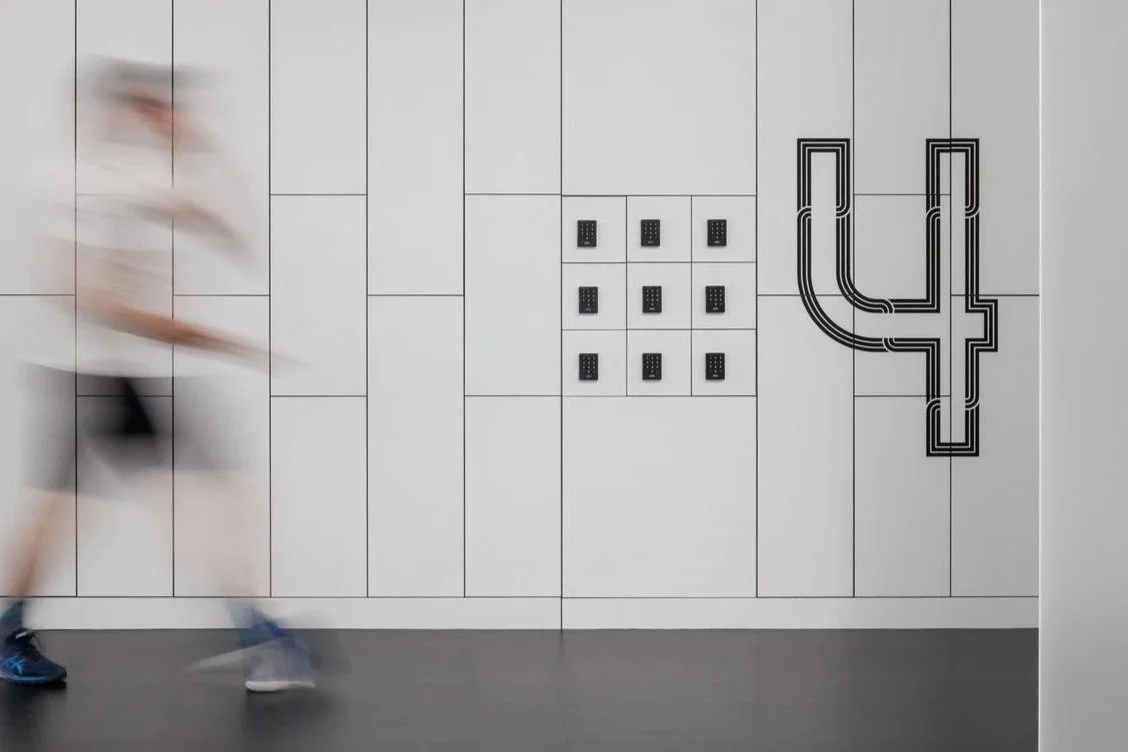
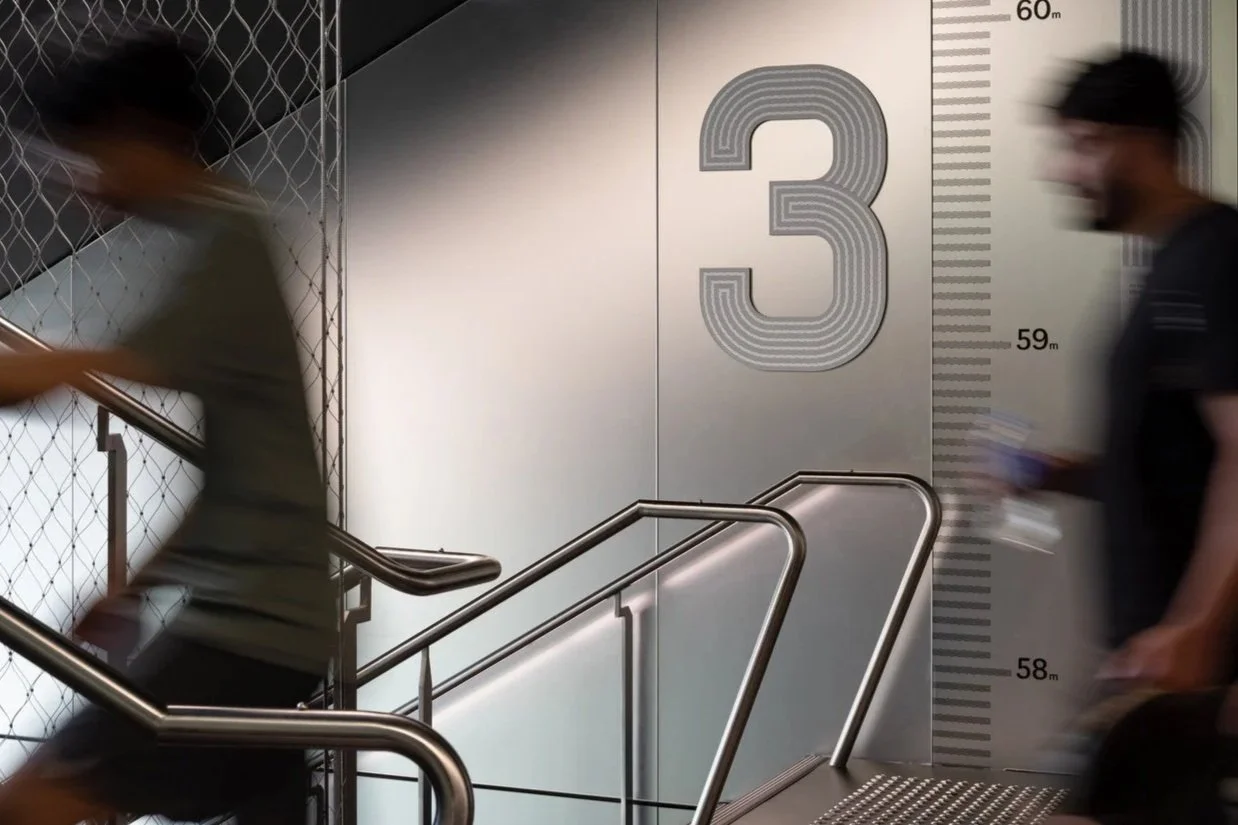
Traditional carving methods inform the patterns of the typography, including numbers routered into locker faces, identification of various sports courts, and the demarcating of floor levels.
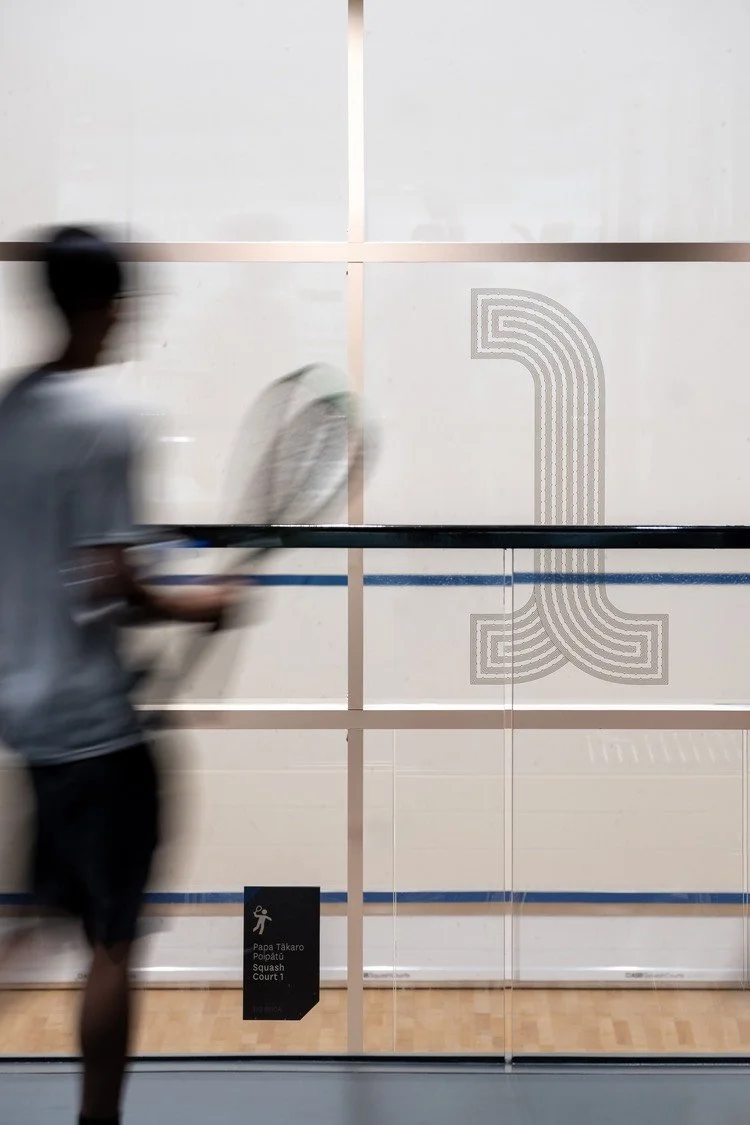
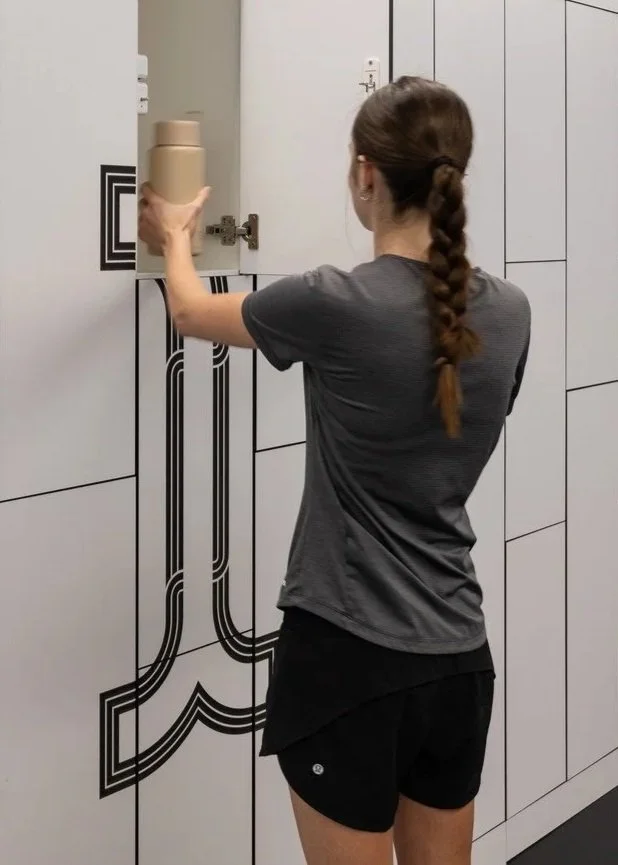
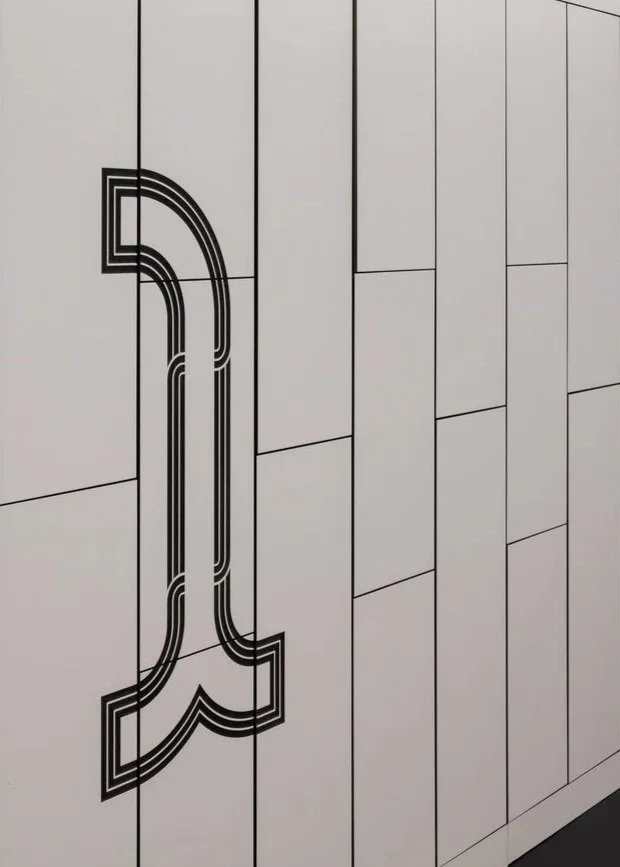
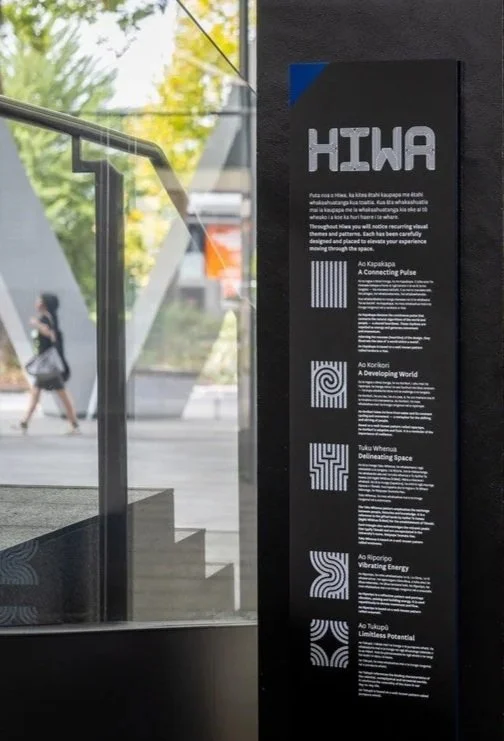
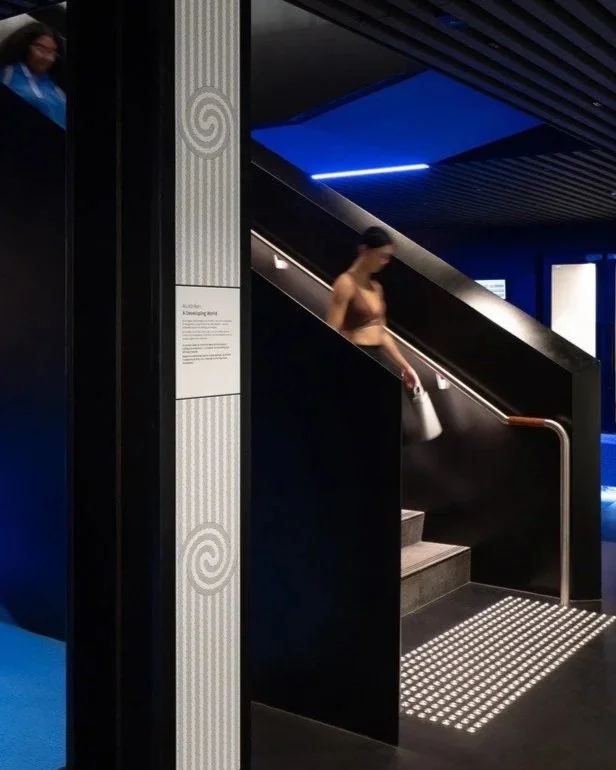
Interpretive graphics and didactics throughout the recreation centre provide information about each of the patterns that appear at significant moments throughout the building.