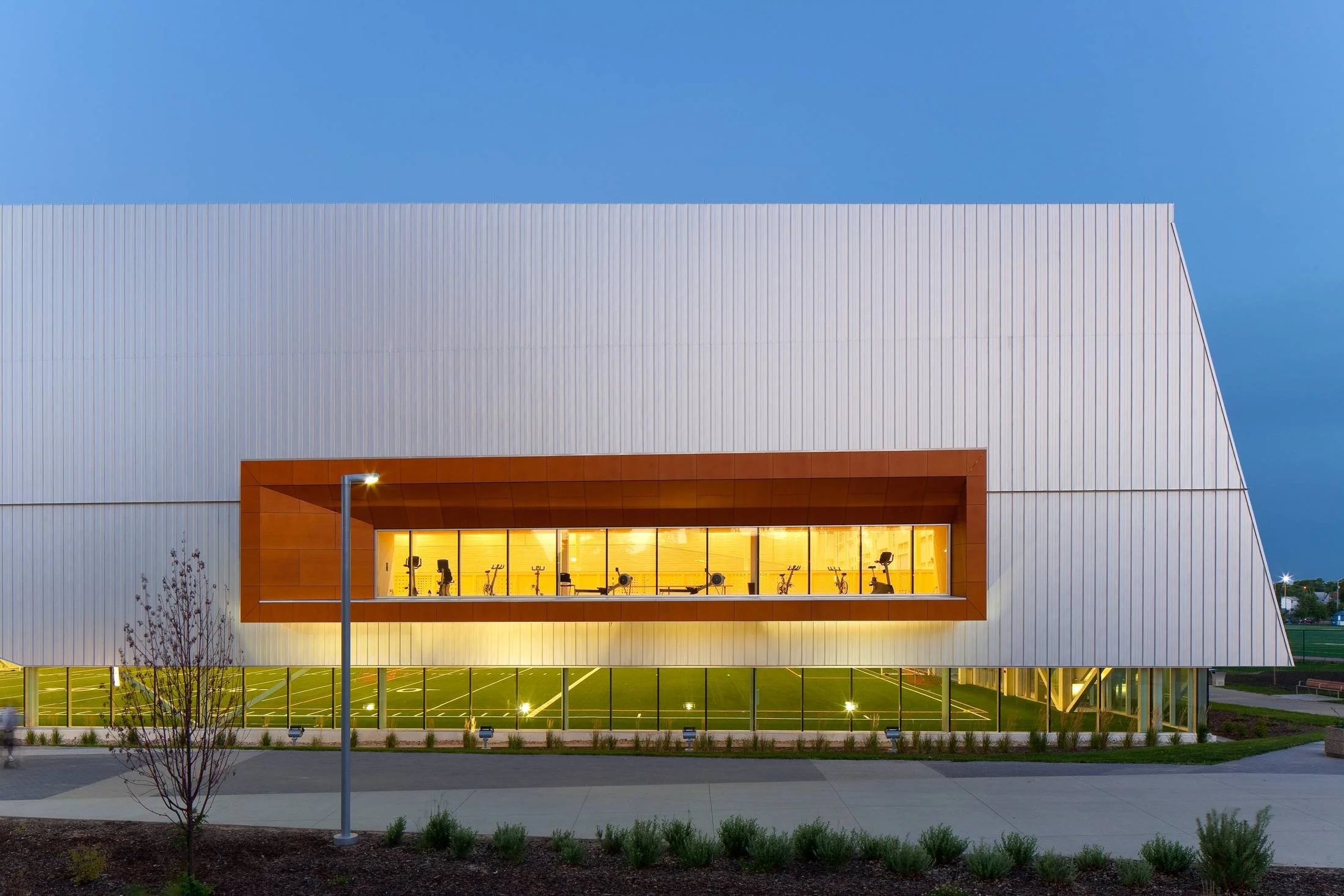
Commonwealth Community Recreation Centre & Edmonton Elks Field House
Edmonton, Alberta
In Collaboration with HIP Architects
-
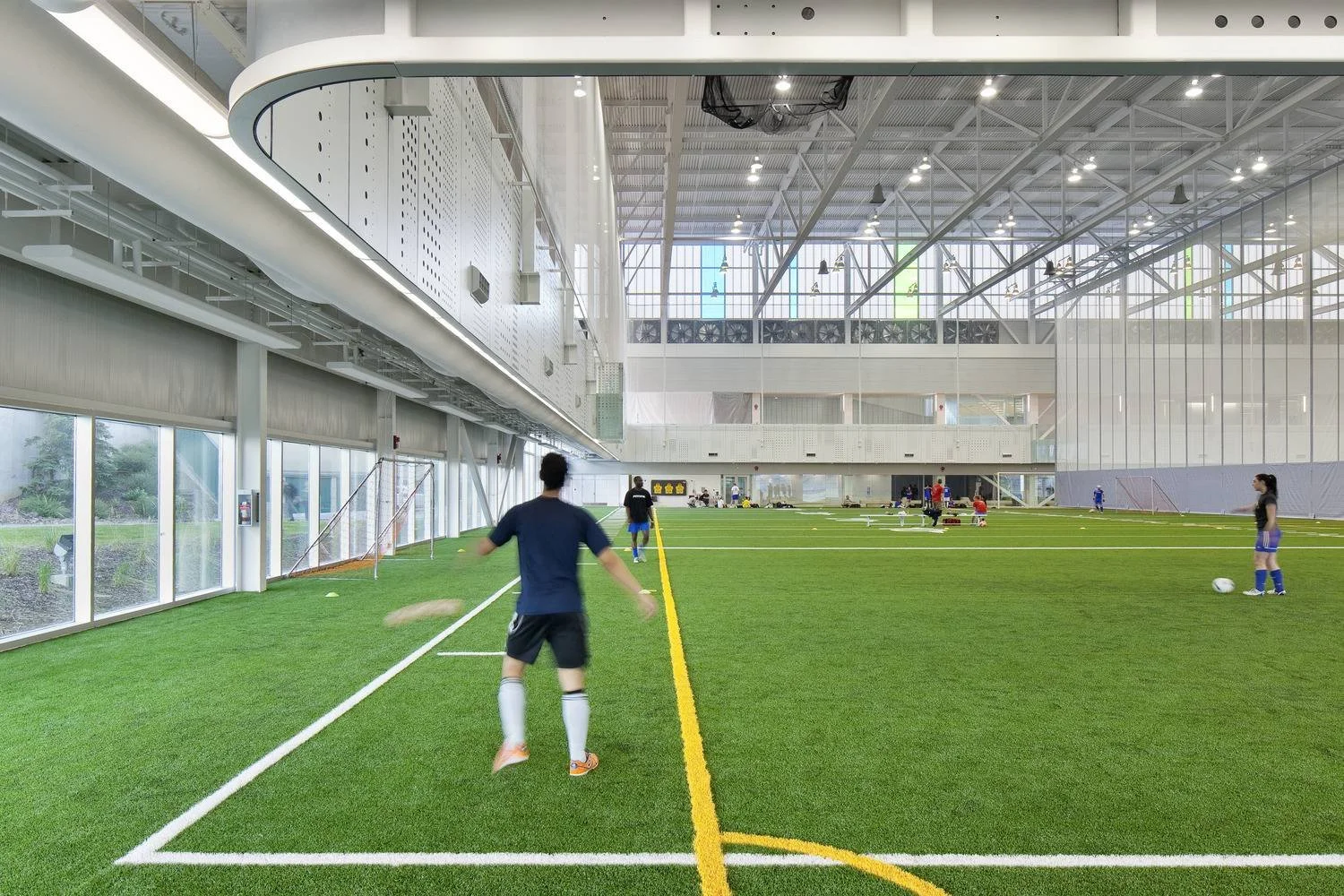
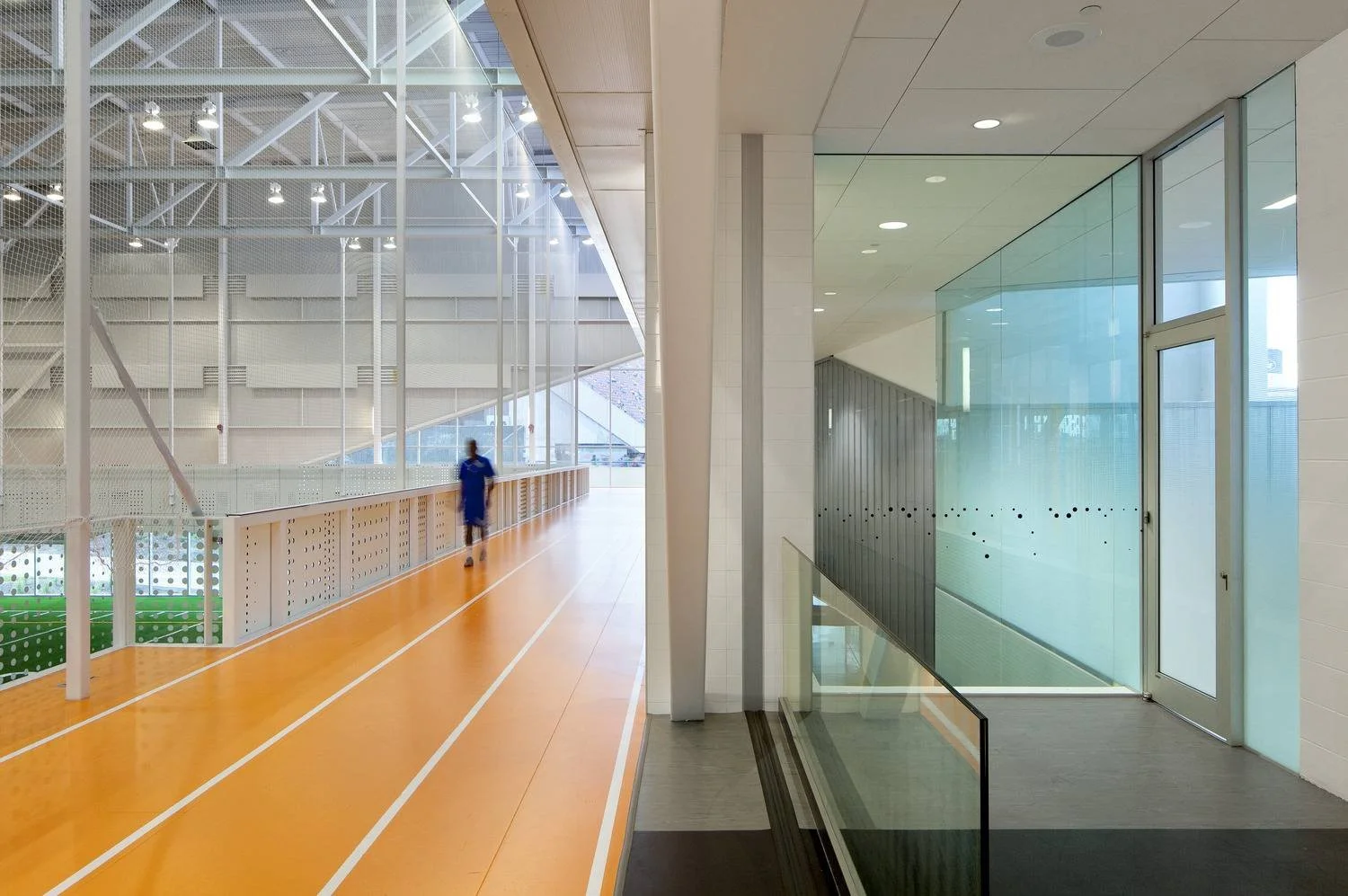
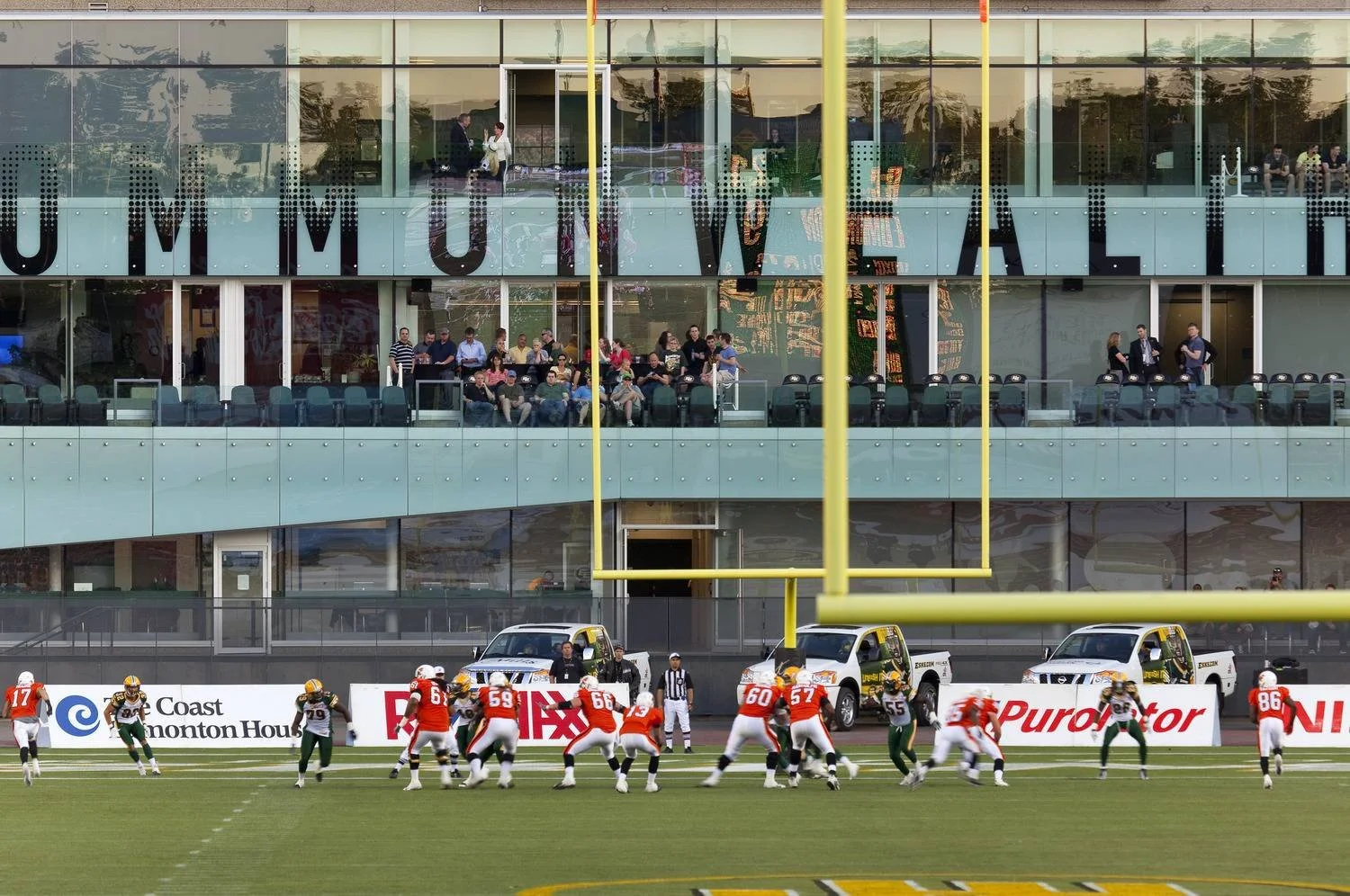
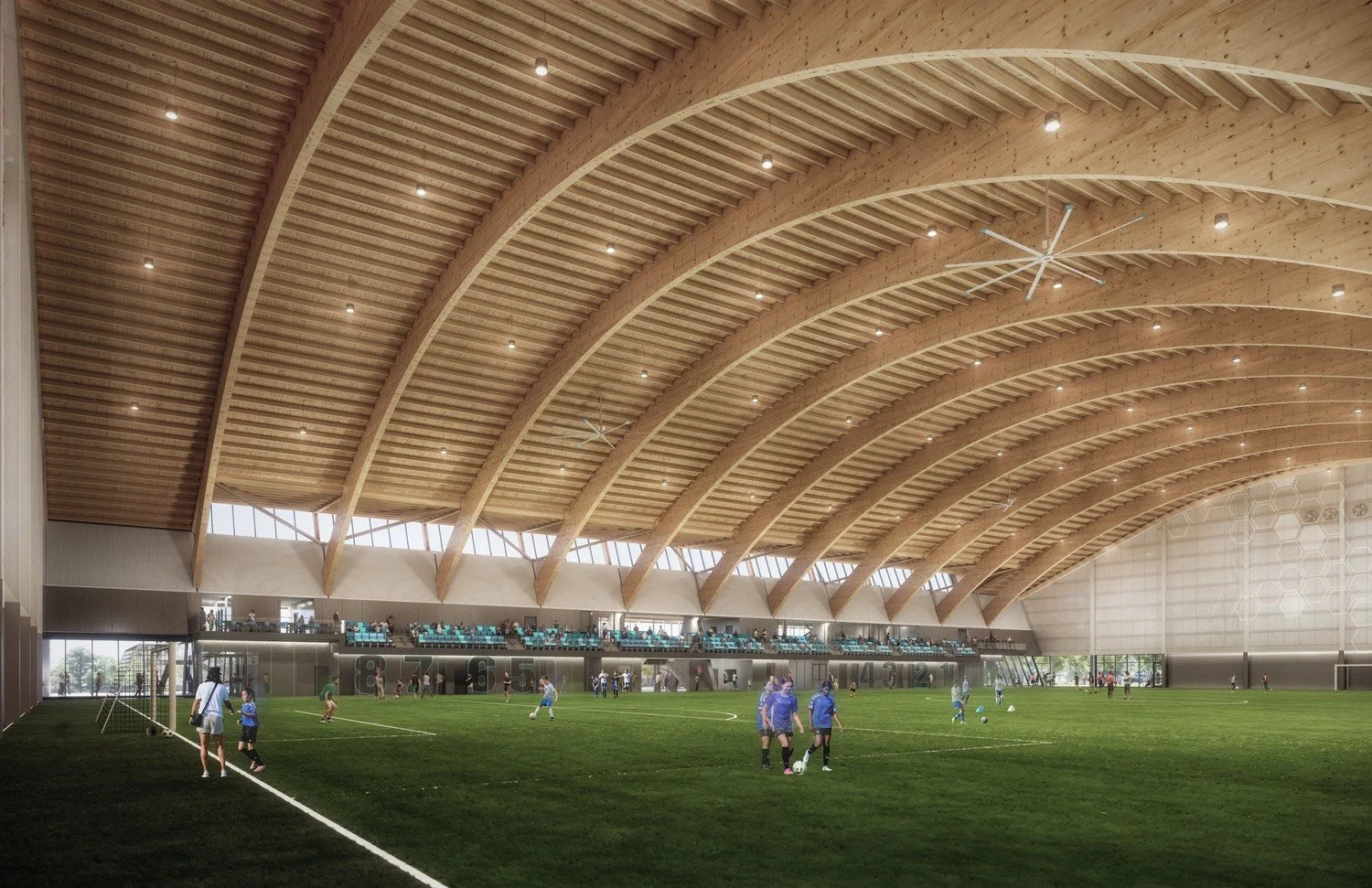
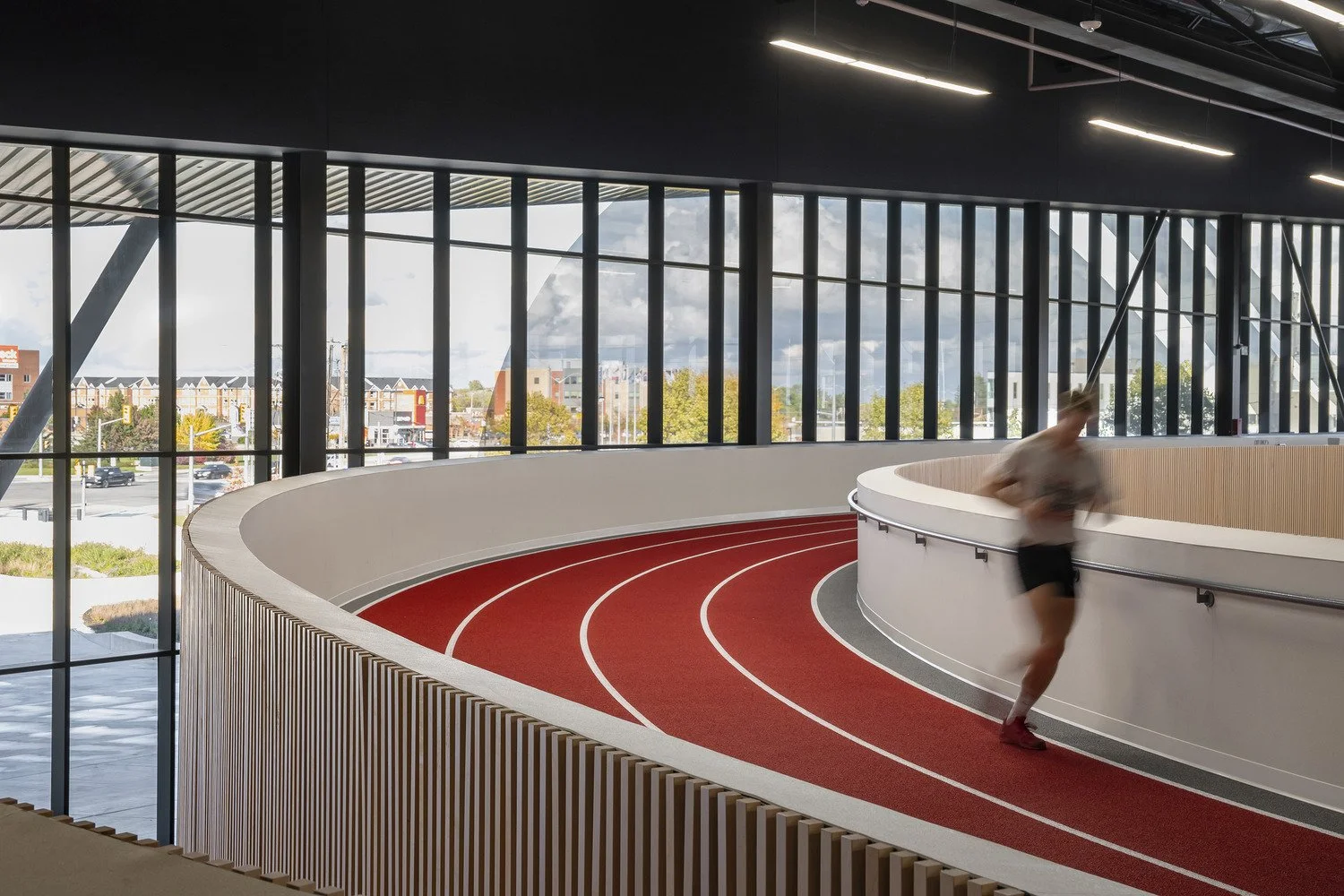
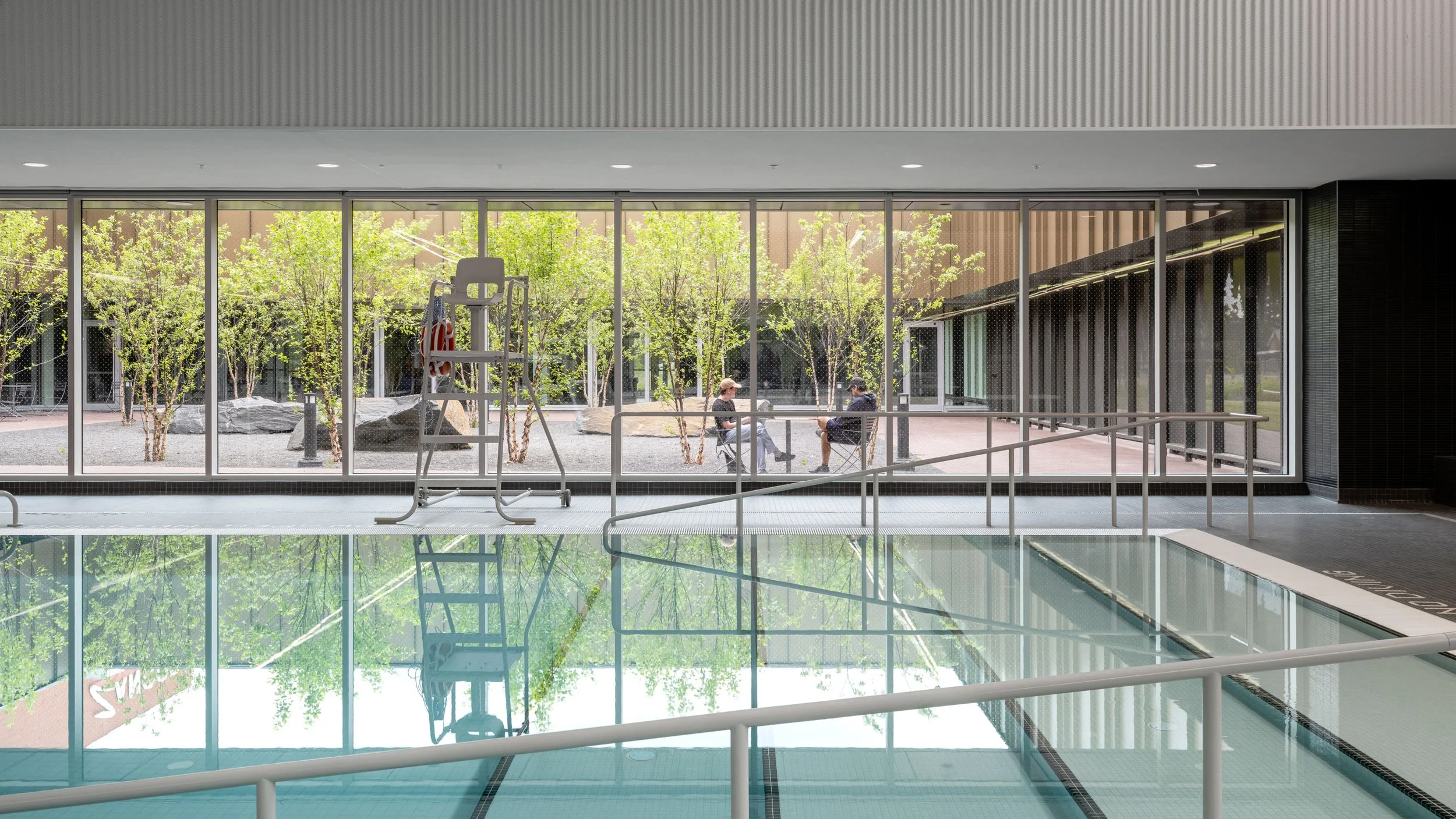
Aquatic Centre, Field House, Gymnasium, Fitness Conditioning Space, Fitness Studios, Indoor Track, Multipurpose Rooms, Child Care, Outdoor Practice Fields, VIP Stadium Seating, Players Locker Rooms and Treatment Area
-
Structural: RJC
Mechanical / Electrical: MCW (formerly Hemisphere)
Civil / Landscape: ISL -
2016 Prairie Design: Award of Excellence
2013 International Olympic Committee (IOC) / International Association for Sports and Leisure Facilities (IAKS): Bronze Medal (Sports & Leisure Facilities)
2013 Ontario Association of Architects (OAA): Design Excellence Award
2013 City of Edmonton: Urban Design Award
2013 Edmonton Mayor's Award: Universal Design in Architecture
2013 Athletic Business: Facilities of Merit Design Award
2013 Parks and Recreation Ontario (PRO): Award of Excellence in Design
2013 Canadian Interiors: Best of Canada Design Award
2013 Association of Registered Interior Designers of Ontario (ARIDO): Award of Merit
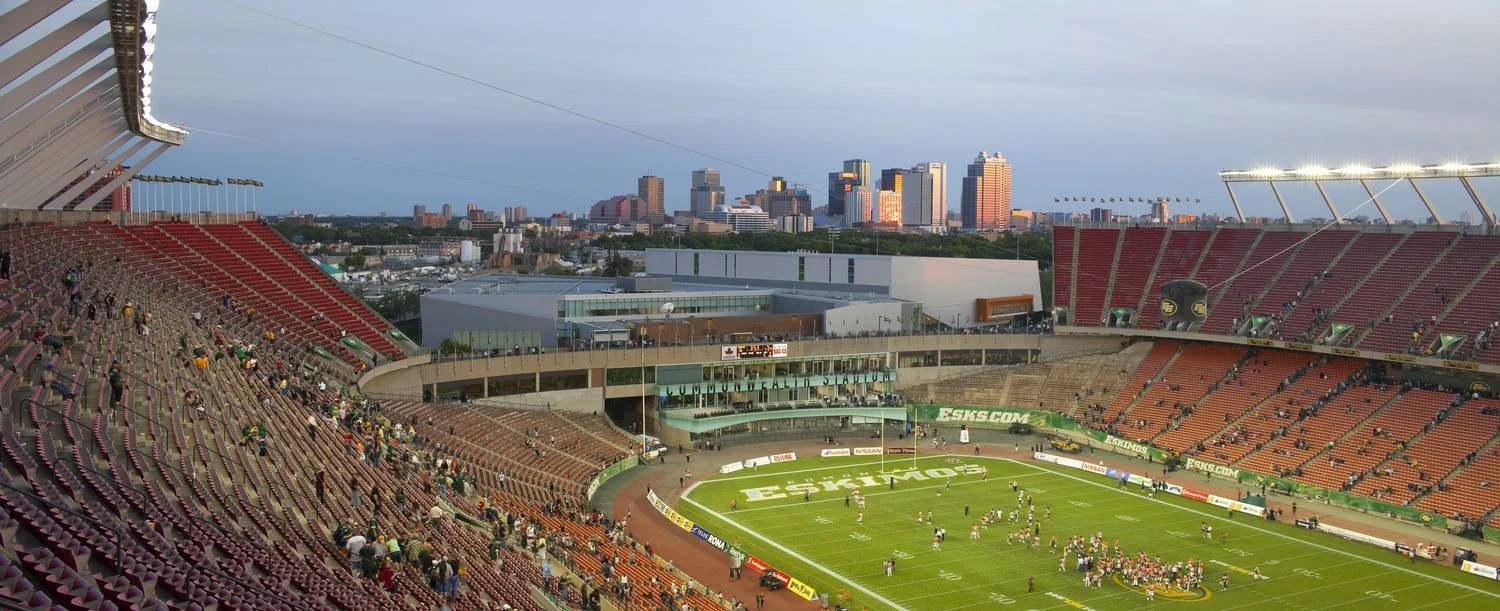
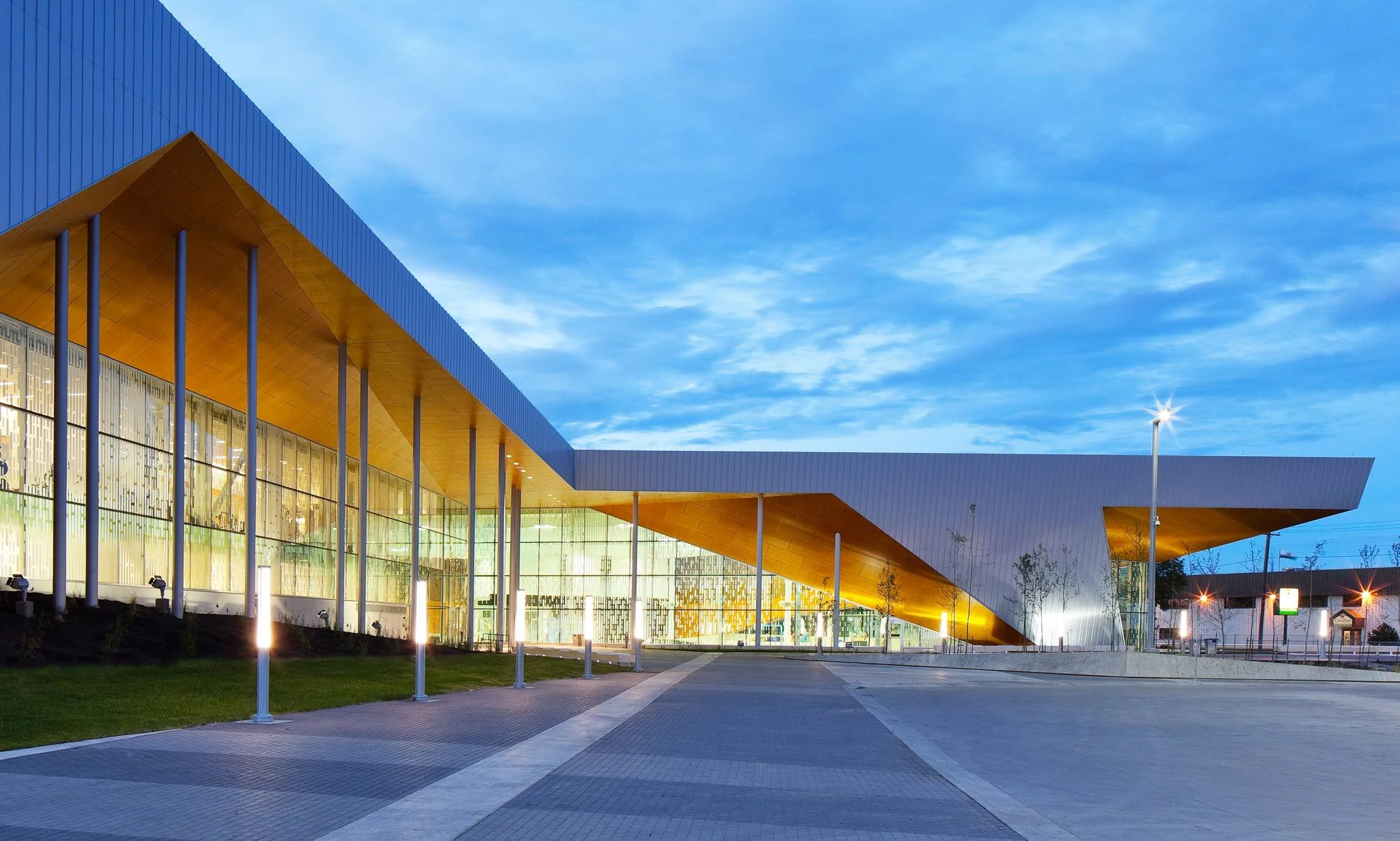
The design of the Commonwealth Community Recreation Complex was driven by a strong civic mandate to create an open, social-condensing facility that allows for shared-use between three partners: the City of Edmonton, the Edmonton Elks professional football team, and the public at large. Located one subway stop from downtown, the four-level 220,000-sf building adaptively reuses a 1978 fitness centre attached to the iconic Commonwealth Stadium, Canada’s largest outdoor professional sports venue.
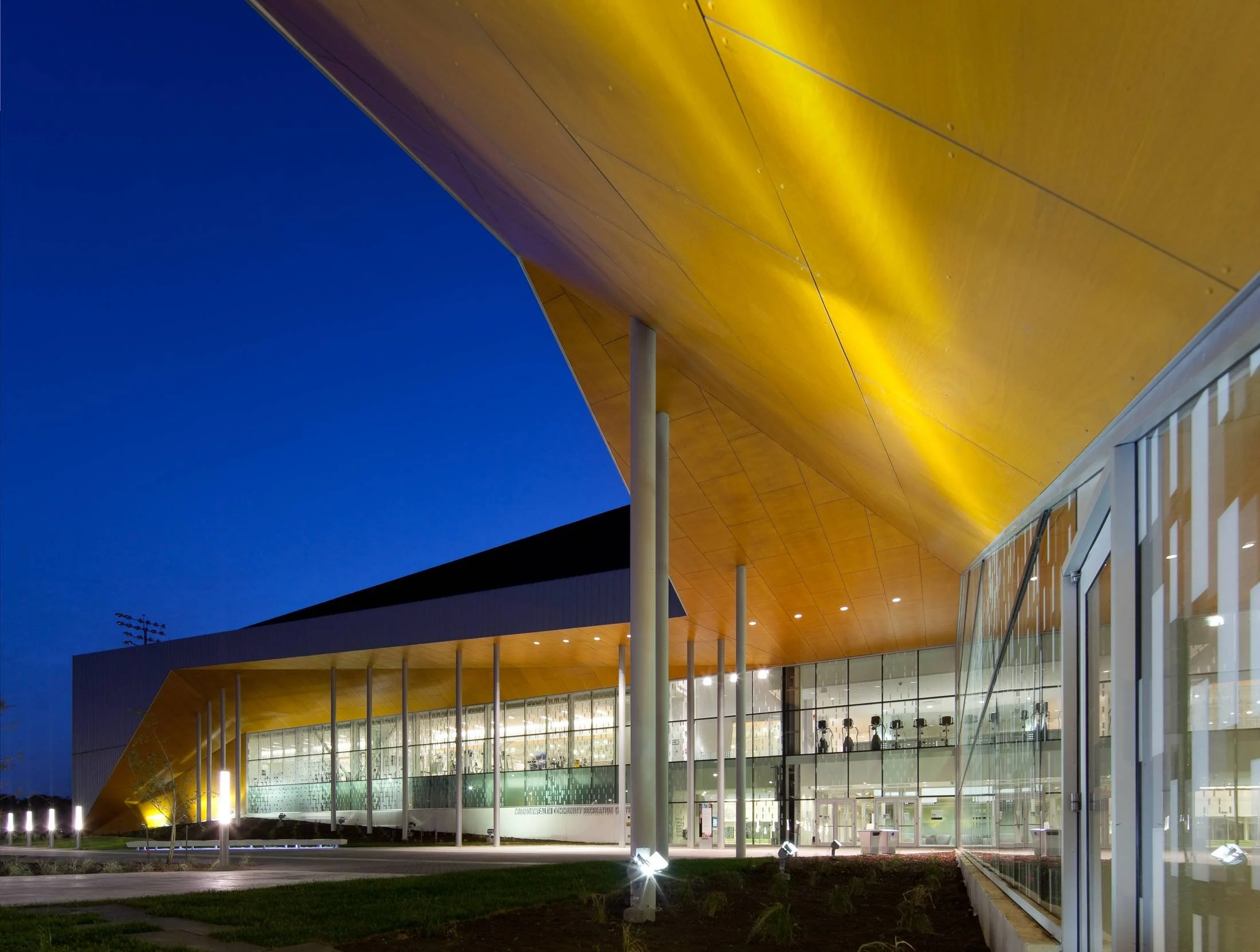
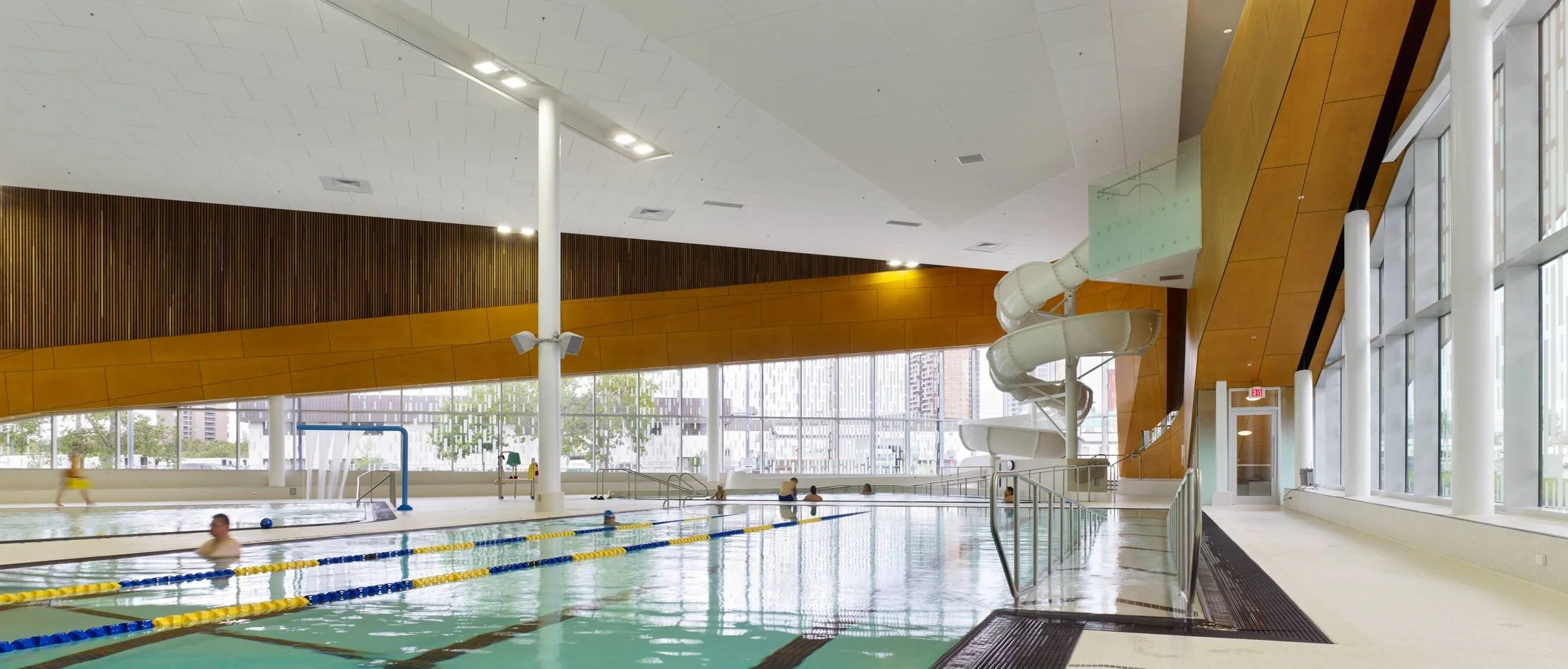
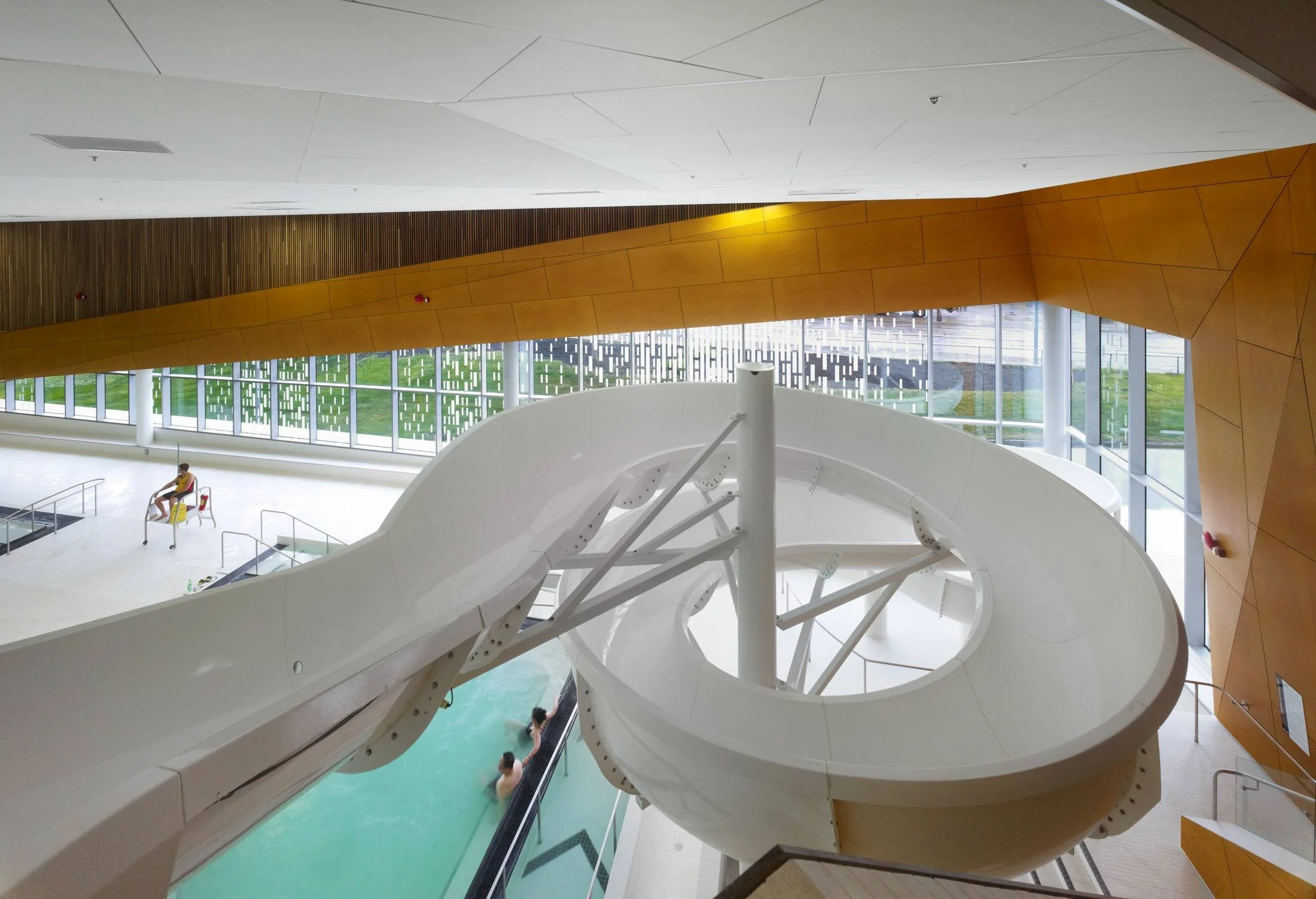
While creating new pedestrian-friendly exterior realms, the project’s expression also responds to the scale and dynamic nature of the stadium’s structure. The building’s south façade is sculpted to several effects — breaking down and humanizing the bulk of the building, unifying the rooflines of the complex’s various masses, and forming a shielding canopy along a new public entry plaza. Here the aquatics wing takes a prominent prow-like shape, evoking forward momentum. Silver metallic panels clad the upper levels and are whittled back, revealing tessellated facets of warm phenolic wood, while large expanses of full-height glazing at grade give inviting views of the facility’s inner activities. The entire complex was planned with equal intentionality: the field house on the west is located next to an existing outdoor practice field, while the new gymnasium and team and administration spaces are closer to the stadium, to north.
Like many stadium and exhibition grounds, the site suffered from limited use, and its depressed condition affected its surroundings. The project revitalizes its urban neighbourhood context, creating a year-round community park with pedestrian-scaled promenades that also run through the building north-south and east-west, connecting directly to the facility’s social core.
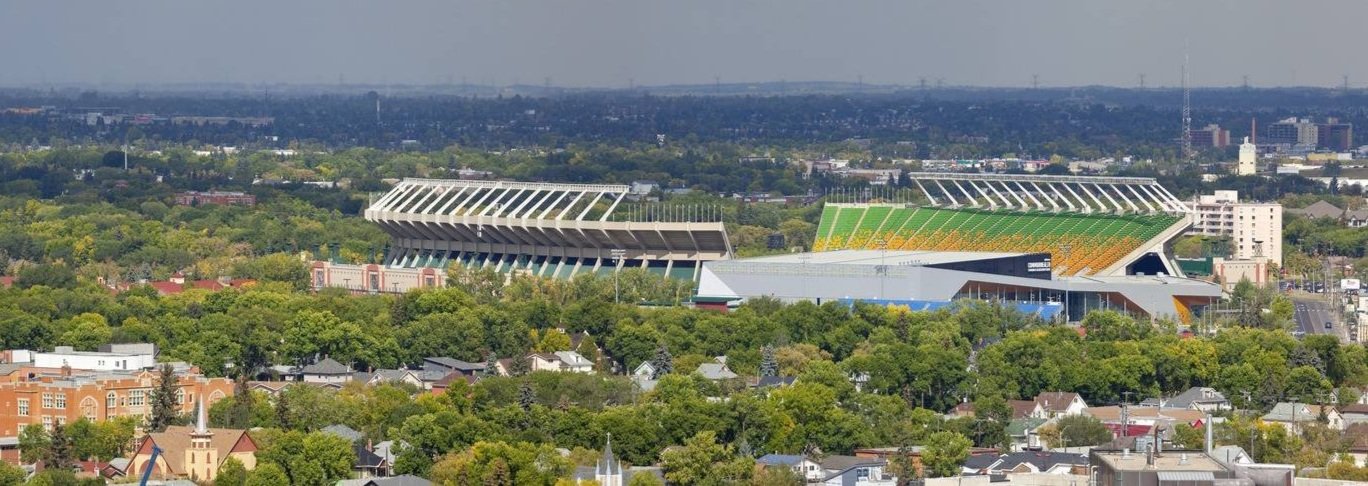
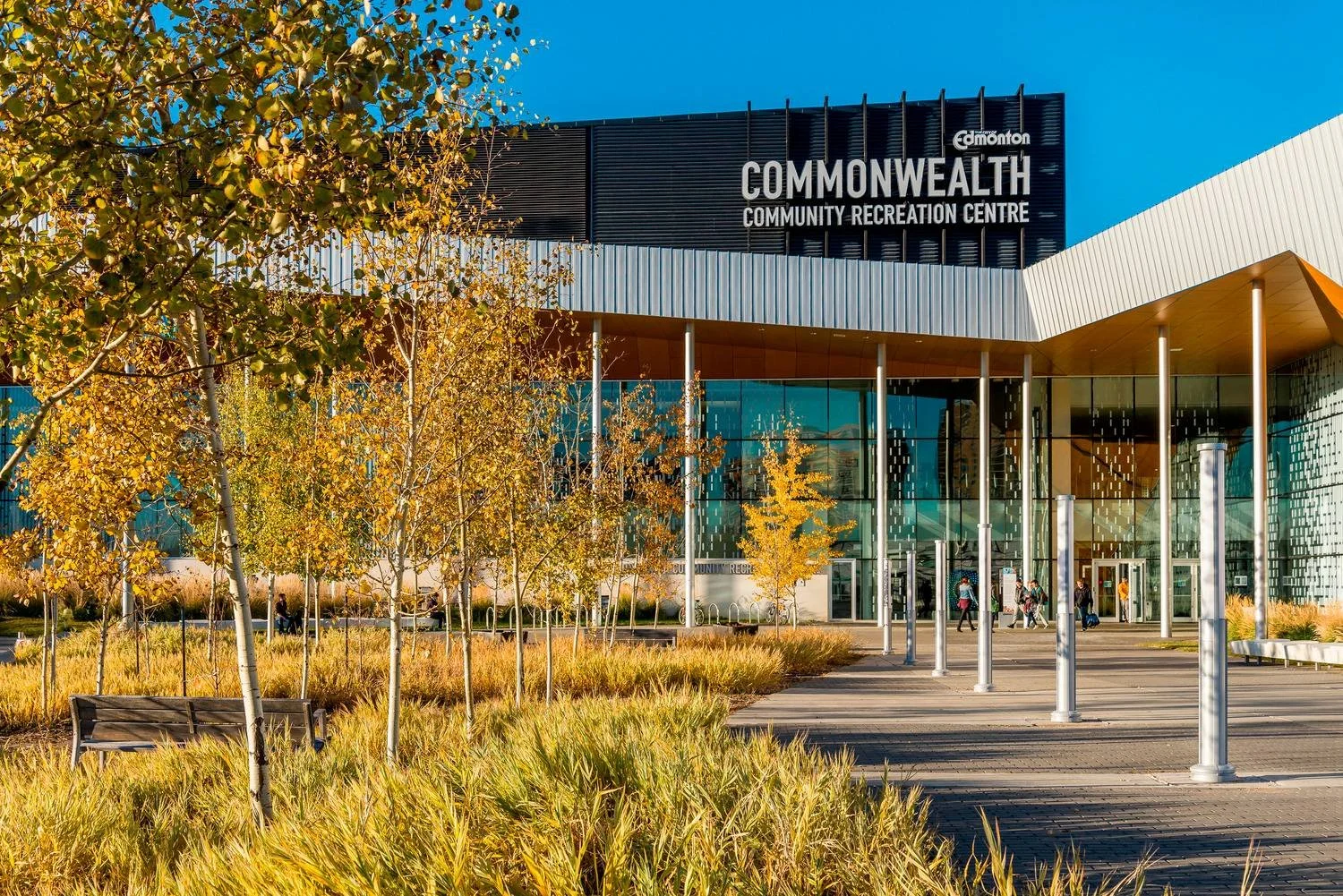
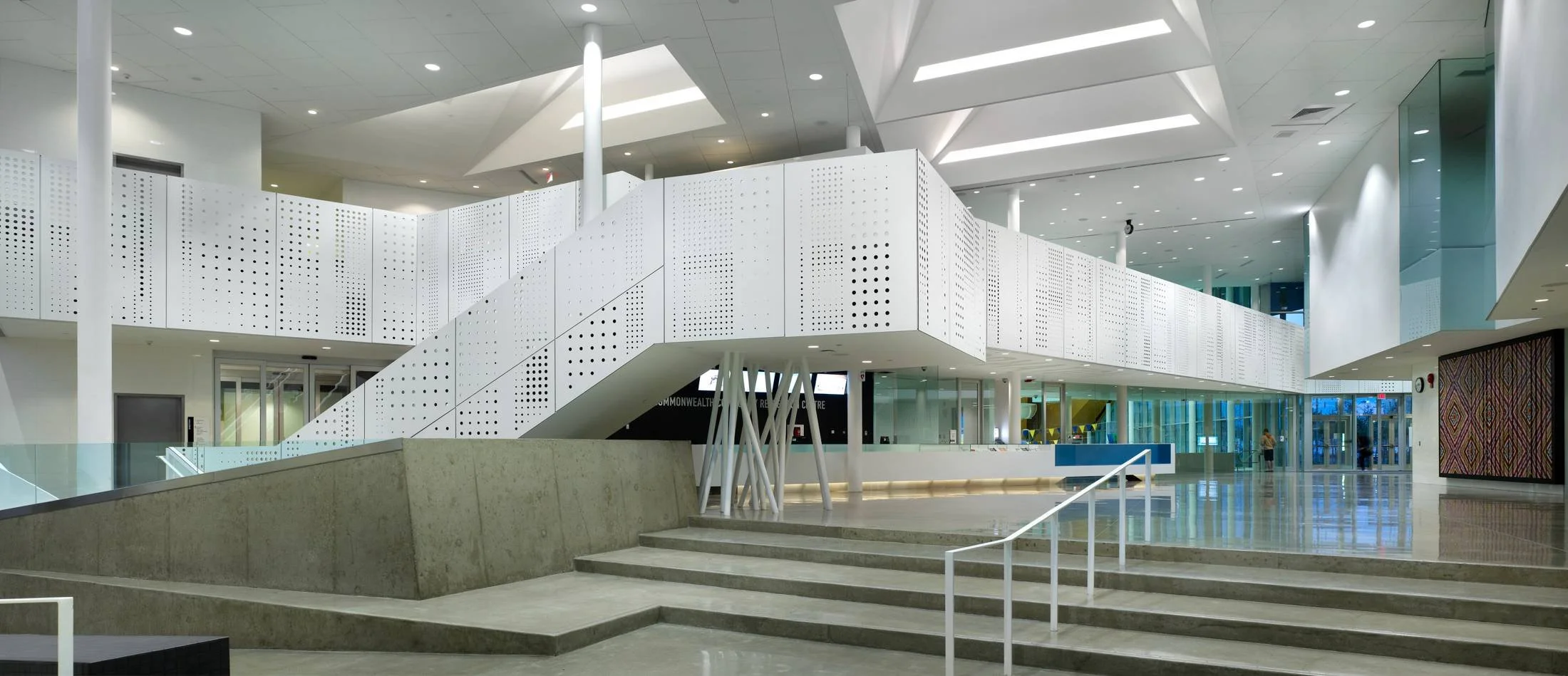
Three primary building masses — field house, aquatics, and gymnasium — respond to the dynamic triangulated geometries of the site, including the adjacent stadium, and define three exterior forecourt spaces, each with a distinct entry into the building. These masses also frame an internal lobby space, the central ‘social heart’ and control point for access to the fitness centre, aquatics hall, and gym.
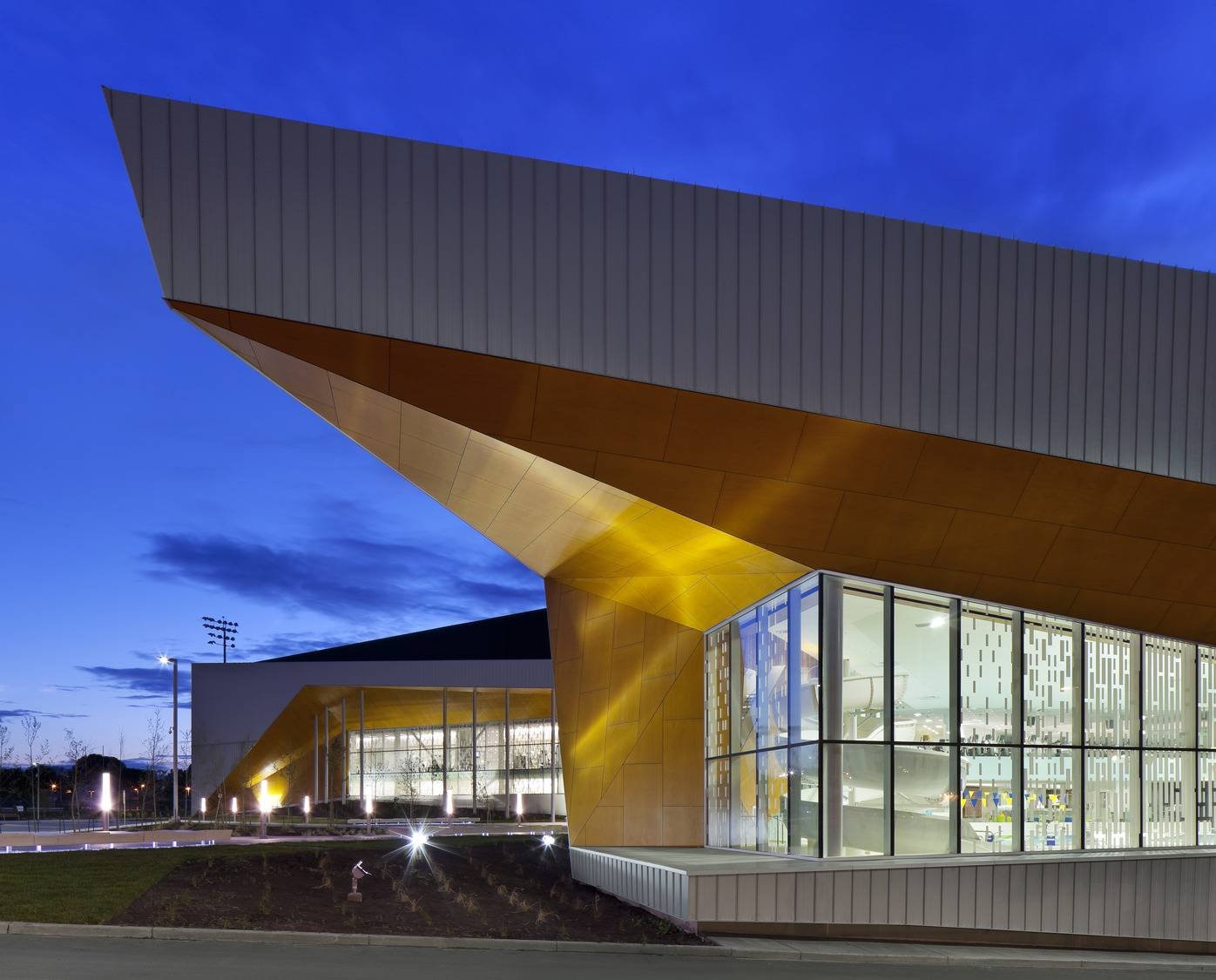
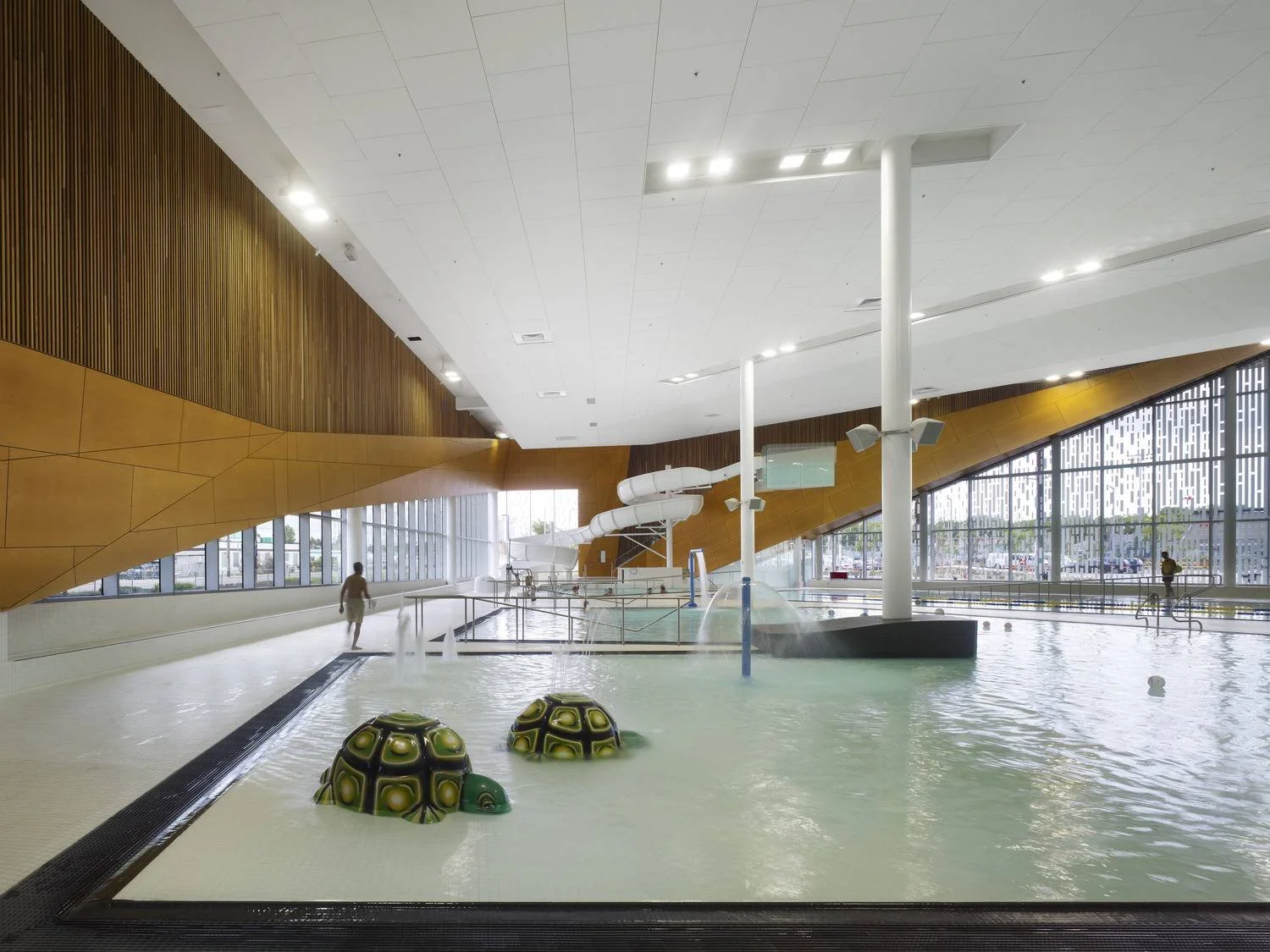
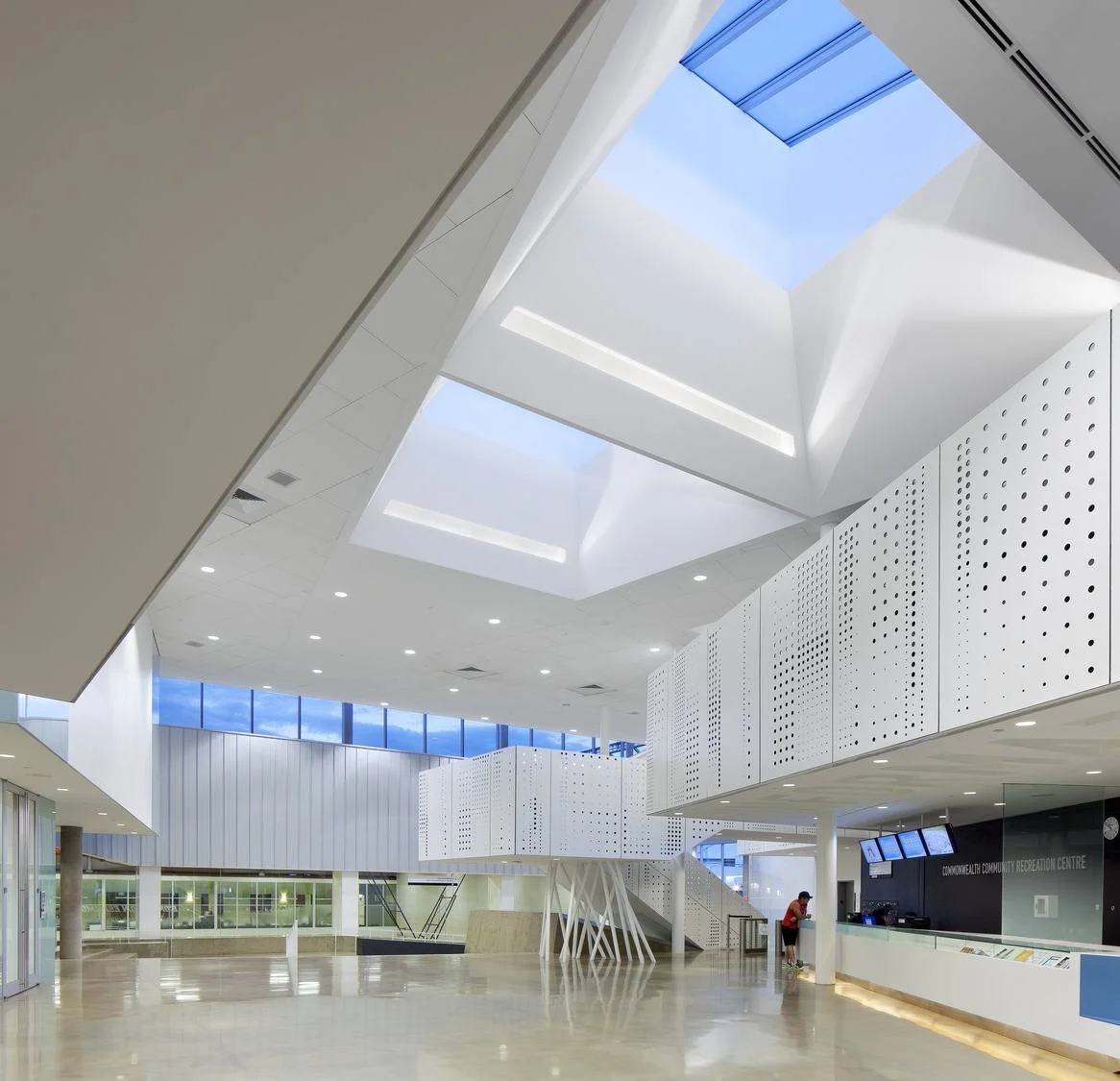
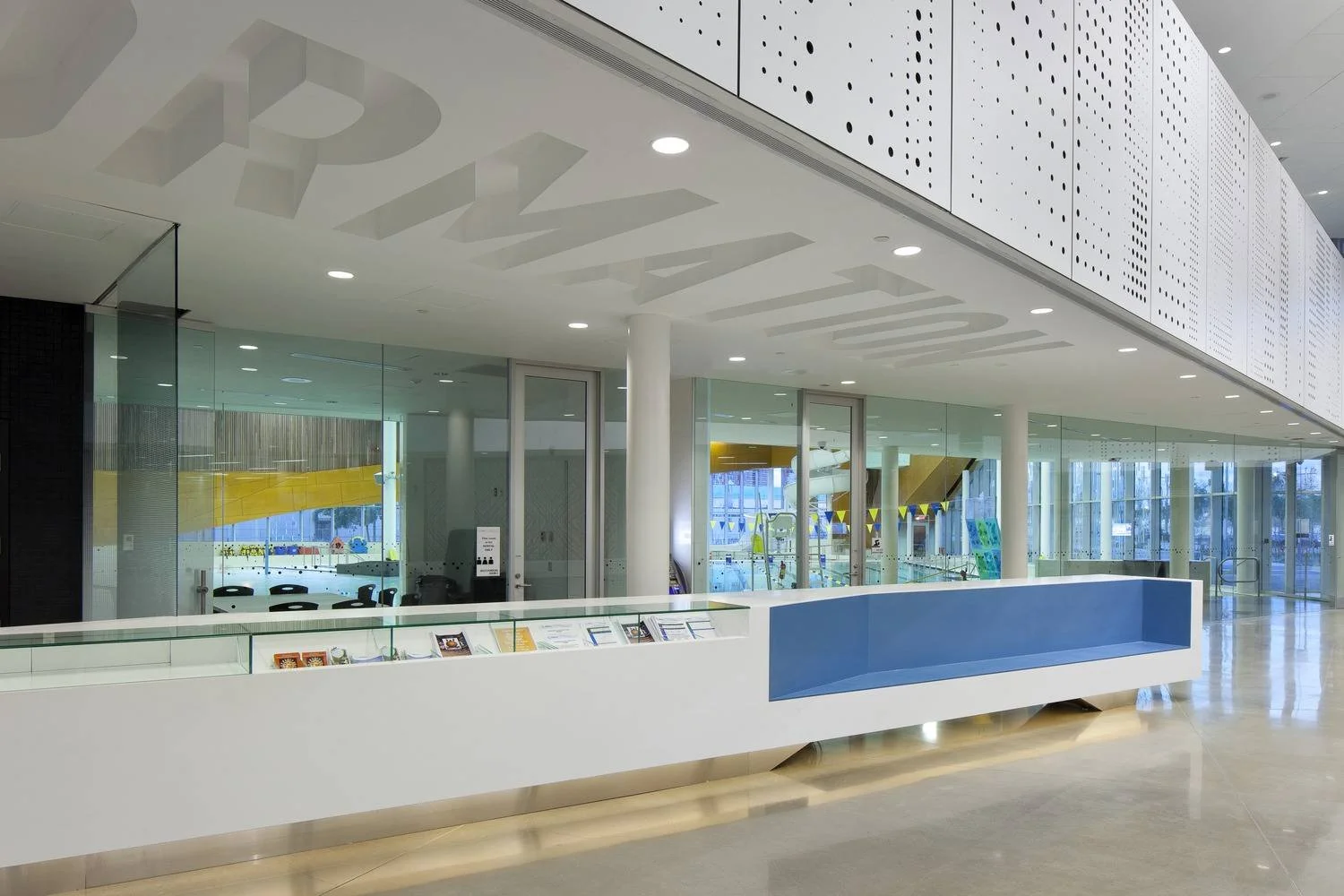
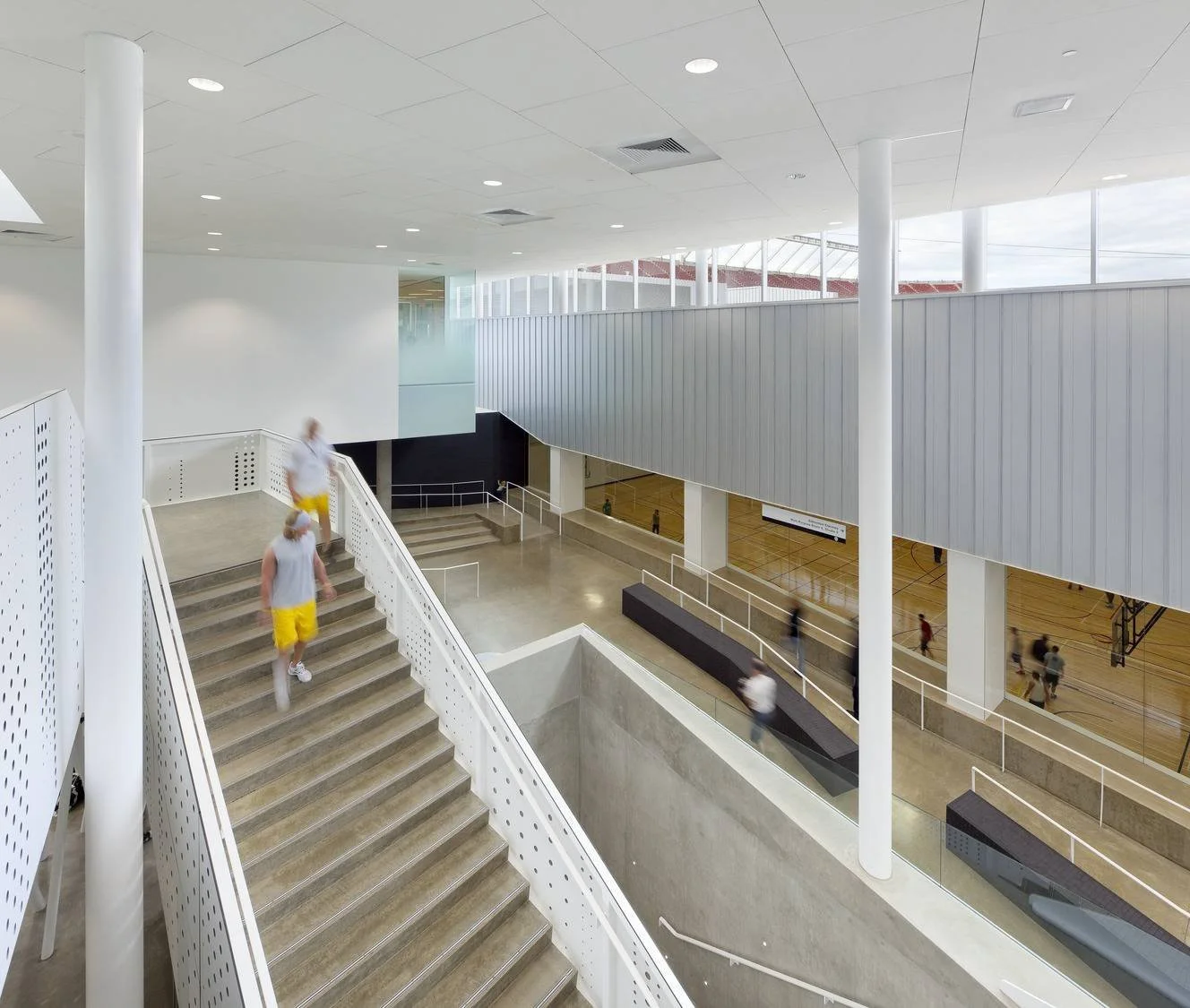
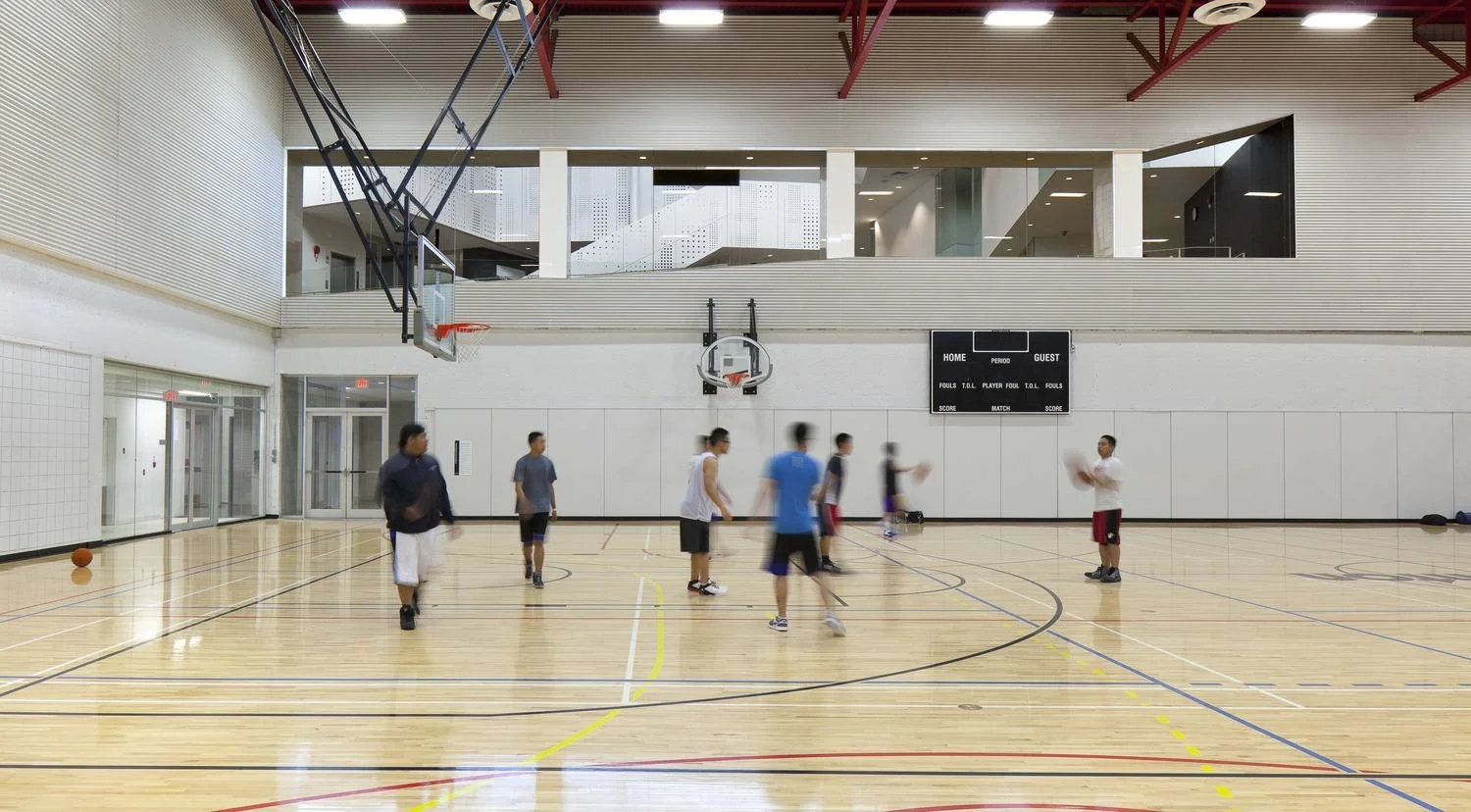
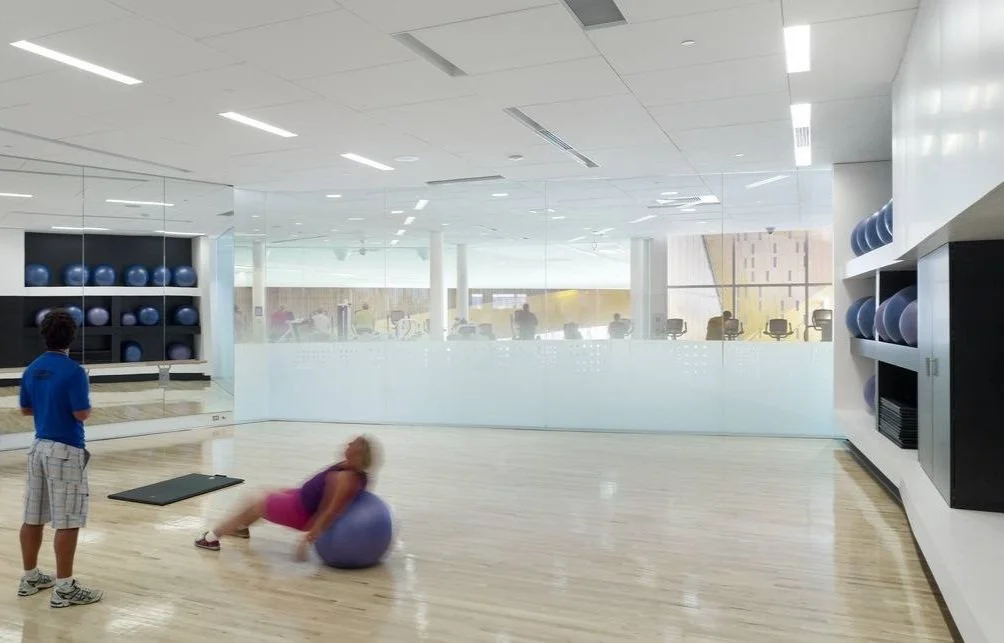
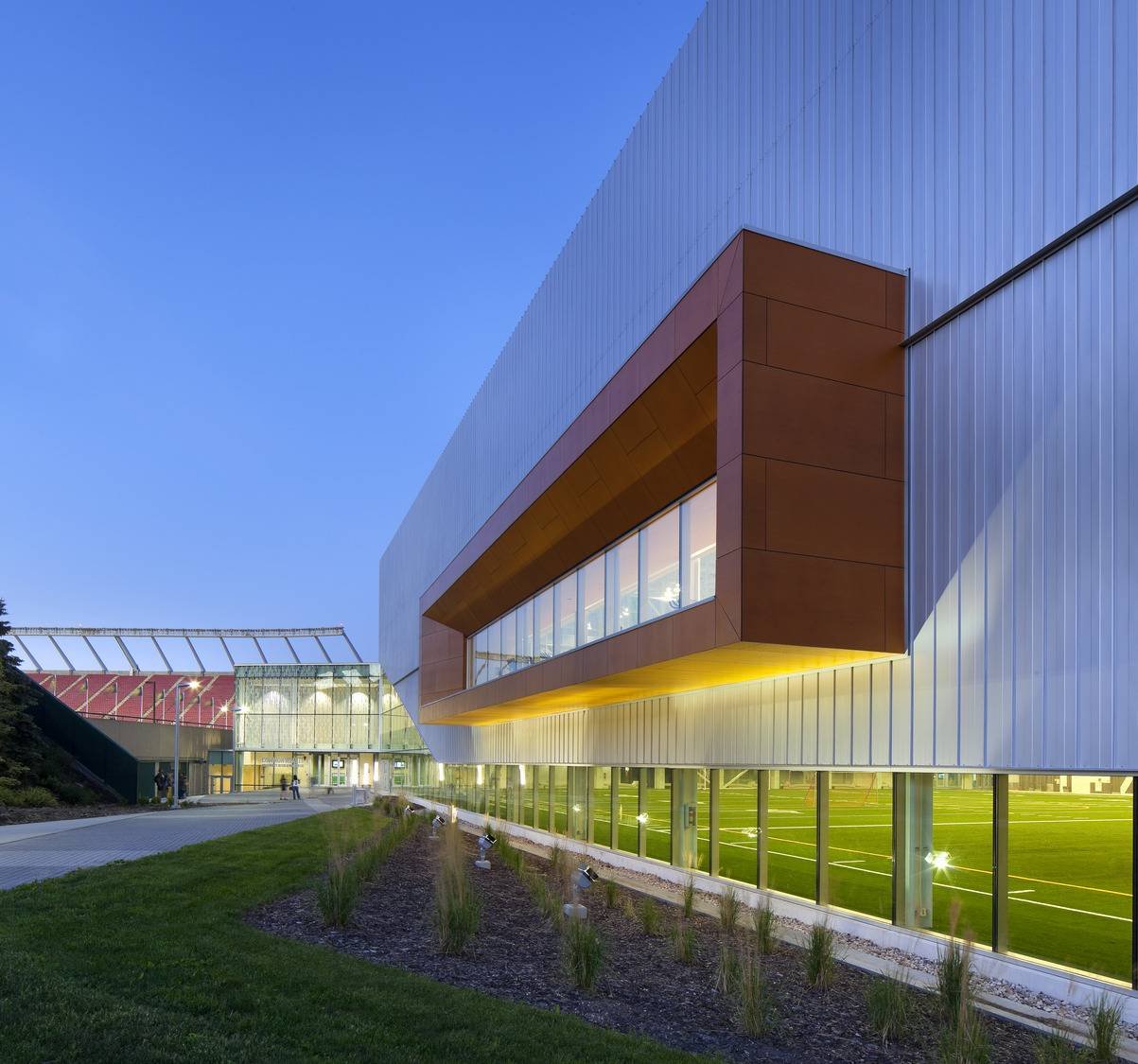
Adept planning allows the three diverse partner-groups to share amenities for mutual benefit and revenue: the Elks use the community aquatic centre, track, and fitness club for player training and hold game-related events in the gymnasium and meeting spaces.
In the evenings and off-season, the community has access to the field house and Elk program rooms; Stadium Operations are able to host side-stage events in the field house and use the recreation centre and Elk spaces for functions related to concerts and athletic events.
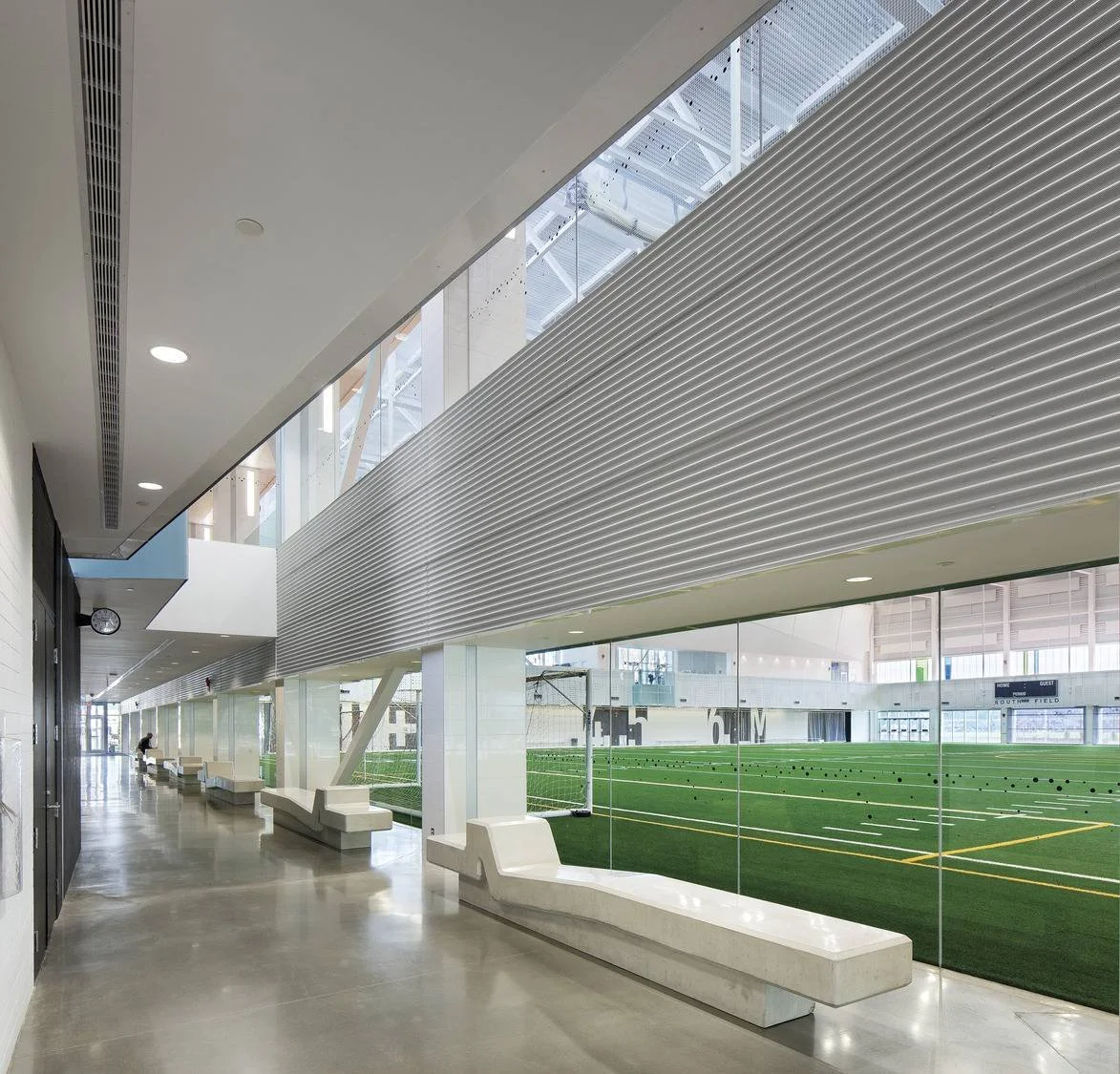
The building’s sustainable features include natural ventilation in the field house, solar wall pre-heating technology, ceramic-fritted glass and triple-glazing for solar and thermal control, and southern canopy solar shading for the field house and aquatics hall. Copious and controlled clerestory and skylight daylighting reduces energy use while enhancing the quality of spaces deep into the plan.